
How Does Gangnammould Pallet Mould Design Influence Production Costs
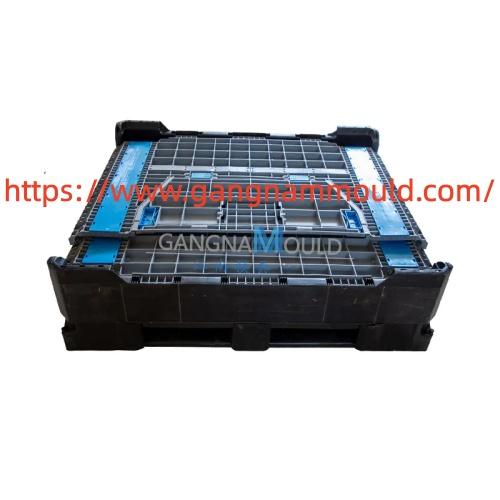
Pallet Mould design can influence manufacturing costs long before production begins. Buyers evaluating a new tooling project need to consider structural requirements, material consumption, machining complexity, cycle time, and maintenance expenses. These factors affect the initial investment as well as ongoing operating costs. For manufacturers producing logistics and warehouse products, careful design planning can help establish a practical balance between product performance, production capacity, and budget expectations.
One important consideration is the intended application. Pallets used for warehouse storage may have different structural requirements from those designed for export shipping, automated handling, or repeated outdoor use. Load capacity, dimensions, stacking arrangements, and handling equipment should be discussed before engineering work begins. When the intended application is clearly defined, the manufacturer can develop a more appropriate tooling configuration and avoid unnecessary design changes.
Material distribution also deserves attention. Product geometry influences how raw material moves through the cavity and how the finished component performs under load. Reinforcing ribs, support columns, and deck structures need to be arranged according to engineering requirements. Adding unnecessary structural features may increase material consumption and tooling complexity, while insufficient reinforcement can affect product performance. A detailed design review helps identify a suitable structure for the intended working conditions.
Cavity configuration is another factor that affects project costs. A single cavity may be appropriate for certain production volumes or specialized designs, while multiple cavities can support higher output when the machine and tooling structure allow it. However, additional cavities may increase machining requirements, equipment demands, and initial expenditure. Manufacturers should compare expected order quantities with production schedules before deciding on a configuration.
Cooling system design can influence cycle time and product consistency. Large plastic components may require careful attention to temperature distribution and cooling channels. Uneven cooling can contribute to deformation, dimensional variation, or longer processing cycles. An appropriate cooling layout requires consideration of product thickness, material properties, and the intended machine conditions. These details should be reviewed during engineering rather than treated as an afterthought.
Equipment compatibility also affects the overall investment. Buyers should provide information about the injection molding machine, including available clamping force, platen dimensions, injection capacity, and other relevant operating parameters. A tooling design that matches the available equipment can reduce the need for costly production adjustments. Early technical communication also allows the manufacturer to identify possible limitations before fabrication starts.
Machining complexity is closely connected with design decisions. Deep cavities, intricate surface patterns, complex sliding components, and special ejection mechanisms may require additional engineering and manufacturing time. Some decorative or functional details may be simplified without affecting the intended application. Reviewing these features with the tooling supplier can help buyers determine which details are necessary and which may increase costs without providing meaningful operational value.
Maintenance should be included in the cost assessment. Tooling used in regular production requires cleaning, inspection, and appropriate storage. Moving components, cooling channels, and ejection mechanisms should be accessible for routine servicing where the design permits. A maintenance plan can help production teams identify wear early and schedule servicing around manufacturing requirements. Buyers should also clarify the availability of replacement components and technical assistance before confirming an order.
The initial quotation is only one part of the financial decision. Businesses should consider expected production volume, material consumption, cycle time, maintenance needs, and anticipated tooling service life when estimating operating expenses. A lower initial price may not represent a lower overall cost if the configuration requires frequent adjustments or creates avoidable production delays. Comparing proposals against the same technical specifications provides a clearer basis for evaluation.
Sampling and testing provide another opportunity to review costs before full production. Initial samples can help verify dimensions, structural features, stacking compatibility, and handling requirements. If testing identifies areas for improvement, the design can be reviewed before production scales up. Clear inspection criteria and documented feedback make the process more efficient and help both parties understand the required adjustments.
For manufacturers planning a new pallet product or updating an existing production line, working with an experienced tooling partner can simplify technical discussions and budget planning. Gangnammould supports buyers in evaluating design requirements, structural configurations, and manufacturing considerations for their projects. Businesses can visit https://www.gangnammould.com/product/ to review available product solutions and discuss tooling options that align with their specifications, production plans, and cost objectives.

 English
 Arabic
 French
 Portuguese
 Deutsch
 Turkish
 Dutch
Dutch
 Italiano
 Russian
 Romaian
 Portuguese (Brazil)
 Greek
Greek