
Best Interior Designers in South Delhi: Costs Explained
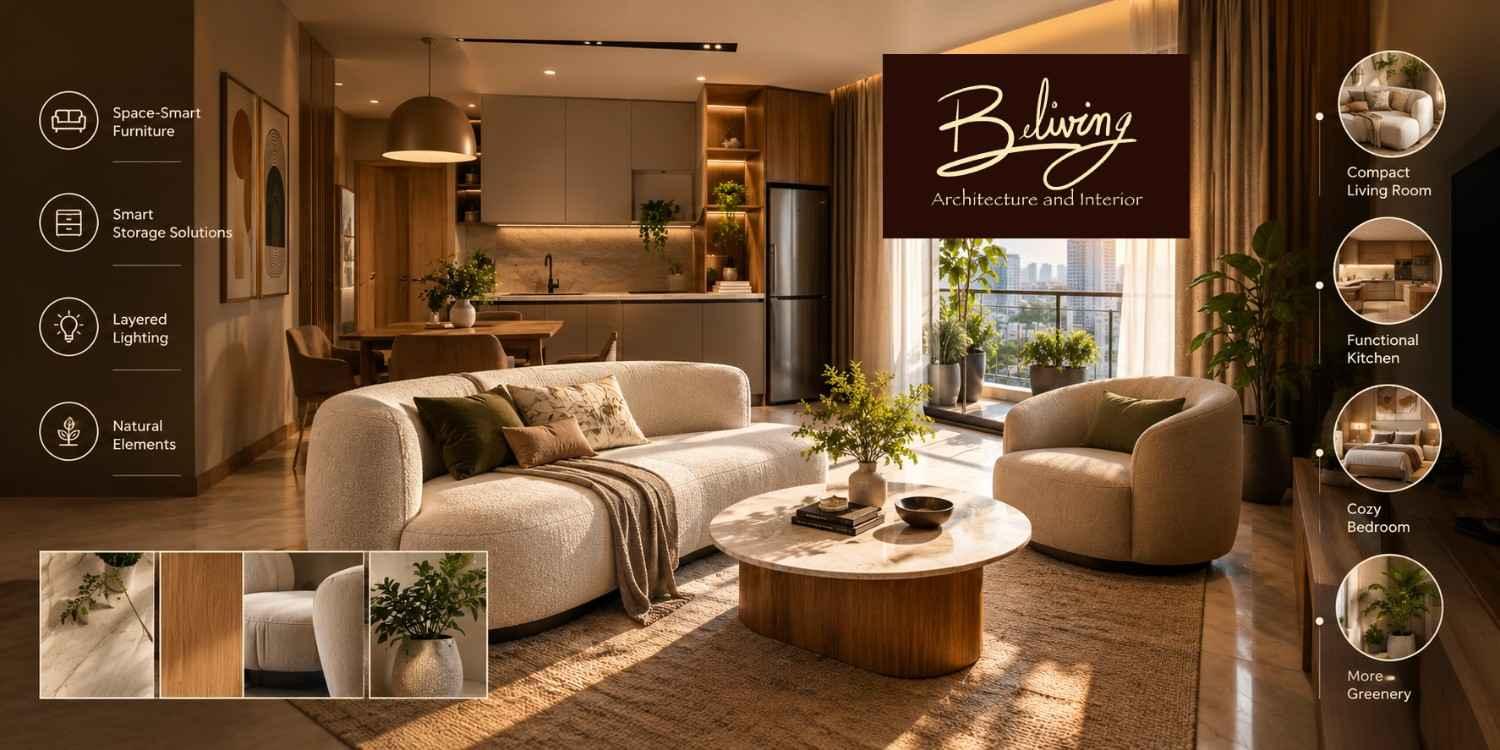
Choosing the right interior designer goes beyond choosing good-looking furniture or high-quality finishes. The Best Interior Designers in South Delhi need to know about your lifestyle, space, material needs, functionality, and overall budget before suggesting a design. Whether you're refurbishing a builder floor in Greater Kailash, designing an apartment in Saket, or making a luxurious home in Vasant Vihar, knowing about interior design cost will help you make better choices and avoid surprise bills.
It will be most helpful to divide your interior project into costs of design, furniture, carpentry, electrical works, lighting, and finishings. A scope of work will help in comparison of quotations. Beliving Interior focuses on interior designing through preferences, functionality, and aesthetics in everyday life.
This article discusses what is typically involved in interior design cost in Delhi NCR, how your budget will be affected, interior design process, and questions that need to be asked while engaging an expert. It also includes information regarding office or commercial interior projects.
1. What Determines Interior Design Costs in South Delhi?
South Delhi properties vary considerably in size, age, layout, and construction quality. A compact apartment requiring modular furniture will usually need a different budget from an independent house with custom wardrobes, decorative ceilings, upgraded bathrooms, and bespoke furniture.
The following are indicative planning estimates for 2026, not fixed quotations. Actual costs depend on the site inspection, material specifications, scope of work, and contractor pricing. Published Delhi NCR estimates also show substantial variation between basic, mid-range, and premium interiors.
Approximate residential interior design costs
- Basic interiors: ₹800–₹1,100 per sq. ft. Suitable for straightforward layouts, standard laminates, essential storage, basic lighting, and limited customisation.
- Mid-range interiors: ₹1,100–₹1,800 per sq. ft. Often suitable for homeowners seeking coordinated furniture, improved storage, modular kitchen solutions, and more considered lighting.
- Premium interiors: ₹1,800–₹2,500+ per sq. ft. May include upgraded finishes, customised cabinetry, feature walls, designer lighting, and more detailed carpentry.
- Luxury interiors: ₹2,500–₹4,000+ per sq. ft. Can involve bespoke furniture, premium veneers or stone, complex detailing, specialised lighting, and high levels of customisation.
These ranges are broad budgeting references rather than guaranteed turnkey rates. Confirm whether a quotation covers the entire home or only selected rooms, and whether taxes, appliances, loose furniture, and civil work are included.
How much could a 2 BHK or 3 BHK cost?
For an initial estimate, a 2 BHK apartment might require approximately ₹6–12 lakh for a moderate interior package, while a 3 BHK could require ₹9–18 lakh. Premium specifications and extensive custom work can increase these figures significantly. Published South Delhi estimates also place some modular 2 BHK packages at ₹6–7 lakh and premium or larger projects considerably higher.
These figures should not be treated as fixed package prices. A home with an existing usable kitchen, wardrobes, and flooring may cost less to update than a newly purchased property requiring complete interior work.
2. What Services Should Your Interior Designer Provide?
A successful interior project starts with understanding how the property will be used. The design should reflect your routines, storage needs, family size, preferred style, and maintenance expectations.
Beliving Interior focuses on creating spaces that balance appearance with practical use. When assessing a design proposal, look for a clearly defined service scope rather than relying only on attractive 3D renders.
Typical services may include:
- Space planning and furniture layouts.
- Modular kitchen and wardrobe planning.
- Colour palettes, lighting design, and material selection.
- Custom furniture and storage solutions.
- Ceiling, flooring, wall finishes, and decorative detailing.
- Technical drawings, contractor coordination, and execution supervision, where included in the agreement.
Before appointing a firm, verify which of these services it actually provides. Design consultancy, material procurement, and complete turnkey execution are different service models, and the price will reflect those differences.
3. How to Choose the Best Interior Designers in South Delhi
A dependable interior designer must be able not only to describe the appearance of the room but also its functionality, costing, and delivery process. While analyzing the Best Interior Designers in South Delhi one should pay attention to clear space planning, accurate costing, proper choice of materials, realistic schedule, and successful coordination of the project to make sure that the resulting room is what you expected.
First of all, it is necessary to analyze the projects that have something in common with yours. Renovation of an apartment, builder floor, and a luxurious villa need a different approach to circulation, storage, lighting, and coordination with the existing services of the building.
Ask for samples of the projects, quotation, material specification, and realistic schedule. In addition, it is important to understand who will be responsible for the site management, substitution of materials, and other changes influencing the cost of the project.
Evaluate the design before approving the budget
A visually impressive proposal can still create problems if it overlooks daily requirements. For example, a family in Greater Kailash might need concealed storage, a practical dining arrangement, and better circulation rather than additional decorative panelling.
Similarly, a compact Saket apartment may benefit more from full-height wardrobes and multifunctional furniture than from expensive finishes that reduce the available space.
Beliving Interior can be considered as part of your evaluation when comparing design approaches. The important step is to match the proposed services, project experience, and execution responsibilities with your specific needs.
4. The Step-by-Step Interior Design Process
A structured process helps prevent unnecessary revisions, delayed purchases, and budget overruns. Although the sequence varies by project, these stages provide a practical framework for most residential interiors.
Step 1: Consultation and site assessment
Discuss your lifestyle, family requirements, preferred design style, timeline, and maximum budget. The designer should inspect the property, measure rooms, assess existing finishes, and identify limitations such as awkward corners, plumbing locations, or insufficient natural light.
For older properties in Defence Colony or Green Park, the assessment may also need to consider existing electrical installations, dampness, flooring conditions, and the feasibility of changing room layouts.
Step 2: Space planning and design concepts
The next stage translates your requirements into a workable layout. Furniture positions, storage locations, movement paths, lighting, and room functions should be established before decorative details are finalised.
A good layout helps you identify practical problems early. For example, a wardrobe door should not obstruct the bed, and kitchen drawers should open without colliding with nearby appliances.
Step 3: Material selection and cost estimation
Once the concept is approved, compare materials according to durability, appearance, maintenance, and price. Laminate, acrylic, veneer, and painted finishes each have different cost implications.
Beliving Interior's design planning should be assessed against a written scope that identifies the proposed materials, quantities, finishes, and items excluded from the estimate. This makes it easier to compare competing proposals on an equivalent basis.
Step 4: Drawings, procurement, and execution
Detailed drawings help contractors understand dimensions, electrical points, ceiling levels, cabinetry, and installation requirements. After approvals, materials can be ordered and work scheduled in a logical sequence.
Civil work, electrical changes, ceiling installation, carpentry, painting, and fixture installation must be coordinated carefully. Starting work before measurements and specifications are final can lead to rework and wasted materials.
Step 5: Inspection and handover
Before accepting the completed project, inspect cabinet alignment, drawer operation, electrical fittings, paint finishes, plumbing connections, and the quality of installed hardware. Record incomplete work and agree on a correction schedule.
Request warranties, product documentation, and maintenance instructions where applicable. A proper handover should leave you with a clear understanding of what has been installed and whom to contact if an issue arises.
5. How to Budget for Office and Commercial Interiors
Houses and office spaces have different considerations. Houses cater to comfort, personal likes, storage, and ambiance. Offices need to provide for employee movement, technology, acoustics, visitor access, and operational aspects.
In case of companies evaluating Office Interior Designers in Gurgaon the first step in budget planning would be the number of employees, number of workstations, meeting rooms, cabins, storage needs, and the state of the rented premises.
Similarly, all offices in Delhi NCR follow the same rule, but there could be additional aspects like air conditioning, data cabling, fire safety, landlord approvals, and other considerations in a commercial venture.
Indicative commercial interior costs
Recent Delhi NCR office fit-out guides indicate approximate costs of ₹800–₹1,200 per sq. ft. for basic projects, ₹1,200–₹2,500 for many mid-range specifications, and ₹2,500–₹5,000 or more for premium fit-outs. The precise scope matters: some estimates include furniture and building services, while others exclude important items.
A small office with standard workstations and limited partitions will have a different cost profile from a client-facing office with custom reception furniture, acoustic meeting rooms, branded finishes, and advanced lighting.
For businesses considering commercial interior design, compare quotations based on the same floor area, furniture quantities, material grades, electrical scope, and exclusions. A lower headline rate is not necessarily cheaper if essential work is billed separately.
How to manage a commercial interior budget
- Define the required number of seats, cabins, meeting rooms, and shared facilities before approving the layout.
- Separate essential infrastructure from optional upgrades such as decorative walls or premium finishes.
- Confirm the responsibilities for HVAC, electrical installations, IT infrastructure, fire safety, and building permissions.
- Keep a contingency allowance for unforeseen site conditions and approved changes.
Beliving Interior's suitability for a workplace project should be evaluated through its proposed commercial scope, relevant portfolio, and ability to coordinate design and execution. Confirm that the chosen service covers your operational requirements rather than assuming a residential design package will meet commercial needs.
6. Hidden Costs That Can Increase Your Interior Budget
One of the most common budgeting mistakes is focusing on furniture and finishes while overlooking the work required to prepare the property. These additional expenses can become significant when the original estimate does not define the scope clearly.
Common cost variables include electrical rewiring, plumbing changes, damaged flooring, wall repairs, waterproofing, specialised hardware, transportation, debris removal, and installation charges. GST and professional fees may also be additional, depending on the contract.
Older homes in South Delhi can require repairs that are not visible during the initial consultation. A site inspection and a detailed bill of quantities (BOQ) help identify these risks before execution begins.
Keep a contingency allowance of approximately 10–15% of the planned project budget as a prudent starting point. This is a planning recommendation, not a fixed industry charge; the appropriate amount depends on the property's condition and the certainty of the specifications.
7. Getting Better Value Without Compromising Design
A carefully thought out interior does not have to incorporate the costliest material in all rooms. The idea is to spend where the cost will be justified by quality, function, and usage.
For instance, high-quality kitchen hardware, practical wardrobe interiors, and task lighting may prove to be more useful than fancy finishing. In commonly used rooms, materials should be chosen with ease of maintenance and repair in mind.
Beliving Interior can assist you in discovering your options, as long as the final proposal includes a clear description of deliverables and costs. Be sure to ask for alternative options before approving the specification.
When choosing among Commercial Interior Designers in Delhi apply the same value-based approach to your business premises. Start with an efficient layout, adequate lighting, correct acoustics, durable surfaces, and a reliable electricity infrastructure before splurging on decoration.
For both domestic and commercial projects, the best safeguard against financial risks is to finalize all drawings, materials, quantities, payment schedule, and change order process prior to the start of works.
A Simple Client–Designer Conversation
Client: I wish to have a fashionable house but am on a budget.
Designer: Beliving Interior can assist you in exploring functional design ideas and appropriate material choices.
Client: What is the method for evaluating the options that exist?
Designer: Shortlist the Best Interior Designers in South Delhi based on scope of work, costing, and execution process.
Summary
Interior design costs depend on much more than a property's size. Material quality, custom furniture, existing site conditions, technical requirements, and execution responsibilities all influence the final investment. A clear plan helps you distinguish essential work from optional upgrades and make decisions before they become expensive to change.
When evaluating Beliving Interior or other design professionals, focus on relevant project experience, transparent quotations, detailed specifications, and dependable communication. Whether you are updating a South Delhi apartment, furnishing an independent home, or planning a commercial workspace, a well-defined scope is the foundation of a successful project.
The aim is to create an interior that suits your lifestyle or business, uses space efficiently, and delivers lasting value within a realistic budget.
Some Important Questions
1. How much do interior designers charge in South Delhi?
Costs vary according to the size of the property, material quality, customisation, and execution scope. For initial planning, basic interiors may cost around ₹800–₹1,100 per sq. ft., while premium projects may exceed ₹2,500 per sq. ft. Request an itemised quotation before making a decision.
2. How much does it cost to design a 3 BHK in South Delhi?
A moderate 3 BHK interior project may require approximately ₹9–18 lakh, although extensive carpentry, premium materials, structural changes, and luxury finishes can increase the total. The final budget should be based on actual measurements and a confirmed scope of work.
3. What should I check before hiring an interior designer?
Review completed projects, design deliverables, material specifications, payment milestones, execution responsibilities, project timelines, and warranty terms. Ask whether the quotation includes procurement, installation, taxes, and site supervision.
4. How long does a home interior project take?
A straightforward apartment project may take approximately 8–16 weeks after design approvals, while larger homes or extensive renovations can take longer. Procurement delays, site repairs, and changes to approved drawings can affect the schedule.
5. How much do office interiors cost in Gurgaon?
Indicative Delhi NCR office fit-out costs range from approximately ₹800–₹1,200 per sq. ft. for basic specifications to ₹2,500–₹5,000 or more for premium projects. Costs depend on furniture, electrical work, HVAC, partitions, finishes, and the condition of the premises.
6. What is the difference between design-only and turnkey interior services?
Design-only services generally cover planning, design concepts, drawings, and specified consultancy deliverables. Turnkey services typically combine design with procurement, coordination, and execution under an agreed scope. Always confirm inclusions and exclusions in writing.
About us -
Official Mobile No. - +91 9871678798

 English
 Arabic
 French
 Spanish
 Portuguese
 Deutsch
 Turkish
 Dutch
Dutch
 Italiano
 Romaian
 Portuguese (Brazil)
 Greek
Greek