
What Should Buyers Check in Automation Machinery And Equipment
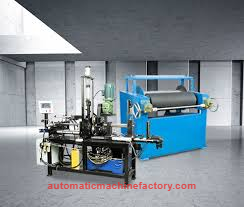
Understanding the Role of Modern Equipment
Manufacturing environments involve many repetitive operations, including cutting, bending, forming, assembly, feeding, and material handling. When these processes depend entirely on manual work, consistency can become difficult to maintain as production requirements change.Automation Machinery And Equipment provides a way to organize such operations through programmed movement, controlled processing, and coordinated mechanical functions. At automaticmachinefactory, equipment is developed for metal processing, industrial automation, wire processing, brush manufacturing, and related production applications. With so many machine types available, which features should a manufacturer examine before selecting suitable equipment?
The answer should begin with the production task itself. A machine designed for wire bending has different requirements from equipment intended for cutting, stamping, brushing, or assembly. The ideal configuration should match the material, product structure, working sequence, available factory space, and expected operating pattern. A practical machine is not simply a collection of mechanical components. It should form part of a production process that operators can understand, adjust, inspect, and maintain.
Precision and Control
Precision control is one of the first characteristics worth examining. Manufacturing equipment often needs to repeat the same movement many times while maintaining a consistent position, cutting length, bending shape, or processing sequence. A suitable control system allows operators to set working parameters and manage the machine according to the requirements of the product.
Sensors, programmable controls, mechanical positioning systems, and feedback functions can contribute to controlled operation. These features are particularly useful when the production process contains several connected actions. For example, an automatic wire cutting system may need to feed material, position it, cut it, and remove the finished section before beginning the next cycle. TARUN's automatic wire cutting equipment uses a programmable control panel for setting wire length and related parameters, with automatic ejection after processing.
Control should also be understandable for the operator. A complicated interface can create unnecessary difficulty during setup or adjustment. Clear parameter settings and practical operating procedures can help production staff manage routine tasks without constantly relying on technical intervention.
Integration and Flexibility
A manufacturing machine rarely works in complete isolation. It may need to connect with feeding equipment, conveyors, inspection systems, tooling, or another processing station. Integration capability is therefore an important consideration when evaluating industrial machinery.
An integrated system can help different production stages communicate through a logical sequence. Material enters the process, receives the required treatment, and then moves toward the next operation. This arrangement can reduce unnecessary handling and support a smoother workflow.
Flexibility is also valuable when a factory serves several product specifications. Adjustable tooling, programmable settings, interchangeable components, and adaptable feeding systems can allow equipment to handle different production requirements. The exact level of flexibility depends on the machine type, so buyers should discuss actual products with the manufacturer instead of assuming that one configuration will suit every application.
TARUN's Automation Machinery Division includes equipment such as wire bending machines, curved wire trimming machines, automatic wire cutting machines, brush segment machines, and other specialized systems. This range allows production planning to be based on the actual processing stage rather than a single general-purpose machine.
Customization for Specific Applications
Standard equipment can be suitable for common production tasks, but some factories require a configuration based on a particular drawing, sample, material, or workflow. Customization can become important when the required product differs from a conventional specification.
Before discussing customization, manufacturers should prepare useful technical information. Product drawings, material characteristics, dimensions, processing steps, expected working conditions, and installation limitations can help an equipment supplier understand the application. Samples can also be useful when the finished structure is difficult to explain through written specifications alone.
TARUN states that its R&D team can develop and produce various metal processing machinery and equipment according to drawings or samples supplied by customers. The company also identifies customization as one of its core capabilities.
This approach is relevant for manufacturers that need specialized wire processing, brush production, or metalworking equipment. Instead of selecting a machine based only on its name, the buyer can discuss the complete process and identify which mechanical functions are actually required.
Stability, Safety, and Maintenance
A machine used in an industrial environment should also be designed with stable operation and practical maintenance in mind. Mechanical structures, drive components, electrical systems, pneumatic elements, and tooling all influence daily performance. Regular inspection can help identify wear before it develops into an unexpected production interruption.
Safety is another essential consideration. Guards, emergency stops, suitable control logic, protected moving parts, and clear operating procedures can help reduce exposure to mechanical hazards. The appropriate safety arrangement depends on the machine and application, so buyers should review the manufacturer's safety information before installation and operation.
Maintenance access should not be overlooked either. Components that require cleaning, lubrication, adjustment, or replacement should be reasonably accessible. A machine that is difficult to inspect may create unnecessary maintenance challenges, particularly in a busy factory environment.
TARUN's published material emphasizes production equipment, technical capability, customization, and quality control as important parts of its manufacturing approach. The company also states that it has testing equipment and a testing laboratory for product quality management.
Matching the Machine to the Factory
Choosing industrial equipment is not simply about finding a machine with a long list of functions. A factory should consider how the equipment will fit into the existing workflow. Floor space, power supply, material movement, operator access, tooling storage, maintenance areas, and downstream processes can all affect installation.
Production goals should also be considered before placing an order. A machine intended for occasional work may have different requirements from equipment that operates throughout a regular production shift. Likewise, a company planning to add new product varieties may value adjustable settings and modular tooling.
Supplier communication can make this evaluation easier. A manufacturer can provide drawings, product samples, material information, and details about the current production process. The equipment supplier can then assess the working sequence and suggest a configuration that fits the actual application.
For overseas buyers, shipment capability and communication are also practical factors. TARUN is located in Yongkang, Zhejiang, and its website states that the company works with domestic and overseas agents and retailers. Its location also provides convenient access to export transportation.
Building a Practical Automation Solution
The right equipment should support a production process that is precise, understandable, adaptable, and maintainable. Control functions help operators manage processing parameters, integration allows individual stages to work together, customization addresses specialized products, while safety and maintenance features support routine factory operation.
Manufacturers evaluating equipment should therefore look beyond basic machine specifications. They can begin by defining the product, material, processing sequence, working environment, installation conditions, and expected production pattern. Once these requirements are clear, discussions with an equipment supplier become much more focused.
For companies researching Automation Machinery And Equipment, the range available through https://www.automaticmachinefactory.com/product offers a practical starting point for exploring metal processing machinery, industrial automation systems, wire processing equipment, brush production machinery, and related solutions. TARUN can also discuss drawings, samples, production requirements, and customized configurations, giving manufacturers a direct way to evaluate equipment according to their actual factory needs.

 English
 Arabic
 French
 Spanish
 Portuguese
 Deutsch
 Turkish
 Dutch
Dutch
 Russian
 Romaian
 Portuguese (Brazil)
 Greek
Greek