
The Hidden Technology Behind Gold Backed Digital Assets
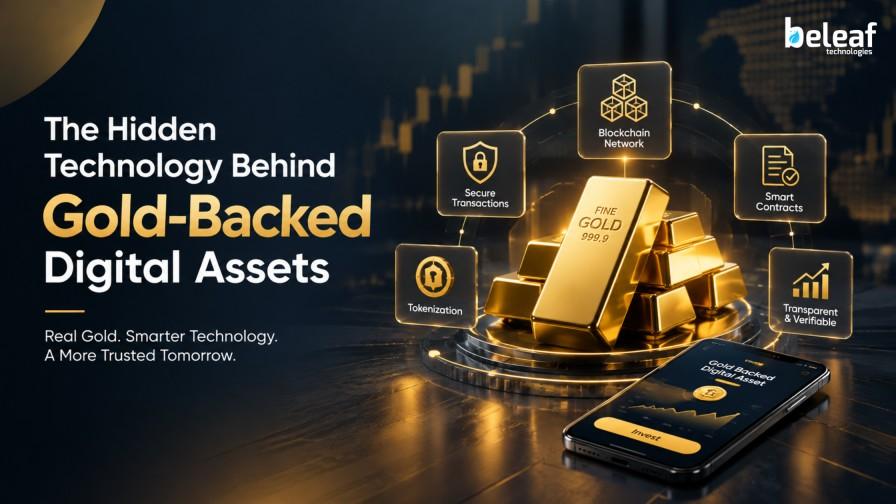
Gold has always been considered a valuable physical asset, but the way people represent, manage, and transfer that value is changing. Gold backed digital assets connect physical gold reserves with blockchain based infrastructure, creating a digital layer around a traditional asset. Behind this process is a combination of asset verification, custody, smart contracts, blockchain networks, and secure transaction systems.
For businesses exploring Gold Tokenization Development, understanding these underlying technologies is important because successful tokenization involves much more than simply creating a digital token.
Connecting Physical Gold With Digital Assets
The foundation of a gold-backed digital asset is the relationship between the physical gold and its digital representation. A platform needs a clearly defined process for verifying the underlying gold, recording relevant asset information, and determining what each token represents.
Depending on the business model, a token may represent a specific quantity of gold or a defined interest in an underlying reserve. This connection needs to be established clearly before tokens are issued.
This makes asset verification one of the first important layers in Gold Tokenization Development.
Asset Verification and Secure Custody
Tokenization depends heavily on trust in the underlying asset. If digital tokens represent physical gold, businesses need appropriate systems for verifying and managing those reserves.
Custody infrastructure can include secure storage arrangements, inventory records, ownership documentation, audits, and reporting mechanisms. These processes help maintain a connection between the physical asset and the digital representation.
The technology platform can provide digital records and monitoring capabilities, but the physical gold still requires proper custody and management outside the blockchain environment.
Blockchain Provides the Digital Record
Blockchain technology forms another major layer of gold tokenization. It can provide a distributed record for token transactions, ownership changes, and other activities supported by the platform.
Instead of treating the blockchain as the entire solution, it is better viewed as one component within a larger architecture. The blockchain network needs to work alongside user accounts, custody systems, APIs, wallets, smart contracts, and administrative tools.
Choosing the appropriate blockchain can therefore be an important technical decision when planning Gold Tokenization Development.
Smart Contracts Manage Token Logic
Smart contracts can automate predefined actions associated with digital tokens. Depending on the platform design, they may support token issuance, transfers, redemption processes, or supply management.
For example, when an authorized process confirms that additional gold has been allocated to the platform, the associated token supply may be managed according to predefined rules.
Smart contracts can reduce manual intervention for supported processes, but they must be carefully designed, tested, and audited. They should also operate within the wider legal and operational framework of the platform.
Wallets and Transaction Infrastructure
Users need a secure way to hold and transfer tokenized gold. This makes wallet infrastructure another important component.
A gold tokenization platform may integrate custodial or non custodial wallets depending on its business model. Transaction management should also consider authentication, authorization, transaction monitoring, and security controls.
For platforms supporting trading or transfers, APIs can connect blockchain infrastructure with user interfaces, payment systems, market services, and other external applications.
Transparency Through Connected Systems
One of the major advantages of digital asset infrastructure is the ability to connect different records and workflows.
A well-designed tokenization platform can bring together:
-
Gold reserve information
-
Custody records
-
Token supply
-
Blockchain transactions
-
User ownership records
-
Verification processes
-
Transaction history
-
Administrative reporting
This connected approach can make it easier for authorized participants to monitor the relationship between physical assets and digital tokens.
However, blockchain alone does not automatically guarantee that physical reserves are accurate. The complete system still depends on reliable custody, verification, reporting, and governance processes.
Security Is a Core Requirement
Security needs to be considered across every layer of a gold tokenization platform. Smart contracts, wallets, APIs, user accounts, databases, and administrative dashboards can all require different security controls.
Common considerations include secure authentication, access management, encryption, transaction monitoring, smart contract testing, API protection, and regular security assessments.
A strong security architecture is particularly important because the platform connects valuable physical assets with digital transactions.
Where Gold Tokenization Development Fits
Gold Tokenization Development brings these different technologies and operational processes together into one platform. The objective is not simply to create a gold-backed token but to build an infrastructure that can manage the complete lifecycle of that digital asset.
This may include asset onboarding, verification, token creation, wallet management, transfers, redemption workflows, reporting, and administrative controls.
The exact architecture depends on the business model, target users, blockchain network, custody structure, and regulatory requirements.
The Technology Behind the Digital Gold Economy
Gold backed digital assets demonstrate how traditional assets can interact with modern financial technology. The visible token may appear simple to users, but several systems operate behind it to support ownership records, asset backing, transactions, and security.
As businesses explore tokenized real-world assets, understanding these hidden technical layers becomes increasingly important. A carefully planned Gold Tokenization Development approach can bring together blockchain, smart contracts, custody, verification, and digital asset management into a structured ecosystem.
The future of tokenized gold will therefore depend not only on the token itself, but on the technology and infrastructure supporting everything behind it.
Let's Talk >> https://www.beleaftechnologies.com/gold-tokenization-development
WhatsApp : +91 8056786622
Reach Us : https://www.beleaftechnologies.com/contact-us
Telegram: https://telegram.me/BeleafSoftTech

 English
 Arabic
 French
 Spanish
 Portuguese
 Turkish
 Dutch
Dutch
 Italiano
 Russian
 Romaian
 Portuguese (Brazil)
 Greek
Greek