
What Causes Content Fatigue in Visual Social Apps, and How Can Startups Prevent It?
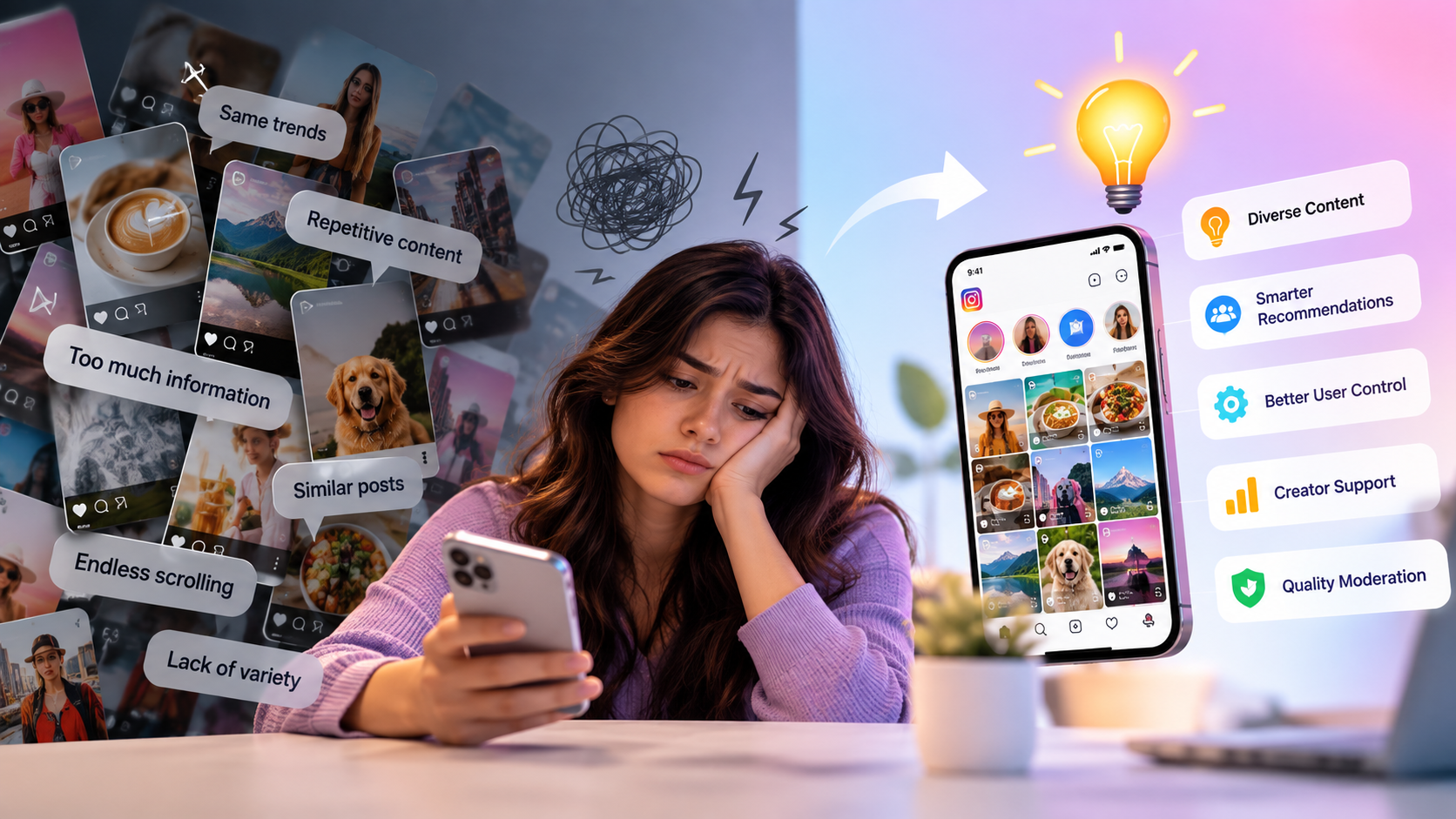
Visual social apps depend heavily on a continuous flow of photos, short videos, Stories, carousels, live streams, creator updates, and recommended content. This constant supply gives users reasons to return, but it can also create a serious engagement problem: content fatigue.
Content fatigue happens when users begin to feel that their feeds are repetitive, overwhelming, predictable, or simply too demanding to consume. Instead of discovering something interesting, users may feel that they are seeing the same topics, formats, creators, trends, and recommendations repeatedly.
For startups developing a visual social platform, content fatigue is more than a user experience issue. It can affect session duration, content interactions, creator visibility, retention, notification response rates, and long-term community growth.
The challenge is therefore not simply publishing more content. Startups need to create a content ecosystem where users consistently feel that there is something relevant, fresh, and valuable to discover.
Understanding the causes of content fatigue can help founders design healthier feeds, smarter recommendation systems, better creator tools, and more sustainable engagement strategies.
What Is Content Fatigue in a Visual Social App?
Content fatigue describes the point where users become less interested in consuming content because the experience feels repetitive or overloaded.
A user may still open the app regularly, but their behavior can begin to change. They might scroll faster, skip more videos, ignore recommended posts, stop interacting with creators, or leave the platform sooner.
Eventually, they may reduce how often they open the app.
This matters because visual social platforms rely on a cycle:
Creators publish content → users discover content → users interact → creators receive feedback → creators publish again.
When users lose interest in the feed, the entire cycle becomes weaker.
A well-designed Instagram clone therefore needs more than publishing and engagement functionality. It also needs mechanisms that help users discover relevant content without making the experience feel endless, repetitive, or overwhelming.
Why Does Content Fatigue Happen?
There is rarely one single reason. Content fatigue usually develops because several product, recommendation, and community problems appear at the same time.
Repetitive Content Formats
One major cause is excessive repetition.
If nearly every creator follows the same trending format, users may quickly begin seeing similar videos, captions, transitions, sounds, challenges, and visual styles.
Trends can initially increase participation because creators have a familiar structure to follow. However, too much repetition can make a feed predictable.
For example, if a user watches one travel Reel, the recommendation system might begin showing dozens of similar travel videos.
Personalization has now become repetition.
Instead of asking only, "What content does this user like?" the platform should also consider, "How much similar content has this user already seen?"
That distinction can significantly improve feed quality.
Over-Personalized Recommendation Systems
Personalized feeds are essential for visual social apps, but excessive personalization can create a narrow content bubble.
Suppose a user interacts with fitness content several times. A recommendation engine may start prioritizing workouts, nutrition videos, gym creators, motivational clips, and fitness products.
Initially, this is relevant.
Eventually, however, the user may become tired of seeing the same category repeatedly.
Recommendation systems should therefore balance relevance with discovery.
Useful ranking signals can include:
-
Recent engagement
-
Creator affinity
-
Content category
-
Viewing duration
-
Saves and shares
-
Content freshness
-
Topic diversity
-
Negative feedback
-
Repeated exposure
-
User exploration behavior
The objective should not be maximum repetition of proven interests. It should be a healthy mixture of familiar and unexpected content.
Too Much Content Can Become a Problem
Content supply is important for a social platform, but higher volume does not automatically create better engagement.
Endless Scrolling Can Become Mentally Exhausting
Infinite feeds remove natural stopping points.
Users can continuously swipe through hundreds of posts without making a conscious decision to continue. While this may initially increase session duration, it can also make the experience feel exhausting.
Eventually, users may begin associating the app with passive consumption rather than meaningful discovery.
Startups should therefore measure more than time spent.
A long session where someone rapidly skips through irrelevant content may be less valuable than a shorter session where the user saves three posts, follows a creator, and sends content to a friend.
Quality of engagement should matter alongside quantity.
Too Many Notifications Create Additional Pressure
Content fatigue does not begin only inside the feed.
Notifications can also create fatigue.
If users constantly receive alerts such as:
"New post from..."
"Someone went live."
"You may like..."
"New Reel available."
"Your friend added a Story."
the platform begins competing aggressively for attention.
Initially, these notifications may increase return sessions. Over time, users may disable notifications entirely.
Startups should allow users to control notification frequency and categories.
Miracuves highlights notification preferences and moderation as important components of social platform design, alongside feeds, messaging, creator tools, and media management.
Poor Content Diversity Can Make Feeds Feel Identical
Content diversity is one of the strongest defenses against fatigue.
The Same Creators Appear Too Frequently
A recommendation engine may identify a group of creators that consistently generate engagement for a user.
The easy solution is to keep showing those creators.
However, this creates another problem: smaller creators become difficult to discover.
Users may start feeling that the platform contains fewer creators than it actually does.
Platforms can introduce controlled exploration where a percentage of recommendations come from accounts outside the user's usual creator network.
This creates discovery while still maintaining relevance.
The Same Topics Dominate the Feed
A similar issue occurs with topics.
If one trend becomes extremely popular, ranking algorithms may begin promoting it heavily because it generates strong engagement across the platform.
Soon, nearly every user sees variations of the same trend.
Startups should consider content saturation when ranking posts.
Once a topic has been shown repeatedly, the ranking system could gradually reduce its exposure and introduce related but different categories.
Lack of User Control Makes Fatigue Worse
Users often know when they are tired of certain content before the recommendation engine does.
Giving them simple controls can therefore improve the experience.
Add "Not Interested" Feedback
A clear "Not Interested" option gives users a direct way to adjust recommendations.
This feedback should affect future ranking rather than simply hiding one individual post.
For example, if someone repeatedly marks a particular topic as uninteresting, the system can reduce that topic's recommendation weight.
Allow Users to Mute Without Unfollowing
Sometimes users do not want to completely disconnect from a creator.
They may simply want to stop seeing that creator's posts temporarily.
Mute functionality creates a useful middle ground.
Users can maintain the social connection while reducing unwanted feed exposure.
This is particularly useful when creators temporarily post heavily about an event, campaign, product, trend, or niche topic.
Give Users More Feed Options
Different users want different levels of algorithmic control.
A visual social app could offer:
-
Recommended feed
-
Following feed
-
Favorites feed
-
Recent posts
-
Topic-based discovery
-
Saved content
-
Creator collections
Providing multiple ways to browse content reduces dependence on one recommendation algorithm.
Creator Repetition Can Also Cause Content Fatigue
The platform is not the only source of repetition.
Creators themselves can unintentionally contribute to fatigue.
Creators Follow the Same Trends
Trending formats encourage participation, but they also make originality more difficult.
If thousands of creators use the same audio, editing style, challenge, caption structure, or hook, users quickly recognize the pattern.
Platforms can prevent this by encouraging broader creative formats instead of rewarding only viral templates.
Discovery tools can highlight emerging formats, niche communities, original series, educational posts, behind-the-scenes content, long-form captions, carousels, and live interactions.
Creators Need Better Performance Signals
Creators often repeat formats because those formats previously generated engagement.
Without useful analytics, they may not realize when audience interest begins declining.
Creator dashboards should provide information such as:
-
Reach trends
-
Watch duration
-
Completion rate
-
Saves
-
Shares
-
Follower growth
-
Content-type performance
-
Audience retention
-
Repeated viewer activity
Strong social media app development should therefore consider creator analytics alongside publishing, messaging, feeds, moderation, and engagement functionality.
When creators understand audience behavior, they can change their content strategy before users become tired of it.
How Can Startups Prevent Content Fatigue?
Preventing fatigue requires coordinated decisions across product design, recommendations, content discovery, creator tools, and community management.
Balance Personalization With Exploration
Recommendation systems should not become too confident about a user's interests.
Users often have broader preferences than their recent engagement suggests.
A person who frequently watches cooking videos may also enjoy travel photography, comedy, technology, fitness, or local content.
The feed should occasionally test different categories.
If the user interacts positively, the recommendation profile becomes more diverse.
If not, the system can adjust again.
This creates a discovery experience rather than a repetitive prediction loop.
Use Content Freshness as a Ranking Signal
Older high-performing content should not permanently dominate feeds.
Freshness can be introduced as part of ranking logic so recently published content receives an opportunity to reach audiences.
This benefits both users and creators.
Users receive newer material, while emerging creators receive opportunities beyond competing against historically viral posts.
Detect Repetition Before Users Notice It
Platforms can measure repeated exposure.
For example, the system could identify when a user has recently seen:
-
Several posts from the same creator
-
Multiple videos using the same audio
-
Many posts about the same trend
-
Similar hashtags
-
Similar visual formats
-
Repeated product recommendations
The recommendation engine could then temporarily reduce similar content.
This creates automatic variety without requiring users to manually adjust every preference.
Improve Content Discovery Beyond the Main Feed
A strong visual social app should not make the home feed responsible for every discovery interaction.
Create Topic-Based Exploration
Users may sometimes want intentional discovery rather than passive recommendations.
Topic pages can organize content around areas such as:
Travel, food, fitness, fashion, technology, photography, entertainment, education, gaming, art, local communities, and hobbies.
Users can enter these spaces when they actively want to explore something different.
Improve Search and Saved Content
Content discovery should also continue after users see a post.
Search, collections, bookmarks, saved posts, creator profiles, hashtags, and categories can help users return to useful content.
When saved content becomes impossible to find, users may eventually stop saving posts altogether.
Creating better retrieval tools increases the long-term value of content beyond the initial feed impression.
Use Multiple Content Formats Carefully
Visual social apps commonly support several publishing formats.
Miracuves' current Instagram-style platform describes posts, carousels, Reels, Stories, live content, direct messaging, creator monetization, and commerce as part of the broader product ecosystem.
Variety can reduce fatigue, but only when formats serve different purposes.
Give Each Format a Clear Role
For example:
Short videos can support quick entertainment and discovery.
Stories can support temporary updates and casual interactions.
Carousels can support deeper educational or visual content.
Live streaming can support real-time conversations.
Photo posts can support highly visual storytelling.
Messaging can support private sharing and relationships.
When every format simply copies the same content, adding more formats does not create real variety.
Startups should think about how each publishing tool changes user behavior.
Use Moderation to Improve Feed Quality
Content fatigue is not always caused by quantity. Low-quality content can create the same result.
Spam, misleading posts, copied content, repeated promotions, engagement bait, duplicate uploads, and irrelevant recommendations can make feeds feel crowded.
A growing platform therefore needs reporting systems, blocking tools, moderation workflows, and administrative controls.
Miracuves' social platform material emphasizes moderation, reporting, user safety, feed decisions, and blocking controls as important parts of operating a social network.
Platforms should use these systems not only for safety but also for maintaining content quality.
Measure Content Fatigue Through User Behavior
Startups cannot improve fatigue if they only measure total users and total views.
They should monitor signals that may indicate declining interest.
Track Feed Engagement Quality
Useful metrics may include:
-
Average session length
-
Scroll depth
-
Skip rate
-
Video completion rate
-
Save rate
-
Share rate
-
Follow rate
-
Hide or mute actions
-
"Not Interested" feedback
-
Notification opt-outs
-
Return frequency
-
Creator diversity viewed per session
A rising number of impressions combined with falling saves, shares, comments, or completion rates may indicate that users are consuming more but enjoying less.
Measure Creator Diversity
Startups should also examine how many different creators users encounter.
If a small group of creators receives most impressions, discovery may become repetitive.
Platforms can experiment with controlled distribution to give emerging creators visibility while measuring whether users interact with the new content.
Build Feed Flexibility From the Beginning
Content fatigue is difficult to solve if the platform's recommendation architecture is rigid.
Startups should design feeds so ranking signals can be adjusted as user behavior changes.
The Instagram clone features offered by Miracuves include multiple publishing formats, engagement functionality, creator tools, privacy controls, commerce features, and administrative capabilities, providing a foundation that can be configured for different social platform models.
For founders, the important point is that feed strategy should remain flexible.
User preferences will evolve.
Creator behavior will evolve.
New content formats will appear.
Trends will change.
A successful social platform needs enough flexibility to respond without redesigning the entire product each time audience behavior changes.
How Startups Can Create a Healthier Content Ecosystem
Preventing content fatigue is ultimately about balancing competing priorities.
The platform needs enough content to feel active, but not so much that users become overwhelmed.
Recommendations need to be personalized, but not so personalized that every post looks identical.
Creators need access to trends, but original content should still have opportunities to gain visibility.
Notifications should encourage users to return, but they should not create pressure.
Feeds should be easy to consume, but users should still have control over what they see.
Startups that manage these trade-offs can build communities where users continue discovering content instead of simply scrolling through it.
Final Thoughts
Content fatigue is one of the less obvious challenges facing visual social platforms. A startup may successfully attract users and creators yet still struggle with retention if its feed becomes repetitive, overwhelming, or predictable.
The solution is not simply producing more content.
Startups should focus on content diversity, recommendation balance, creator discovery, user controls, moderation, feed quality, notification preferences, and meaningful engagement signals.
Giving users the ability to mute unwanted content, explore new topics, provide recommendation feedback, switch feed modes, and rediscover saved posts can make the platform feel more personal without becoming repetitive.
At the same time, creator analytics and flexible discovery systems can encourage a wider range of content instead of pushing every creator toward the same viral formats.
For startups building visual social communities, Miracuves can provide the underlying social platform foundation while allowing businesses to focus on audience positioning, community growth, creator strategy, and differentiated user experiences.
The strongest visual social apps are not necessarily those with the most content. They are the ones that continuously help users discover content worth paying attention to.

 English
 Arabic
 French
 Spanish
 Portuguese
 Deutsch
 Turkish
 Dutch
Dutch
 Italiano
 Romaian
 Portuguese (Brazil)
 Greek
Greek