
What Continuous Duty Does to a Grove Crane, and What to Replace on Time
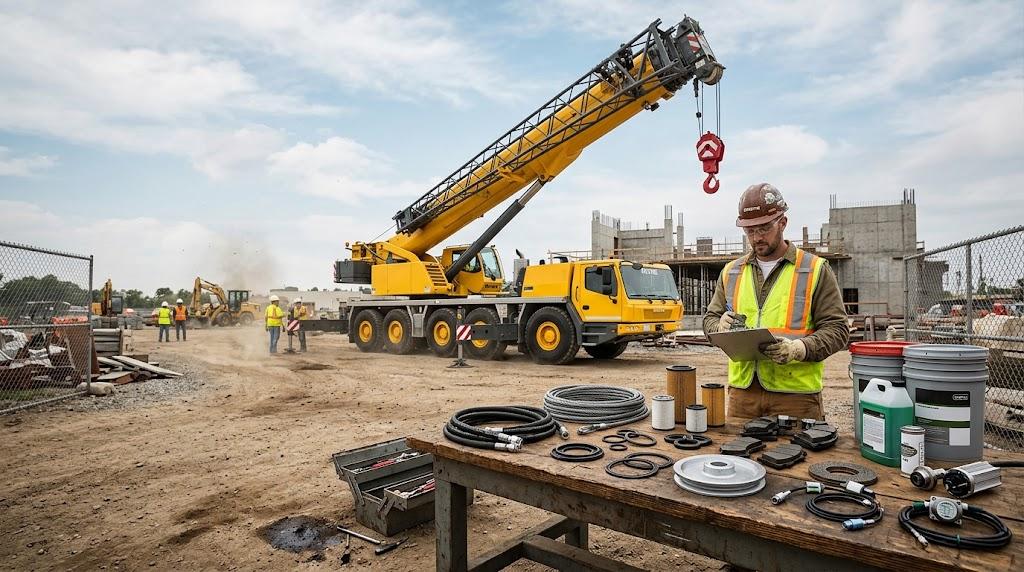
A crane ages by the cycle, not by the calendar. Two units from the same year can wear at very different rates. One works single shifts on prepared ground. The other works double shifts in a dusty yard with heavy picks.
That difference shows up in the components first. Ropes, seals, and friction material absorb whatever the job demands. Give the machine a hard schedule and those items give back early. Give it a light schedule and they last, but they still do not last forever.
What follows maps continuous duty to the parts it damages first. Each section names the wear item, the symptoms, and the sensible replacement window. Adjust the intervals to your real operating hours, not to a generic table.
1. Wire Rope and Rigging Gear
Consider a rope through a normal shift. It takes the weight of the load, the jerk of the pick, and the drag of reeving. Then it sits outside through temperature swings and rain. Grit settles between strands and grinds quietly.
Inspect before each shift for broken wires, kinks, crushed sections, and rust. Internal fatigue runs ahead of surface fraying nearly every time. Set replacement by working hours and by the heaviest lifts logged.
Slings, shackles, and master links follow a comparable curve. Retire anything with stretched eyes or distorted pins immediately. An early swap costs less than a load released mid-air.
2. Hydraulic Hoses and Cylinder Seals
Fluid pressure drives boom lift, extension, and outrigger spread on every cycle. Hoses and seals absorb that pressure alongside heat and vibration. Rubber ages from the inside while the cover still looks sound. Then a line bursts and the shift ends on the spot.
Walk the machine and check for cracks, blisters, and damp fittings. Cylinder weeping usually signals a seal already past its life. Fit new O-rings whenever a joint is opened for service.
Because failure arrives without warning, hoses and seal kits belong on the service truck. These are the kind of Grove parts that turn a two-hour delay into a same-day fix when they are already on hand.
3. Filtration for Hydraulic, Air, and Fuel Systems
Filters do quiet, essential work every hour the engine runs. They capture grit, water, and metal before those particles circulate further. A blocked filter restricts flow and starves the engine or pump. Output drops, and heat builds where lubrication thins.
Change hydraulic filters whenever the fluid is serviced. Air and fuel filters follow the intervals printed in the manual. Shortening those intervals shortens engine life faster than most owners realize.
Log the date, the part number, and the machine hours at every change. Records convert filter work from guesswork into a scheduled task. Match media specifications exactly, because quality varies widely between suppliers.
4. Service, Park, and Swing Brakes
Stopping carries as much consequence as lifting on a busy site. Service brakes, park brakes, and swing brakes each absorb heavy rotating mass. Friction material thins slightly with every application across a shift. Longer stopping distances and squealing surface as the earliest hints.
Fit new pads, shoes, and discs before they reach the backing plate. Letting friction run to metal damages drums and rotors behind it. Those larger assemblies cost more and take longer to source.
Inspect lines, actuators, and return springs while the assembly is apart. A small leak can imitate worn friction material convincingly. Correct the underlying fault before fitting new linings.
Rotors, drums, pads, and shoes are widely available crane parts, so the delay is usually scheduling rather than supply. Booking the work early is the smarter constraint.
5. Hoist Brake Bands and Clutch Plates
Heat and torque concentrate in the hoist above any other assembly. It raises, holds, and lowers every load placed during the shift. Bands and clutch plates slip by design to control a descending load. Each deliberate slip removes a thin layer of lining.
Watch for a load that creeps downward without a command. That behavior means friction material has thinned beyond its working range. Treat it as urgent and arrange the teardown at once.
Bands and plates are among the Grove parts most dealers stock in common sizes. While the assembly is open, inspect drums for scoring and springs for tension. Uneven wear hints at problems deeper in the gearing.
6. Slewing Bearing and Swing Ring
Rotation under load falls on one large bearing. Boom weight, counterweight, and the suspended load all route through it. Thrust forces and tipping moments concentrate there during each pick. Lubrication and inspection remain permanent items on any service plan.
This bearing outlives hoses and filters by years, yet it still wears. Grinding noise or visible play during rotation signals advancing damage. Ease the duty and plan a teardown before the condition worsens.
Swing ring replacement brings extended downtime and heavy handling requirements. Keep inspection notes, torque figures, and grease logs together in one file. Patterns across months tell more than a single measurement ever will.
Seals and shims for this assembly are standard crane parts to order before opening the machine. Staging them prevents the crane from sitting half apart while a shipment moves.
7. Hook Blocks, Sheaves, and Hooks
The hook block is the last connection between crane and load. Sheaves inside guide the rope through every lift and hold. Groove wear develops where the rope crosses the same contact points. A worn groove begins cutting the rope beneath it.
Examine the hook for stretch, twist, or bending near the throat. Test the safety latch for spring tension and free movement. A throat that has opened shows the yield point was passed.
Record measurements at each inspection and compare them season to season. Numbers expose wear that a quick look will always conceal. Swap blocks and sheaves once readings move outside tolerance.
Hook blocks, sheaves, and complete assemblies are dependable Grove parts to keep in a small inventory. Replacement is straightforward compared with a rope lost mid-lift.
8. Tires and Outrigger Support
Two separate duties fall on the tires of a mobile crane. They carry the machine between lifting positions on the road. They also hold static weight while the boom works overhead. Pressure moves with temperature and duty, so check it often.
Cuts, bulges, and uneven tread wear each justify a replacement decision. Outrigger pads take the reaction load during every setup. Steel pads bend under concentrated loading. Composite pads splinter, crack, or separate at the edges.
Inspect pads before each lift and retire anything damaged. Size pad area to suit ground conditions and the load chart. Timber or matting spreads pressure over soft or saturated soil.
9. Sensors, Switches, and LMI Electronics
Electronics enforce safe working limits on every modern crane. Load moment indicators read sensors and warn before stability is lost. Limit switches stop the boom at full extension and near the drum. Rain, mud, and vibration attack this hardware all shift long.
Corroded connectors and stuck switches explain most reported faults. When the LMI shows false values, begin at the sensor circuit. Check wiring, grounds, and calibration before blaming the display.
Spare harnesses and switches are among the Grove parts worth keeping in the shop. Swap them during planned shutdowns so the safety system stays current. Log each replacement to keep calibration records complete and traceable.
10. Hydraulic Oil, Engine Oil, and Coolant
Three duties fall to the fluids inside every working machine. They lubricate, transmit force, and carry heat away from hot areas. Oil and coolant both decline with time and accumulated hours. Additives break down and moisture enters through seals and reservoirs.
Contaminated oil quietly erodes pumps, valves, and precision surfaces. The damage stays hidden until an expensive failure finally surfaces. Follow the manual's intervals and shorten them under severe duty.
Send a used sample to a laboratory at each drain. The report names which internal assemblies are shedding material. Use only specified grades and keep stored fluid sealed and labeled.
Clean handling during transfer matters as much as the fluid itself. Pumps, seals, and coolers rank among the costliest crane parts to replace after lubrication failures.
Matching the Plan to the Machine
Continuous duty asks more of every component than light duty ever will. The outcome depends less on luck than on how wear is managed. Unplanned failures cost shifts, revenue, and margin for error. Planned replacements keep those costs visible and predictable.
Turn the ten areas above into a checklist for the next service window. Keep common Grove parts on a clean, dry rack where they will not degrade. Basic storage discipline stops new items from aging before installation.
Establish a dependable source for rigging gear and specialist fittings early. A known supplier shortens the wait when a machine is already idle. Compare lead times and documentation before committing to one.
Follow the schedule, document every change, and train crews to report symptoms early. Small replacements handled on time prevent the repairs nobody can plan around. Your crew works with confidence, and the machine stays productive.

 English
 Arabic
 French
 Spanish
 Portuguese
 Deutsch
 Turkish
 Dutch
Dutch
 Italiano
 Romaian
 Portuguese (Brazil)
 Greek
Greek