
Which Ratings Matter Most in Zhiguang Industrial Plastic Pallets Selection
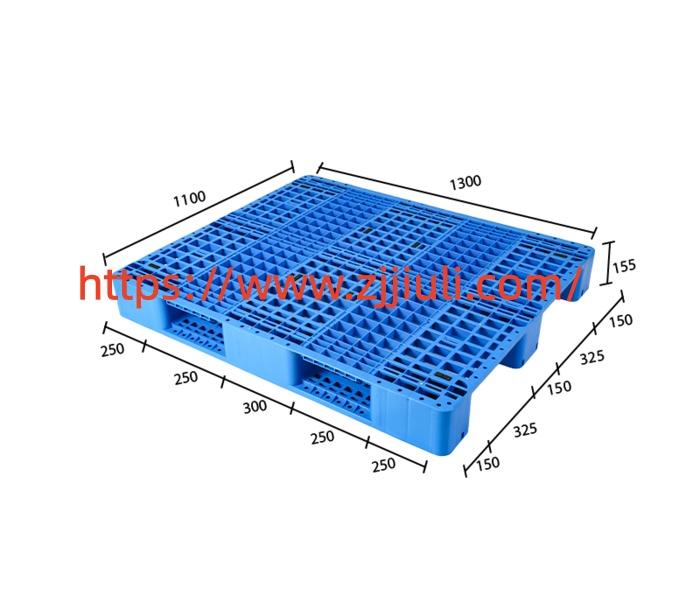
Industrial Plastic Pallets require careful review of weight ratings before purchase to ensure safe movement and storage of goods in various settings. Static capacity covers the maximum mass a unit can hold while resting on a solid floor without any motion. Dynamic capacity applies when the same unit is lifted or shifted by forklift or jack. Racking capacity becomes relevant once the unit sits on beams with support only at the edges. Each of these figures must be treated separately because they differ widely depending on design and material.
Operators first measure the heaviest load their process will place on a single unit. They also note whether that load stays evenly spread or concentrates in one area. An uneven footprint can lower the effective rating even if the total mass falls inside the listed limit. Next they map the full path the unit will travel. Floor stacking allows higher static numbers. Frequent forklift trips demand attention to dynamic numbers. Any time spent in selective racks or automated storage systems requires confirmed racking numbers that match the exact beam span in use.
A practical safety factor between one and a half and two times below the published maximum keeps operations inside safe bounds. Working at the absolute limit leaves no room for sudden shifts or minor impacts. Temperature also influences performance. High density polyethylene maintains toughness in cooler zones while polypropylene holds stiffness when heat rises. Chemical exposure or constant moisture further guides material choice so the structure does not soften or crack over time.
Deck style and runner layout affect how weight transfers into the floor or beams. Closed decks spread force more evenly and simplify cleaning. Open decks lighten the empty mass and allow drainage. Four way entry points give drivers more approach angles and reduce handling time. Three runner or full perimeter bases improve stability under rack beams. Matching these features to existing equipment prevents binding on conveyors or misalignment with pallet jacks.
Zhiguang designs units that address these variables through consistent molding and reinforced rib patterns. Clear documentation of all three capacity ratings accompanies each model so buyers can compare numbers against their own data. Sample trials under actual loads remain useful before large orders. A short pilot run reveals whether the unit tracks straight on rollers or holds shape after repeated stacking.
Cycle count and recovery plans complete the picture. Units that return empty after every trip face different stresses from those that stay in continuous local circulation. Tracking expected trips per year helps estimate how long a given capacity rating will remain valid under real conditions. Recycled resin content can support sustainability goals without altering the core strength figures when the formulation stays controlled.
In the final evaluation stage teams gather the maximum cargo weight the travel method the storage method and the environmental range. They then filter available models against those four points. Units that clear every filter receive a further check for dimensional fit with current racks and handling tools. This sequence keeps selection focused on measurable needs rather than general claims.
Zhiguang continues to refine its range so capacity options remain practical for varied manufacturing and distribution flows. To review available models that align with different capacity profiles visit https://www.zjjiuli.com/product/ and identify solutions suited to specific operational demands.

 English
 Arabic
 French
 Spanish
 Portuguese
 Deutsch
 Turkish
 Dutch
Dutch
 Italiano
 Romaian
 Portuguese (Brazil)
 Greek
Greek