
How a Museum WordPress Theme Can Improve Online Collection Management
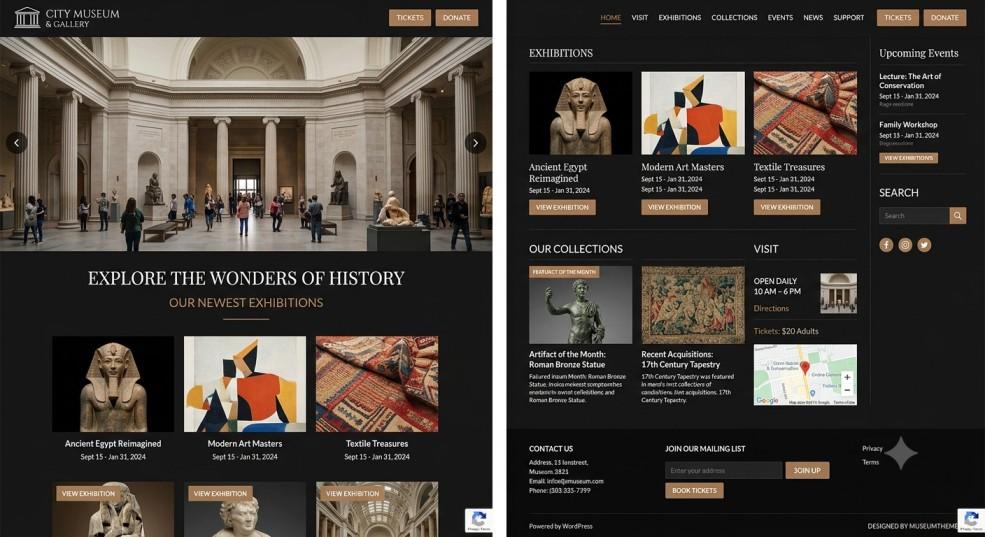
Behind every well-organized, easy-to-browse museum website, there's usually a curator or collections manager who spends considerable time entering data, uploading images, and double-checking that each object record is accurate and complete. A museum WordPress theme can make this backend work easier to manage by providing a structured way to organize collection content and present it consistently. That backend work rarely gets discussed when people talk about museum websites, but it directly determines whether the public-facing collection actually stays accurate, current, and genuinely useful over time.
A museum WordPress theme built with genuine collection management support in mind makes that backend work significantly more manageable, which in turn keeps the public-facing experience reliable.
Why Backend Management Quality Affects the Visitor Experience
A museum website's public quality is only as good as the underlying data management supporting it, and a difficult, inefficient backend often leads directly to a neglected, inconsistent public collection.
Difficult Data Entry Leads to Incomplete Records
If adding a new object record is a tedious, complicated process, staff naturally end up entering only minimal required information, resulting in thin, less useful public-facing content over time.
Poor Organization Creates Inconsistency Across the Collection
Without genuine structural support, different staff members entering data over time often end up with inconsistent formatting, terminology, and completeness across the collection, undermining the public experience.
Structured Data Entry That Supports Consistency
Standardized Fields for Object Records
A theme with genuinely structured, standardized fields, dimensions, materials, date, and provenance ensures every object record captures the same essential information consistently, rather than relying on staff to remember what to include each time.
Required Field Validation for Essential Information
Setting certain fields as required before a record can be published helps prevent incomplete or thin object entries from slipping through unnoticed.
Controlled Vocabulary for Classification Terms
Supporting standardized, controlled terminology for categories, materials, and classifications prevents the inconsistency that comes from different staff members using varying terms for the same concept over time.
Features That Streamline Bulk Data Management
Bulk Import Capabilities for Large Collections
For museums digitizing extensive existing collections, bulk import functionality significantly reduces the time required compared to manually entering each object record individually.
Bulk Editing for Shared Updates
When classification systems change or shared information needs updating across many records simultaneously, bulk editing tools save substantial time compared to manual, one-by-one updates.
Batch Image Upload and Processing
Supporting efficient batch upload and processing of collection photography reduces the tedious, time-consuming nature of adding visual documentation for large numbers of objects.
Supporting Multi-User Collaborative Management
Role-Based Access for Different Staff Members
A theme that works well with defined user roles lets museums assign appropriate access levels, curators managing content, volunteers assisting with basic data entry, without giving everyone identical, potentially risky full access.
Review Workflows Before Publishing
Supporting a review step before new or updated records go live helps ensure accuracy, particularly valuable for museums relying partly on volunteer or less experienced staff for data entry.
Clear Audit Trails for Record Changes
Maintaining a record of who made specific changes and when supports accountability and helps identify the source of any errors that need correction.
Managing Digital Assets Effectively
Organized Image and Media Libraries
A well-structured system for organizing photographs, documents, and other digital assets prevents the common problem of misplaced or difficult-to-locate media files as a collection grows.
Version Control for Updated Images
For objects that get rephotographed or documented again over time, maintaining clear version history prevents confusion about which image represents the current, accurate documentation.
Metadata Management for Digital Assets
Ensuring images and other media carry proper metadata, copyright information, photographer credit, and date taken, supports both organizational needs and proper public-facing attribution.
Supporting Data Accuracy Over Time
Regular Data Audit Capabilities
Features supporting periodic review of collection data help identify outdated, incomplete, or inconsistent records before they undermine visitor trust in the overall collection's reliability.
Flagging System for Identified Errors
A simple internal system for flagging records needing correction, whether identified by staff or through visitor feedback, ensures issues get addressed rather than lingering unnoticed indefinitely.
Tracking Data Provenance and Sources
Maintaining clear records of where specific information originated- scholarly research, donor documentation, prior institutional records- supports both accuracy verification and proper academic citation.
Making Collection Management Efficient for Smaller Institutions
Simplified Workflows for Limited Staff Resources
Since many museums operate with limited staff, sometimes relying heavily on volunteers, genuinely intuitive, straightforward data management workflows matter significantly more than complex systems designed for large institutional teams.
Clear Documentation and Training Resources
Accessible internal documentation helping staff and volunteers understand how to properly enter and manage collection data reduces inconsistency stemming from unclear expectations or processes.
Scalable Systems That Grow With the Institution
A collection management approach that works well for a smaller collection today should ideally scale reasonably as the institution's digital collection grows over time, without requiring a complete system overhaul.
Supporting Integration With Broader Museum Systems
Compatibility With Existing Collection Management Software
For museums already using dedicated collection management systems, theme compatibility or integration options prevent duplicate data entry between internal systems and the public-facing website.
Syncing Data Between Internal and Public-Facing Records
Where integration exists, ensuring changes in internal collection records can efficiently reflect on the public website reduces manual redundancy and keeps public information current.
Balancing Public Presentation With Backend Efficiency
Ensuring Backend Structure Supports Strong Public Display
The underlying data structure should genuinely support the kind of rich, engaging public presentation discussed elsewhere, meaning backend and public-facing considerations need to work together rather than being designed independently.
Avoiding Overly Complex Systems That Discourage Use
If a collection management system becomes so complex that staff avoid using it properly, even excellent underlying capability provides little genuine benefit, making usability a critical practical consideration.
Mobile Access for Collection Management Tasks
Since some collection management tasks, such as quick updates and checking records, might reasonably happen away from a primary workstation, ensuring reasonable mobile or tablet access to backend functions supports practical flexibility for staff.
Conclusion
Improving online collection management directly affects the quality and reliability of everything visitors ultimately see and rely on, standardized data entry, efficient bulk tools, and collaborative workflows all support a public-facing museum website that stays accurate and genuinely useful over time. A museum WordPress theme built with this backend efficiency in mind helps staff maintain a collection that serves visitors well, without requiring an unsustainable amount of ongoing manual effort. This kind of practical, management-focused approach is exactly what you'll find supported in premium WordPress Templates designed for museums and cultural institutions, helping your team maintain a collection that's as reliable behind the scenes as it is engaging to the public.
Frequently Asked Questions
1. Why does backend collection management quality affect the public visitor experience?
Because a difficult, inefficient backend often leads to incomplete or inconsistent data entry, which directly results in a less useful, less reliable public-facing collection over time.
2. Is bulk import functionality really necessary for smaller museum collections?
It becomes increasingly valuable as collection size grows, though even smaller museums digitizing an existing physical collection can benefit significantly from this time-saving capability.
3. How important is role-based access for museum staff managing collection data?
Quite important, since it allows appropriate access levels for different contributors, curators, and volunteers, without granting everyone identical, potentially risky full access to the system.
4. Should collection management systems integrate with existing dedicated software many museums already use?
Where possible, yes, since integration prevents duplicate data entry and keeps public-facing information consistent with internal collection records.
5. Does system complexity really matter if it provides more powerful management capabilities?
Yes, if a system is too complex for staff to use consistently and correctly, even powerful underlying capability provides little practical benefit, making genuine usability an essential consideration.

 English
 Arabic
 French
 Spanish
 Portuguese
 Deutsch
 Turkish
 Dutch
Dutch
 Italiano
 Russian
 Portuguese (Brazil)
 Greek
Greek