
Best Shoulder Pads for Skill Positions: What Separates a Real Performance Pad from the Rest
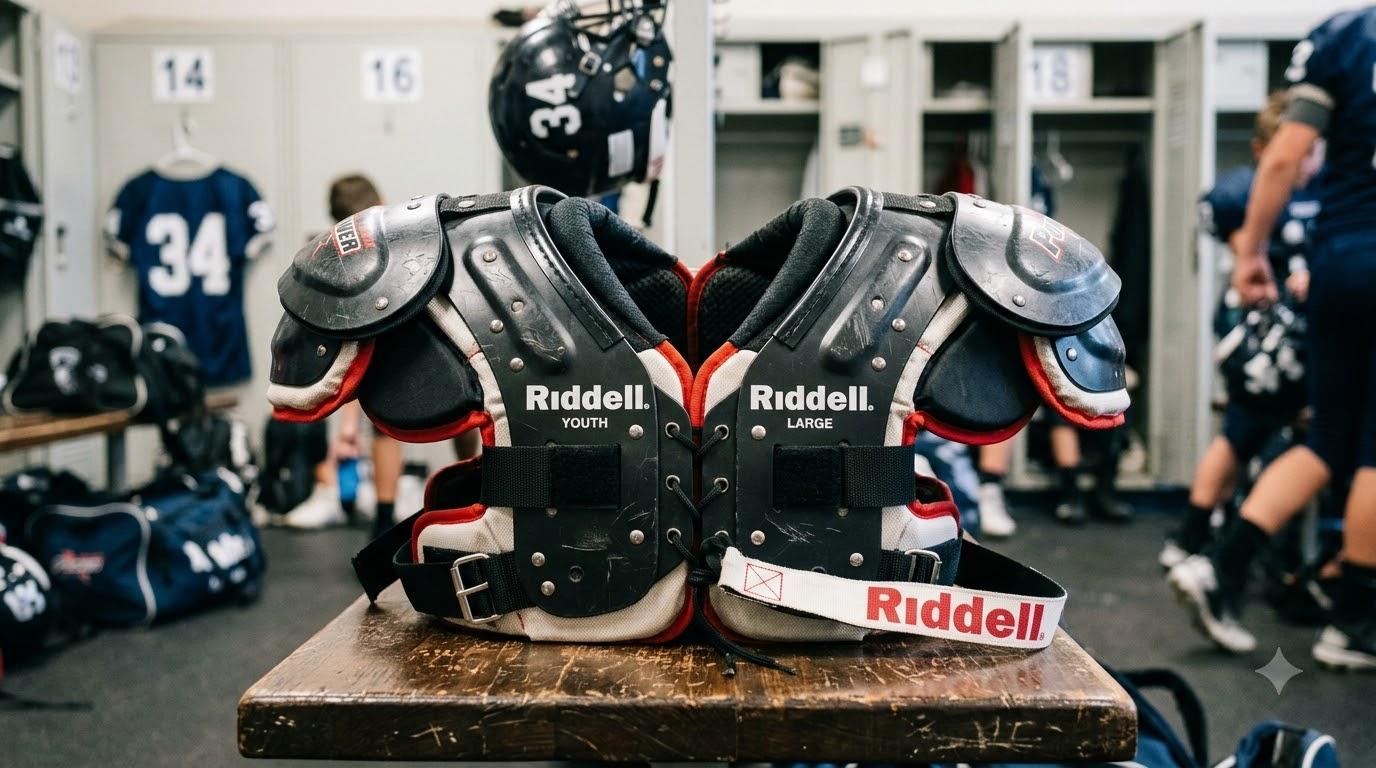
Skill position players have a specific and non-negotiable requirement when it comes to shoulder pads — full protection without anything that slows them down. A linebacker's pad and a wide receiver's pad look fundamentally different because the physical demands of each role are fundamentally different. If a defensive back is wearing pads designed for the line of scrimmage, they are carrying weight and bulk that limits every route break, every pursuit angle, and every catch attempt.
Finding the best shoulder pads for skill positions means understanding what those positions actually demand and matching the pad design to those specific performance requirements.
What Skill Position Players Need from a Shoulder Pad
Skill positions — wide receivers, defensive backs, quarterbacks, running backs, and linebackers — share a common priority: mobility. These players rely on their upper body freedom for catching, throwing, tackling, and change-of-direction movements. A pad that restricts shoulder rotation or limits arm elevation costs them performance on every play.
At the same time, these are contact positions. Wide receivers absorb contact from defensive backs on routes and after the catch. Running backs take hits from multiple directions. Defensive backs make tackles. The pads still need to absorb meaningful impact — particularly at the shoulder cap, chest, and back.
The design challenge for skill position pads is delivering both of those outcomes in the same garment. Low profile without low protection.
Key Design Features of High-Performance Skill Position Pads
Reduced Shoulder Cap Profile
Skill position pads use a smaller, lower-profile shoulder cap than lineman or linebacker pads. The cap provides protection at the shoulder point and deltoid without extending down the upper arm in a way that limits lateral arm movement. The best designs allow full arm elevation above the head — critical for quarterbacks and receivers.
Cantilevered vs. Flat Shoulder Designs
Many skill position pads use a cantilevered shoulder design — the outer shoulder cap floats slightly above the shoulder on an internal arch, rather than sitting flat against the body. This design distributes impact energy outward rather than transferring it directly downward into the shoulder joint. It also maintains the low profile that skill players need while delivering better impact management than a flat-shell design.
Sternum and Chest Plate Construction
The front plate on skill position pads covers the sternum and upper chest without extending so far down that it restricts the hip flexion needed for route running and athletic cuts. Some designs use a split chest plate that allows independent movement on each side — a feature that works well for receivers who need full bilateral shoulder rotation during catching mechanics.
Back Protection
Skill position players absorb rear hits frequently — a cornerback tracking a pass, a running back getting cut down from behind, a quarterback being sacked. Back plate protection that does not add excess bulk is a meaningful design feature at this level.
Why Material Quality Determines Long-Term Performance
Padding materials degrade over time. The foam that provides impact absorption compresses with repeated impacts and eventually loses its ability to recover. A pad that feels protective in September may have significantly less effective padding by the playoffs.
High-quality skill position pads use multi-density foam construction with a longer compression recovery cycle. This means the padding continues to absorb impact effectively throughout a full season rather than flattening out after early-season use. The outer shell material also matters — impact-grade polyethylene or polycarbonate holds its shape under repeated contact, while lower-grade materials develop stress fractures that compromise the distribution of impact force.
Fit: The Factor That Determines Whether Any Pad Works
Even the best-designed skill position pad fails if it does not fit correctly. The shoulder cap alignment check applies here as it does with all shoulder pads — the outer edge of the cap should sit at the actual tip of the shoulder, not beyond it or short of it.
For skill position players specifically:
-
Test arm elevation with the pads on — reach directly overhead with both arms
-
Test throwing or catching motion — a quarterback should be able to mimic full throwing mechanics without the pads pulling at the shoulder
-
Test full range of rotation — bring each arm across the body horizontally to check that the back plate does not restrict movement
-
Confirm the front plate does not compress the collarbone area during athletic movement
High School vs. Collegiate Level Expectations
High school skill position players can typically perform well in mid-grade skill pads with proper fit. Collegiate and advanced level players — where practice rep volume, hit frequency, and contact intensity are all higher — should invest in higher-grade construction with better padding materials and a cantilevered shell system.
The cost difference between a mid-grade and high-grade skill position pad is real, but so is the performance and durability difference. For serious players competing at high levels, the investment in quality shoulder pads is one of the most practical equipment decisions they can make.
Frequently Asked Questions
Can a wide receiver use linebacker shoulder pads if they fit correctly?
Technically yes, but the design is not optimized for a receiver's movement requirements. Linebacker pads provide excellent protection but carry more weight and restrict arm elevation more than skill position pads. A receiver using linebacker pads is carrying unnecessary bulk that affects their performance every play.
How do skill position shoulder pads handle QB-specific mechanics?
The best skill position pads for quarterbacks prioritize shoulder rotation range of motion and allow full follow-through during the throwing motion without any restriction at the back or armpit area. Some pads include a separate QB-specific configuration with a reduced back plate to accommodate the throwing arc.
Are cantilevered shoulder pads better than flat designs for skill players?
For most skill positions, yes. The cantilevered design manages impact more effectively while maintaining a lower profile. The floating cap reduces the direct transfer of impact into the shoulder joint and allows more consistent protection across different angles of contact.
How often should skill position shoulder pads be replaced?
Inspect after every season. Key replacement indicators are compressed foam that does not recover, shell cracking or deformation at impact points, and strap or buckle systems that no longer hold adjustment. High-use skill position players may need replacement every one to two seasons depending on practice and game volume.
The best shoulder pads for skill positions are not the heaviest or the most visually impressive — they are the ones that disappear during play. The player should feel protected without ever thinking about their pads during a route, a tackle, or a throw. That combination of protection and performance transparency is what separates a well-designed skill position pad from everything else.

 English
 Arabic
 French
 Spanish
 Portuguese
 Deutsch
 Turkish
 Dutch
Dutch
 Italiano
 Russian
 Portuguese (Brazil)
 Greek
Greek