
LEI Renewal: Process, Benefits, Requirements & Importance for Businesses
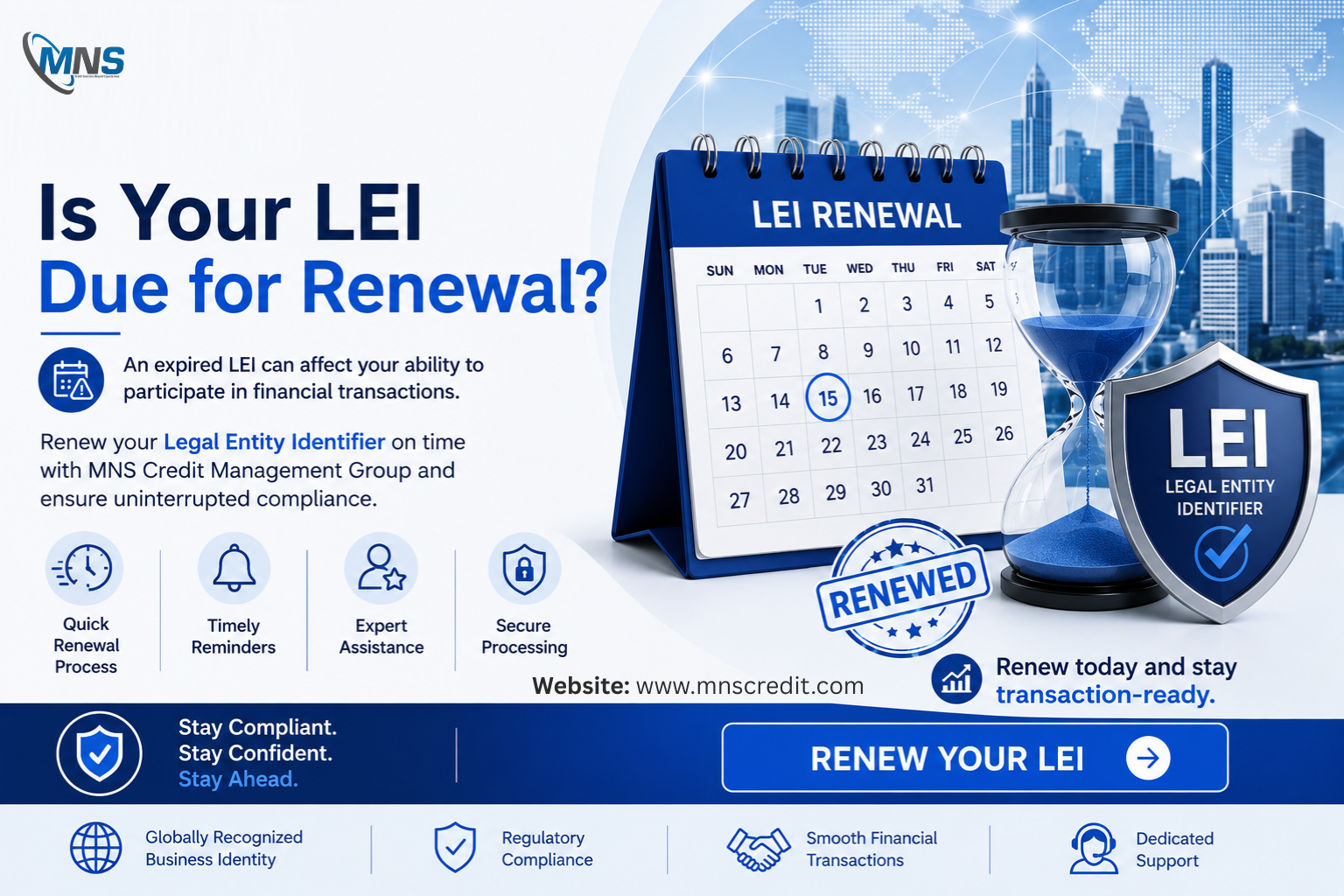
Businesses involved in financial markets often need to maintain accurate and up-to-date legal entity information. A Legal Entity Identifier (LEI) provides a standardized way to identify companies and other legal entities participating in financial transactions. However, obtaining an LEI is not a one-time compliance activity. Organizations must keep their LEI record current through LEI Renewal.
An expired or lapsed LEI can create unnecessary delays in transactions, regulatory reporting, and compliance processes. For banks, financial institutions, investment firms, corporates, and other market participants, timely renewal helps ensure that entity information remains active and reliable.
What Is LEI Renewal?
LEI Renewal is the process of extending the validity of an existing Legal Entity Identifier for another validity period while confirming that the associated entity information remains accurate.
An LEI is a unique 20-character alphanumeric identifier assigned to a legal entity. The associated record can contain information such as:
- Legal entity name
- Registered address
- Registration details
- Entity status
- Parent relationship information, where applicable
Renewal involves reviewing this information and confirming that the entity's LEI record can remain current.
Why Is LEI Renewal Important?
An LEI record is intended to provide reliable information about a legal entity. If the information is not maintained, financial institutions and counterparties may have difficulty determining whether the record is current.
Maintains an Active LEI Status
Timely renewal helps prevent the LEI from becoming lapsed due to an expired renewal date.
Supports Regulatory Compliance
Certain financial transactions and reporting requirements may require an active LEI. Maintaining the identifier helps organizations meet applicable requirements.
Reduces Transaction Delays
Banks, brokers, trading platforms, and other counterparties may use LEI information during transaction processing and entity verification.
Keeps Entity Information Current
Renewal provides an opportunity to review whether important corporate information has changed since the previous validation.
When Should an LEI Be Renewed?
Organizations should not wait until the last moment to begin the renewal process. The LEI record has a defined renewal date, and businesses should monitor this date as part of their compliance calendar.
Early review is particularly useful when a company has recently experienced:
- A change in registered address
- Corporate restructuring
- Merger or acquisition
- Change in legal name
- Ownership changes
- Changes in registration information
For example, if a company changes its registered office during the year, it should ensure that the relevant entity information is properly updated when maintaining its LEI record.
LEI Renewal Process
The LEI Renewal process is generally straightforward when the company's records are accurate.
Step 1: Check the Existing LEI
The organization should first verify its current LEI and renewal status.
This helps determine whether the LEI is active and when the next renewal is due.
Step 2: Review Entity Information
The business should check the information associated with its LEI, including its legal name, registration details, and address.
Any relevant changes should be identified before submitting the renewal request.
Step 3: Select an Authorized LEI Service Provider
The renewal should be handled through an appropriate accredited or authorized LEI issuing organization or registration service.
Step 4: Submit the Renewal Request
The required information is submitted for validation. Depending on the entity and service provider, additional documentation may be required.
Step 5: Data Validation
The submitted information is checked against appropriate authoritative sources.
This process helps ensure that the LEI record remains accurate and reliable.
Step 6: Renewal Confirmation
Once the renewal is completed successfully, the LEI record is updated with the new renewal date and remains available for use according to applicable requirements.
Documents Required for LEI Renewal
The documentation required can vary depending on the entity and whether any corporate information has changed.
Businesses may need information such as:
- Existing LEI
- Legal entity name
- Registration number
- Registered address
- Corporate registration details
- Parent company information, where applicable
- Supporting corporate documents for changes
Keeping company records organized can make the renewal process faster and easier.
What Happens If an LEI Is Not Renewed?
Failure to renew an LEI on time can cause the record to become lapsed.
A lapsed LEI does not necessarily mean that the entity no longer exists. Instead, it indicates that the LEI record has not been renewed within the required timeframe.
This distinction is important because financial institutions and counterparties may treat an inactive or lapsed record differently during transaction and compliance checks.
Potential consequences may include:
- Additional verification requirements
- Transaction processing issues
- Compliance concerns
- Delays in financial operations
- Difficulty meeting internal reporting requirements
The actual impact depends on the transaction, jurisdiction, institution, and applicable regulations.
LEI Renewal and Corporate Changes
Corporate changes should be monitored carefully because the information attached to an LEI needs to remain consistent with the entity's official records.
Consider a company that completes a merger and changes its legal name. Simply renewing the LEI without reviewing the corporate information may not be sufficient. The entity should ensure that relevant changes are properly reflected in its LEI record according to applicable LEI rules.
This makes LEI maintenance part of broader corporate data management rather than an isolated annual task.
Benefits of Timely LEI Renewal
Better Transaction Readiness
An active LEI can help organizations avoid preventable issues during transactions requiring entity identification.
Improved Data Accuracy
Regular validation helps keep important legal entity information current.
Simplified Compliance Management
Maintaining an active LEI can make it easier for compliance and finance teams to manage regulatory requirements.
Greater Counterparty Confidence
Accurate entity information supports transparency between financial institutions and market participants.
Reduced Administrative Disruption
Renewing before expiry reduces the likelihood of urgent corrective action when an LEI is suddenly required for a transaction.
Best Practices for LEI Management
Businesses can make LEI maintenance more efficient by:
- Tracking the LEI renewal date in the compliance calendar.
- Reviewing corporate information before renewal.
- Updating relevant entity changes promptly.
- Maintaining accurate registration documentation.
- Using an appropriate accredited LEI service provider.
- Monitoring the LEI status after renewal.
- Assigning responsibility for LEI management within the organization.
Larger organizations with multiple legal entities should maintain a centralized LEI register so that each entity's renewal status can be monitored.
LEI Renewal for Financial Institutions and Corporates
For banks, investment firms, asset managers, exporters, and large corporates, maintaining active LEIs can be particularly important because these organizations may participate in transactions across multiple financial markets.
Finance and compliance teams can integrate LEI monitoring with other corporate compliance activities. This creates a more reliable process for identifying entities and responding to regulatory or counterparty requirements.
Conclusion
LEI Renewal is an important part of maintaining an active and reliable Legal Entity Identifier. Regular renewal helps organizations keep their entity information current, support applicable regulatory requirements, and reduce avoidable transaction or compliance issues.
Businesses should treat LEI maintenance as an ongoing corporate compliance responsibility rather than waiting until the renewal deadline approaches. By monitoring renewal dates, reviewing entity information, and addressing corporate changes promptly, organizations can maintain better control over their financial identification records.
For companies participating in regulated financial markets, timely LEI Renewal can contribute to smoother transactions, improved transparency, and more efficient compliance management.

 English
 Arabic
 French
 Spanish
 Portuguese
 Turkish
 Dutch
Dutch
 Italiano
 Russian
 Romaian
 Portuguese (Brazil)
 Greek
Greek