
Professional HVAC services: A Complete Seasonal Guide for Homeowners
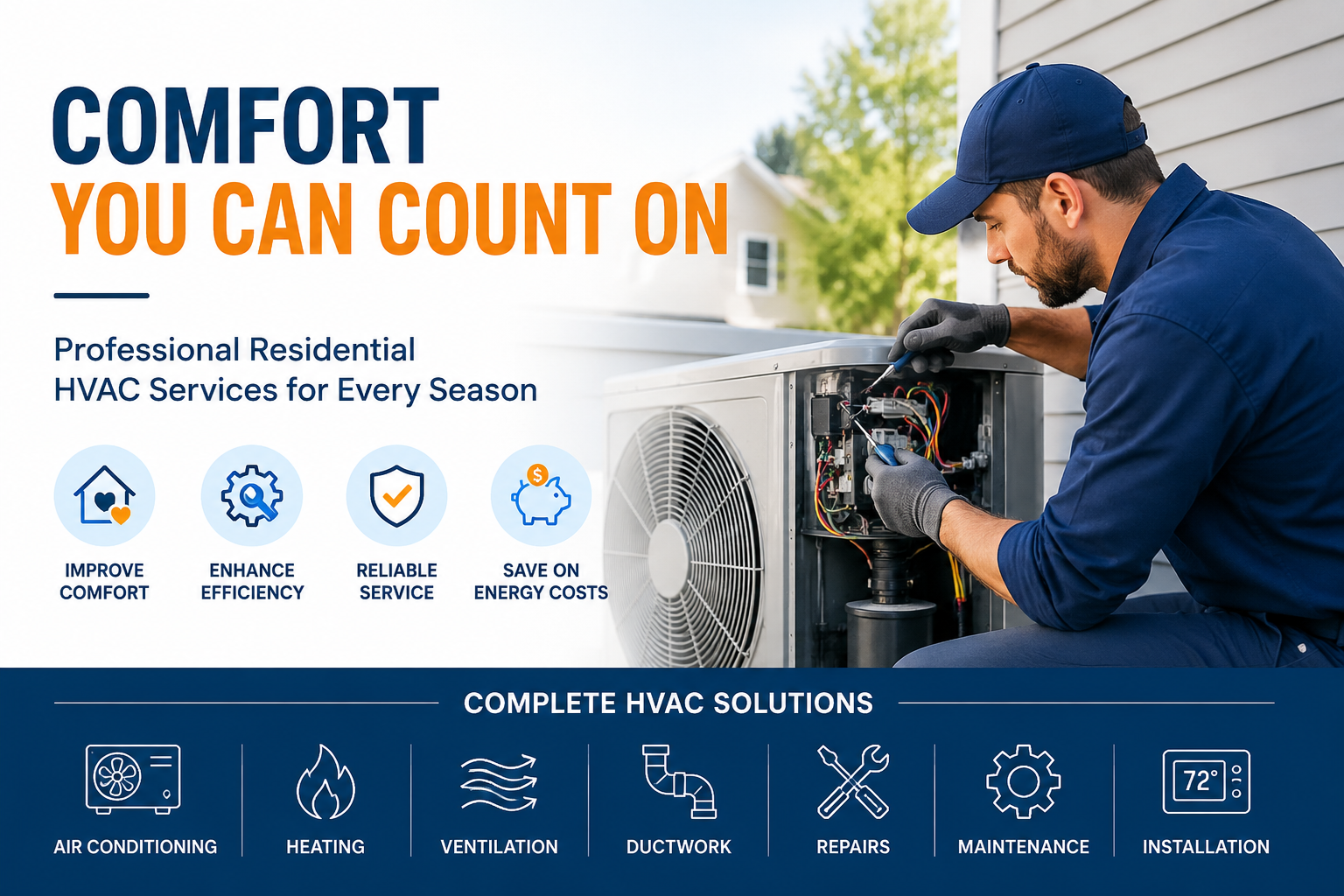
HVAC maintenance is one of the simplest ways homeowners can stay ahead of heating and cooling problems throughout the year. Instead of waiting for an air conditioner or heating system to stop working, regular maintenance focuses on keeping the equipment clean, unobstructed, and operating as intended.
A good maintenance routine also helps homeowners notice changes in airflow, comfort, noise, and energy use before they become difficult to ignore. Some tasks can be handled at home, while others require professional HVAC service.
HVAC Maintenance: What Should Homeowners Do Throughout the Year?
HVAC maintenance works best when it is treated as an ongoing process rather than a single annual appointment.
Different parts of the system need attention at different times of the year. A seasonal approach can make maintenance easier to remember and helps prepare equipment before periods of heavy use.
A practical routine can include:
-
Checking or replacing air filters
-
Inspecting vents and registers
-
Keeping outdoor equipment clear
-
Checking thermostat operation
-
Monitoring airflow
-
Watching for unusual sounds or odors
-
Scheduling professional maintenance
-
Reviewing changes in energy consumption
The exact requirements depend on your HVAC equipment and the manufacturer's recommendations.
Spring HVAC Maintenance Before Cooling Season
Spring is a useful time to prepare your air conditioning system before temperatures begin rising.
Check the air filter
A dirty filter can restrict airflow and make the system work harder. Check the filter regularly and replace or clean it according to the equipment manufacturer's instructions.
Inspect outdoor equipment
Remove leaves, branches, grass, and other debris from around the outdoor unit.
Keep the surrounding area clear enough to allow appropriate airflow.
Check your thermostat
Switch the thermostat to cooling mode and make sure the system responds as expected.
If the thermostat doesn't appear to communicate properly with the HVAC system, arrange for professional service rather than attempting electrical repairs.
Pay attention to airflow
Check whether air is reaching the rooms as expected.
If some areas suddenly have weaker airflow than others, the cause could involve a filter, ductwork, blower, register, or another component.
Schedule cooling-system maintenance
If your equipment requires professional seasonal service, spring is a practical time to arrange it before the system experiences sustained demand.
Summer HVAC Maintenance
During summer, the goal is to monitor system performance while the air conditioner is working regularly.
Watch for changes such as:
-
Longer cooling cycles
-
Weak airflow
-
Uneven temperatures
-
Unusual noises
-
Water around the equipment
-
Unusual odors
-
Unexpected increases in energy use
A gradual change can be easier to overlook than a complete breakdown, but it may still indicate that the system needs attention.
Keep supply and return vents unobstructed by furniture, curtains, rugs, or other household items.
Fall HVAC Maintenance Before Heating Season
Fall is the time to shift attention from cooling to heating.
Before the first extended period of cold weather, homeowners can:
-
Check the heating-system filter
-
Keep supply and return vents clear
-
Inspect accessible areas around the furnace or heating equipment
-
Remove debris around outdoor heat-pump equipment
-
Pay attention to unusual sounds or odors
-
Arrange professional heating maintenance when appropriate
Testing the system before you actually need it gives you more time to address problems.
Winter HVAC Maintenance
During winter, monitor the heating system for changes in performance.
Pay attention if:
-
The home takes longer to warm up
-
Some rooms become colder than others
-
The furnace runs continuously
-
Airflow becomes weaker
-
The system repeatedly starts and stops
-
Unusual sounds appear
-
You notice an unfamiliar burning smell
A brief odor when a heating system is first used after a long period of inactivity can have a different cause from a persistent burning smell. If you notice smoke, a strong burning electrical odor, or another safety concern, turn off the equipment if it is safe to do so and seek appropriate professional help.
How Often Should You Change an HVAC Filter?
There isn't a universal filter replacement schedule.
The appropriate interval depends on the filter type, equipment, household conditions, pets, occupants, indoor air conditions, and manufacturer recommendations.
Instead of relying on a calendar alone, inspect the filter regularly.
A visibly dirty filter deserves attention.
A filter should also be installed correctly. Using a filter that does not fit the equipment can create problems with airflow or allow unfiltered air to bypass the intended filtration path.
Why Airflow Matters to HVAC Performance
Airflow is an important part of heating and cooling performance.
Even a properly functioning HVAC system can struggle to maintain comfort if conditioned air cannot move effectively through the home.
Potential airflow problems can involve:
-
Dirty filters
-
Blocked vents
-
Restricted ductwork
-
Leaking ducts
-
Blower problems
-
Incorrectly sized components
-
Closed or obstructed registers
If changing the filter and removing obvious obstructions doesn't resolve weak airflow, professional evaluation can help determine where the restriction is occurring.
Easy Home Service connects with home improvement experts for affordable home remodeling, repairs & renovation. Get quote from local home improvement specialist.

 English
 French
 Spanish
 Portuguese
 Deutsch
 Turkish
 Dutch
Dutch
 Italiano
 Russian
 Romaian
 Portuguese (Brazil)
 Greek
Greek