
Holistic Wellness Retreats: What "Holistic" Actually Means — And Why It Matters
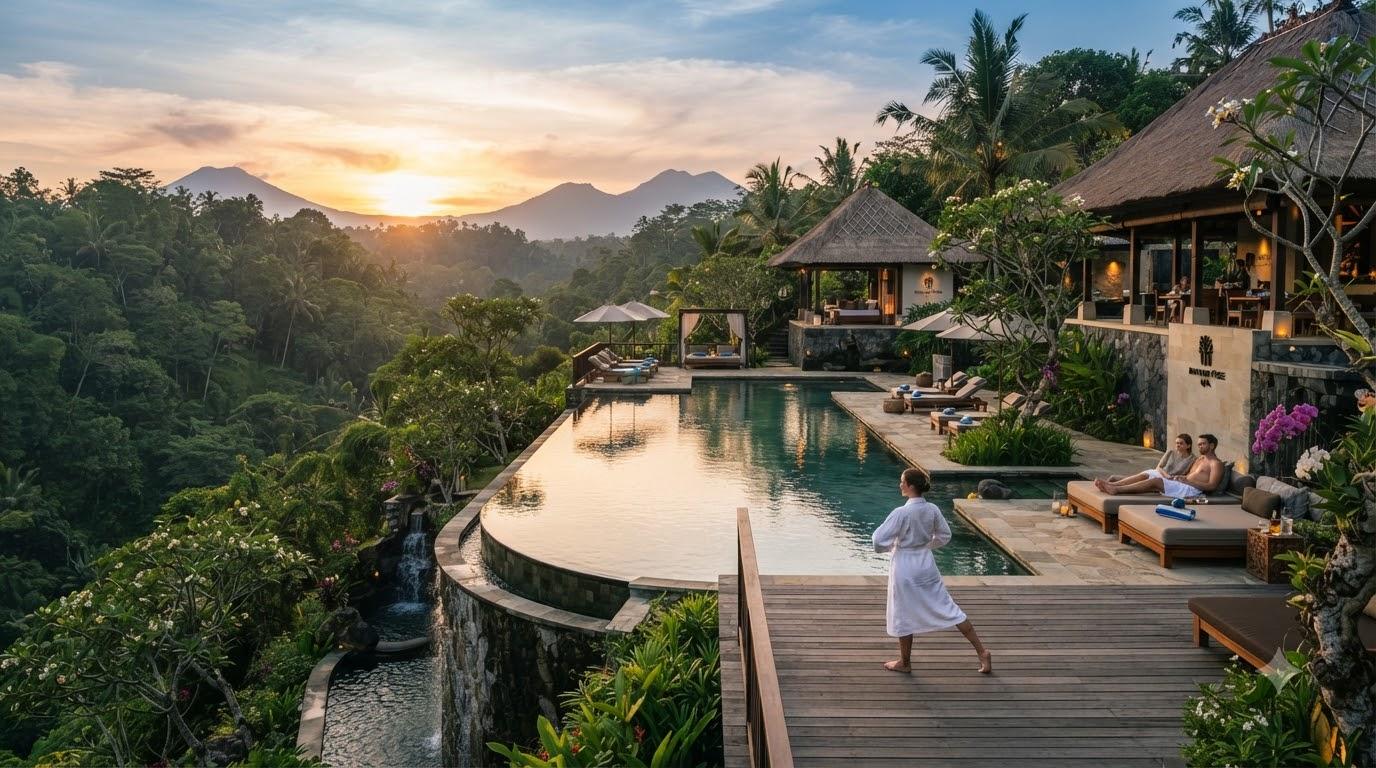
The word holistic gets used so often in wellness marketing that it's become nearly invisible. Holistic massage. Holistic skincare. Holistic nutrition. At this point, it's applied to almost anything that isn't purely pharmaceutical or clinical — which makes it almost useless as a descriptor.
But when holistic wellness retreats are genuinely built around the concept's original meaning — treating the whole person, across body, mind, and spirit as an integrated system — the experience is qualitatively different from a standard wellness or spa offering. Understanding that difference is the first practical step in finding a retreat that delivers real results.
For those ready to look seriously, authentic holistic wellness retreats designed around interconnected healing practices are quite different from the diluted version the word usually implies. Knowing what to look for makes the search considerably more efficient.
What "Holistic" Actually Means in a Retreat Context
The holistic model of health comes from a foundational premise: the body, mind, and spirit are not separate systems that can be fixed independently. They influence each other continuously. Chronic stress manifests physically. Physical illness affects emotional stability. Spiritual disconnection can produce both mental and physical symptoms.
A genuinely holistic retreat takes this seriously in its programming design. Rather than offering a menu of isolated treatments — a yoga session here, a massage there — it builds an experience where different modalities reinforce and deepen each other. Movement prepares the nervous system for meditation. Nutrition supports the emotional work. Rest allows integration to occur.
When a retreat calls itself holistic but offers only one or two modalities with no clear interconnection between them, it's using the word as marketing rather than methodology.
The Four Pillars That Define Quality Holistic Programs
Physical Restoration
This goes beyond exercise or spa treatments. Genuine physical restoration in a holistic context includes sleep quality, nervous system regulation, movement appropriate to the individual's current state, and nutritional support. A retreat that pushes intensive physical activity without understanding the participant's physical condition is not thinking holistically.
Mental and Emotional Processing
Stress, anxiety, unresolved grief, and relational patterns all show up in the body. Quality holistic wellness retreats create space for these to be addressed — through facilitated group work, one-on-one sessions, journaling practices, breathwork, or other modalities that invite reflection without overwhelming the participant.
Nutritional Support
Food is not incidental in a holistic retreat. It's part of the medicine. Meals should be thoughtfully prepared with awareness of how specific foods affect mood, energy, inflammation, and sleep. If a retreat's meals are an afterthought — processed, careless, or heavily caffeinated and sugary — this is a meaningful inconsistency with a holistic framework.
Spiritual or Meaning-Oriented Practices
This pillar is the most frequently misunderstood. Spiritual does not necessarily mean religious. In a holistic context, it refers to practices that connect participants with something beyond daily ego concerns — nature, community, creative expression, meditative silence, or a sense of purpose. These experiences are often the most lasting in their effects.
Common Misconceptions About Holistic Retreats
Misconception: Holistic means alternative medicine.
Not necessarily. Holistic retreats can and often do incorporate evidence-based practices like mindfulness-based stress reduction (MBSR), somatic therapy, trauma-informed yoga, and nutritional science. The holistic frame is about integration, not rejection of conventional knowledge.
Misconception: You need to believe in spiritual practices for holistic retreats to work.
Most well-designed holistic wellness retreats offer practices that are accessible regardless of personal beliefs. A participant who is skeptical of anything spiritual can still benefit enormously from improved sleep, reduced cortisol through breathwork, and emotional processing through facilitated dialogue.
Misconception: Holistic retreats are only for people in crisis.
Many participants are high-functioning people who want to optimize their wellbeing, deepen their self-understanding, or prevent the burnout that they can see on the horizon. Holistic retreats are as much about maintenance and deepening as they are about recovery.
How to Evaluate a Holistic Retreat's Credibility
Look at Facilitator Credentials Carefully
A holistic retreat is only as strong as the people delivering its programming. Check whether yoga teachers hold recognized certifications, whether therapists or counselors have licensed credentials, and whether nutritionists or health coaches have formal training. A retreat with impressive branding but unlicensed facilitators is a significant risk.
Ask About the Retreat's Framework
Quality holistic wellness retreats can explain their theoretical framework simply and clearly. They know why they have included each element, how those elements interact, and what outcomes participants typically experience. Vague answers to direct questions about methodology are a warning sign.
Check the Environment
Holistic healing is context-dependent. Noise, artificial lighting, disconnection from nature, and a chaotic environment all work against the goals of the programming. The physical setting should actively support the work being done.
Holistic Retreats vs. Spa Retreats vs. Mindfulness Retreats
These are related but distinct categories, and conflating them leads to mismatched expectations.
|
Type |
Primary Focus |
Depth of Programming |
|
Spa retreat |
Physical relaxation and indulgence |
Lower — treatment-based |
|
Mindfulness retreat |
Mental clarity and meditation practice |
Medium — mentally focused |
|
Holistic wellness retreat |
Integration of body, mind, and spirit |
Higher — multi-dimensional |
None of these is objectively better. The right choice depends entirely on what you need and what you're willing to engage with.
What to Prepare Before Attending a Holistic Retreat
Arriving unprepared is one of the most common ways people diminish their retreat experience. Before you go:
-
Reduce caffeine and alcohol in the week before arrival — your system will be more receptive
-
Complete any pre-arrival intake forms honestly and thoroughly
-
Set a genuine intention — what would a successful retreat feel like?
-
Inform the facilitators of any physical, mental, or emotional considerations that might affect your participation
-
Create space in your schedule for at least one full day of quiet re-entry after returning home
Why Location Shapes the Holistic Experience
Holistic healing doesn't happen in isolation from environment. A coastal setting, for example, engages multiple sensory systems simultaneously — the sound of waves has measurable effects on the nervous system, natural light regulates circadian rhythms, and the physical act of walking near water activates calming parasympathetic responses. These are not mystical claims; they are reasonably well-supported by research in environmental psychology.
This is one reason why holistic wellness retreats located in natural coastal or rural settings often produce stronger results than urban wellness centers, even when the programming is comparable. The environment participates in the healing.
Frequently Asked Questions
Are holistic wellness retreats suitable for people with medical conditions?
Most holistic retreats can accommodate common conditions if informed in advance. However, always consult your healthcare provider before attending if you have significant physical or mental health concerns. A responsible retreat will ask about this during intake and will make appropriate modifications — or refer you to a more clinically specialized program if needed.
How is a holistic retreat different from therapy?
Therapy is typically ongoing, clinically structured, and focuses on specific psychological diagnoses or patterns. A holistic retreat is time-bounded and designed around general wellbeing, restoration, and deepening rather than clinical treatment. Many people use retreats as a complement to therapy, not a replacement.
What modalities are typically included in holistic wellness retreats?
Common elements include yoga, breathwork, meditation, somatic movement, nutritional education, facilitated group sharing, journaling, nature immersion, bodywork or massage, and creative practices. The specific combination varies by retreat, and the best programs explain why they've included what they have.
How do I know if a holistic retreat will respect my personal beliefs?
Ask directly before booking. Quality retreats are inclusive by design and should be able to explain how participants with different spiritual backgrounds, beliefs, or comfort levels are accommodated. Avoid retreats that impose a specific belief system on all participants without disclosure.
Is one holistic retreat enough to make a difference?
One well-chosen retreat can create a meaningful shift in perspective, nervous system regulation, and behavioral intention. But lasting change almost always requires follow-through in daily life. Many people find that a retreat is most valuable as a starting point — a reset that makes ongoing practices more accessible and sustainable.

 English
 Arabic
 French
 Spanish
 Portuguese
 Deutsch
 Turkish
 Dutch
Dutch
 Italiano
 Russian
 Portuguese (Brazil)
 Greek
Greek