
Picking the Wrong Pit Tags Could Cost Your Entire Study
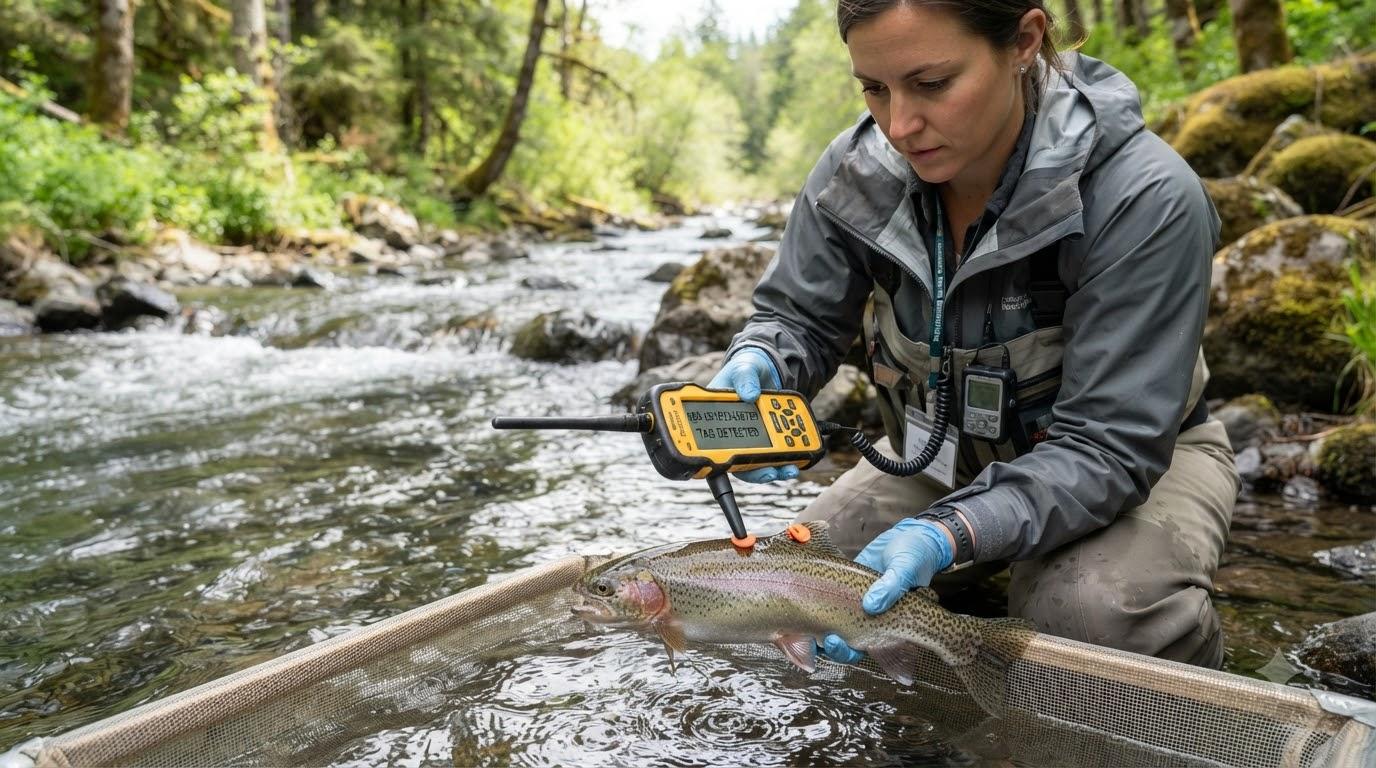
Field seasons are expensive. Personnel time is expensive. And if the pit tags you chose perform poorly — low retention, incompatible frequency, or dimensions that stress your target species — there's no easy way to recover that data. The fish have moved on.
Selecting the right tags before a monitoring program begins is one of the highest-value decisions a fisheries researcher or manager makes. Yet it rarely gets the attention it deserves. If you're comparing options, exploring pit tags designed specifically for aquatic research is a practical starting point.
What Makes One PIT Tag Different From Another
At first glance, PIT tags look similar. Small, glass-encased, passive transponders. But the differences between tag models — frequency, dimensions, chip type, read range, and ID capacity — have real consequences for data quality and animal welfare.
Understanding those differences before you commit to a purchase prevents mismatches between your tags and your detection infrastructure.
Frequency: The Non-Negotiable Starting Point
134.2 kHz — The ISO Standard
The vast majority of fisheries PIT tag programs use 125 kHz or 134.2 kHz tags. The 134.2 kHz ISO 11784/11785 standard is now dominant in most fisheries research globally because it supports longer read distances, has broader international compatibility, and is accepted by large-scale monitoring networks.
If your study will contribute data to a shared detection network — such as a national fish passage monitoring system — confirm which frequency that network uses before ordering tags. Incompatible tags produce zero detections at existing infrastructure antennas.
Why Frequency Matters for Read Range
Higher frequency doesn't automatically mean longer read range. Antenna geometry, power output, and tag antenna design all contribute. The practical read range of a 134.2 kHz tag through tissue and water varies between systems. Always request read range specifications under realistic field conditions, not ideal laboratory tests.
Physical Dimensions and the 2% Rule
Standard Sizes in Fisheries Work
The most common PIT tag dimensions in fisheries research are:
-
12mm x 2.12mm — Standard for larger juvenile and adult fish
-
9mm x 2.12mm — Suitable for mid-sized juveniles
-
8mm x 1.4mm — Designed for small-bodied species and small juveniles
The 2% rule — that tag mass should not exceed 2% of fish body weight — is widely cited as a threshold for minimising physiological effects. Always calculate this for the minimum size fish in your target population, not the average.
Length vs. Diameter Considerations
Diameter is often the more critical dimension in small-bodied fish. A tag that fits within the 2% weight limit but has too large a diameter for the injection needle creates tissue trauma during implantation. Needle gauge must be matched to tag diameter.
Unique ID Capacity and Database Management
PIT tags encode a unique identifier that links detection events to individual fish records. The ID capacity of a tag determines how many unique animals your tagging database can accommodate without recycling codes.
For long-running programs or those contributing to large shared databases, ensure your tags use a sufficient ID space. Tags conforming to ISO 11784/11785 use a 64-bit code structure that provides far more unique identifiers than older proprietary formats.
Verify with your supplier that each batch contains no duplicate IDs. Request a batch scan report as standard practice before any tags are deployed.
Retention: What the Numbers Actually Mean
Factors That Influence Tag Retention
Published retention rates for PIT tags in salmonids are often above 95% over 60-day periods. But those figures come from controlled studies with trained implanters using appropriate tag-to-fish size ratios. Field conditions and less experienced teams often produce lower retention.
Retention is influenced by:
-
Injection depth and angle
-
Tag size relative to body cavity space
-
Needle gauge and condition
-
Post-tagging handling and holding time
-
Water temperature during recovery
A pre-season retention trial — even a small one — gives your team baseline data and an opportunity to refine technique before the main study begins.
When Tag Expulsion Happens
Tag expulsion typically occurs within the first 7–14 days post-implantation if it happens at all. If you're conducting a mark-recapture study, account for early expulsion in your survival and tag retention models rather than assuming 100% retention from day one.
Biocompatibility and Long-Term Implant Safety
Quality fisheries PIT tags use borosilicate or soda-lime glass capsules designed for long-term tissue contact. The glass surface is biocompatible, meaning it does not provoke significant immune reactions in most species studied.
Tags without appropriate biocompatible coatings or with manufacturing defects in the glass capsule can cause chronic inflammation, abscess formation, and eventually expulsion. Purchase from suppliers with documented quality control and biocompatibility testing for aquatic species.
Bulk Purchasing vs. Programme Flexibility
Large programs often benefit from bulk tag purchasing in terms of unit cost, but this requires confidence in your tag selection. Purchasing smaller quantities initially — running a season-specific pilot or retention trial — is a sound approach when working with a new species or a new supplier.
Once you've validated the tag selection for your specific application, scaling up purchases is straightforward.
Integration With Your Detection Infrastructure
Reader and Antenna Compatibility
Tags and readers must be frequency-matched. This sounds obvious, but programs that expand their infrastructure over time sometimes introduce incompatible components. When adding new antennas or reading units, confirm they are fully compatible with your existing tag frequency and protocol.
Detection Efficiency and Tag Position
Tag position within the fish's body affects detection. Tags placed too far posterior or lateral to the body's midline may be partially shielded at certain antenna orientations. This is particularly relevant for panel and wand antenna systems where the tag must enter a defined read zone.
Standard intraperitoneal placement along the ventral midline provides consistent and predictable detection geometry for most horizontal and vertical antenna configurations.
Frequently Asked Questions
Can I reuse PIT tags recovered from deceased fish?
Technically yes, as the tag itself is intact. However, reuse creates data integrity risks if the tag ID has already been recorded in your database as belonging to a previously tagged individual. Some programs prohibit reuse entirely for this reason. If you do reuse tags, document the transition thoroughly.
Do pit tags expire or degrade over time in storage?
Unused PIT tags stored correctly — away from strong electromagnetic fields and in stable temperature conditions — do not degrade. The passive circuitry has no battery to deplete and the glass capsule is stable. Most manufacturers provide indefinite shelf life for properly stored tags.
What's the difference between half-duplex and full-duplex tags?
Half-duplex (HDX) tags transmit only when the reader field is off, while full-duplex (FDX) tags transmit while the reader field is active. FDX-B is the standard used in ISO 11784/11785 fisheries tags. HDX tags are used in some North American systems. Confirm which protocol your detection infrastructure supports.
How many fish can I tag in a day with a small team?
Output depends on species, fish size, team experience, anesthesia protocol, and holding infrastructure. Experienced teams tagging larger salmonids commonly process 200–400 fish per day. With small-bodied species requiring careful handling, throughput may be lower. Pilot sessions help you set realistic targets.
The Decision That Sets Your Study Up for Success
Tag selection isn't glamorous, but it's foundational. A program built on appropriately sized, frequency-compatible, quality-certified tags — supported by a consistent injection protocol — gives you data you can trust and defend. Cut corners here and the consequences follow you through every analysis and every report.
Take the time to match your tags to your species, your detection system, and your study design. It's the simplest way to protect the investment you're making in every other part of your program.

 English
 Arabic
 French
 Spanish
 Portuguese
 Deutsch
 Turkish
 Dutch
Dutch
 Italiano
 Russian
 Romaian
 Greek
Greek