
What Gangnammould Plastic Kitchenware Mould Features Support High Volume Production
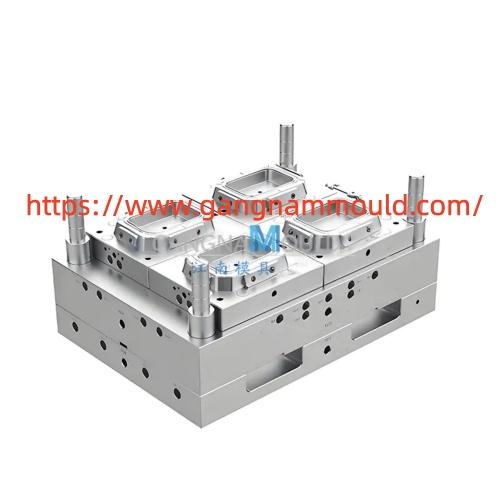
Plastic Kitchenware Mould selection becomes especially important when a production project involves large quantities, repeated cycles, and consistent product requirements. A tool designed for occasional production may not offer the same practical considerations needed for continuous operation. Buyers should therefore look beyond the initial quotation and examine cavity arrangement, cooling design, ejection structure, steel selection, maintenance access, and compatibility with the intended resin. These factors can influence how smoothly a production program runs over time.
Cavity configuration is one of the first details worth discussing. A single cavity can make sense for lower demand or products that require frequent design changes, while multiple cavities may support higher output from each machine cycle. The right arrangement depends on product size, machine capacity, projected order volume, resin behavior, and acceptable tooling investment. Balanced filling across cavities is also important because differences between cavities can create variation in dimensions, appearance, or weight. Careful flow analysis during development can help identify potential issues before machining begins.
Cooling deserves particular attention because it can account for a substantial part of the molding cycle. Research on injection tooling has shown that cooling system layout, channel position, coolant flow, and temperature control have a direct relationship with cycle behavior and dimensional stability. For kitchen products with deeper sections, thicker walls, handles, ribs, or other areas that retain heat, the cooling arrangement needs to match the actual geometry. Balanced heat removal can help reduce problems such as warpage, sink marks, and uneven shrinkage.
Ejection is another feature that should be considered before production begins. Kitchen products can have different shapes, textures, corners, and internal structures, so a simple ejection arrangement may not always be appropriate. Ejector pins, sleeves, lifters, or other mechanisms should be positioned according to the product structure while avoiding unnecessary marks on visible surfaces. Smooth release also helps reduce the risk of deformation when parts leave the cavity before they have cooled sufficiently.
Material selection matters as well. Tool steel should be chosen according to expected production volume, resin characteristics, product geometry, and maintenance plans rather than relying on one material for every project. Different materials can provide different combinations of hardness, wear resistance, machinability, and service requirements. For large orders, buyers should also discuss whether replaceable inserts or other serviceable components could simplify future maintenance.
Runner and gate design can influence filling behavior and material distribution. For products produced in several cavities, balanced runner paths can help deliver resin more evenly to each cavity. Gate location should also be considered in relation to appearance, wall thickness, weld lines, filling distance, and later trimming requirements. A practical design is one that considers the complete production process rather than focusing on a single feature.
Maintenance planning is easy to overlook when a project is still in the quotation stage. Yet repeated production means the tooling will experience many opening and closing cycles, temperature changes, pressure, and material contact. Cooling circuits should remain accessible for inspection and cleaning where practical. Wear components should also be replaceable without requiring unnecessary disassembly. Recent tooling guidance continues to emphasize maintainable cooling layouts because deposits and contamination can gradually affect heat transfer during extended operation.
Another useful consideration is compatibility with the injection machine. The tool size, weight, mold opening requirements, injection volume, clamping capacity, ejection system, and available connections should all be reviewed before final approval. A well designed tool still needs to work comfortably with the intended production equipment. Sharing machine specifications with the manufacturer early can reduce avoidable adjustments later.
Gangnammould can work with buyers to evaluate these details according to product structure, production volume, material requirements, and expected operating conditions. The goal is to create tooling that fits the actual manufacturing plan instead of simply matching a basic product drawing. For buyers preparing a new kitchenware project, the product range and tooling information at https://www.gangnammould.com/product/

 English
 Arabic
 French
 Portuguese
 Deutsch
 Turkish
 Dutch
Dutch
 Italiano
 Russian
 Romaian
 Portuguese (Brazil)
 Greek
Greek