
Vitamin C Serum: Benefits for Glowing & Healthy Skin
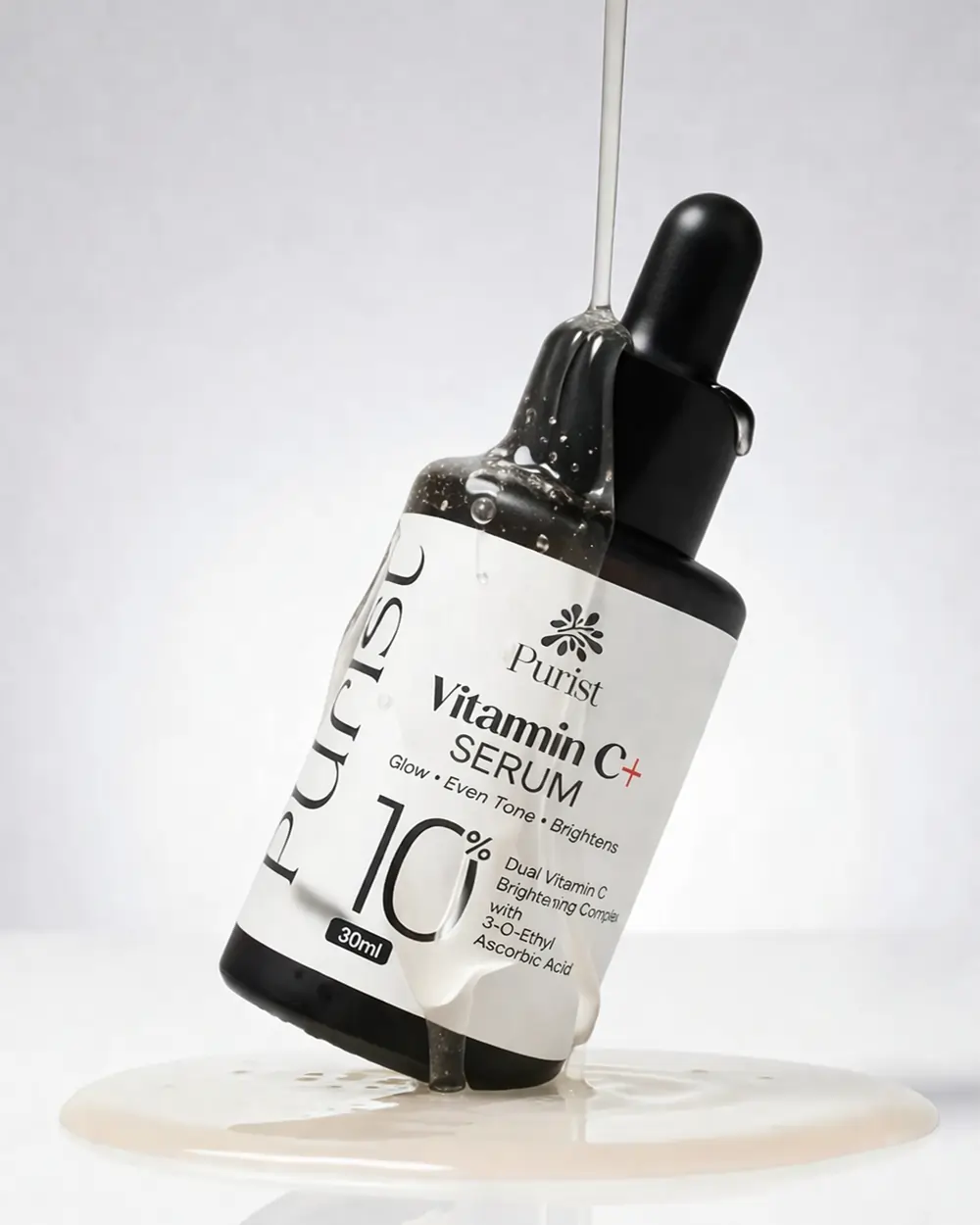
Healthy-looking skin does not come from chasing every new skincare trend. It comes from understanding what your skin needs and choosing ingredients that actually serve a purpose. For dullness, uneven skin tone, dark spots, and loss of radiance, Vitamin C has earned its place as one of the most widely used ingredients in modern skincare.
A well-formulated Vitamin C Serum can help support brighter-looking skin, improve the appearance of uneven tone, and provide antioxidant support against everyday environmental stressors. But choosing the right formula and using it correctly matters just as much as the ingredient itself.
At Purist, we believe effective skincare should feel simple rather than overwhelming. You should understand why you are using a product, what it can realistically do for your skin, and how it fits into your routine.
This guide explains everything you need to know about Vitamin C Serum, including its benefits, how to use it, who should consider it, and how to build a skincare routine around it.
What Is a Vitamin C Serum?
A Vitamin C Serum is a concentrated skincare treatment designed to deliver Vitamin C directly to the skin. Unlike cleansers that you rinse away, serums remain on the skin and provide targeted support for specific concerns.
Vitamin C is widely recognised for its antioxidant properties and its role in supporting healthy-looking skin. In skincare, different forms and concentrations of Vitamin C can help improve the appearance of dullness, uneven skin tone, and visible dark spots.
Most people add a Vitamin C Serum to their routine because they want to achieve:
-
Brighter-looking skin
-
A more even complexion
-
Reduced appearance of dark spots
-
Improved skin radiance
-
Protection against environmental oxidative stress
-
Healthier-looking skin over time
The lightweight texture of most Vitamin C serums also makes them easy to layer with moisturisers and sunscreen.
However, not every formula works the same way. The stability of the Vitamin C, supporting ingredients, packaging, and concentration can all influence the overall experience.
Why Vitamin C Has Become a Skincare Essential
Vitamin C is not just another trending ingredient. It has remained popular in skincare because of its versatility.
Your skin faces environmental stress every day. Sun exposure, pollution, lifestyle factors, and natural ageing can affect how smooth, bright, and even your complexion appears.
Vitamin C provides antioxidant support and helps protect the skin from oxidative stress caused by environmental aggressors.
It also plays an important role in several processes associated with healthy-looking skin.
Vitamin C Supports Brighter-Looking Skin
A dull complexion can make the skin look tired even when you are otherwise healthy. Uneven pigmentation, environmental exposure, dehydration, and accumulated dead skin cells can all affect how light reflects from the skin.
Vitamin C helps support a brighter and more radiant-looking complexion. With consistent use, many people incorporate it into their routines to improve the appearance of overall skin tone.
Rather than changing your natural skin colour, a good Vitamin C Serum aims to help your skin look clearer, fresher, and more even.
Vitamin C Helps Improve the Appearance of Dark Spots
Dark spots can appear for several reasons, including:
-
Previous acne breakouts
-
Sun exposure
-
Skin inflammation
-
Post-inflammatory hyperpigmentation
-
Natural ageing
These marks often take time to fade, which is why consistency matters.
Vitamin C is commonly used in routines designed to improve the appearance of uneven pigmentation and visible dark spots. Regular use alongside daily sun protection can support a more balanced-looking complexion over time.
Vitamin C and Antioxidant Protection
Environmental factors can create oxidative stress that affects the appearance of the skin over time.
Vitamin C acts as an antioxidant, meaning it helps neutralise free radicals generated by environmental stressors.
This makes it a useful ingredient for people living in environments where their skin regularly encounters:
-
Pollution
-
Sun exposure
-
Dust
-
Urban environmental stress
-
Changing weather conditions
Pakistan's climate can be particularly demanding on the skin. Intense sunlight and high temperatures can contribute to uneven-looking skin tone and visible dullness, especially when people skip daily sun protection.
A Vitamin C Serum can complement a consistent skincare routine, but it does not replace sunscreen. These two products work best as part of the same daytime routine.
Key Benefits of Using a Vitamin C Serum
Every person's skin is different, but Vitamin C remains popular because it can support several skincare goals at once.
1. Helps Brighten a Dull Complexion
When skin looks dull, the cause is not always a lack of skincare products. Dehydration, environmental exposure, uneven texture, and pigmentation can all contribute.
Vitamin C helps support a brighter-looking complexion and can become an effective part of a routine focused on improving overall radiance.
For best results, use the serum consistently rather than expecting dramatic overnight changes.
2. Supports a More Even Skin Tone
Uneven skin tone can make the complexion appear patchy or tired. Areas of pigmentation, previous acne marks, and sun exposure often contribute to this concern.
Vitamin C is frequently included in skincare routines focused on improving the appearance of uneven tone.
Pairing it with broad-spectrum sunscreen can help support your efforts to maintain a more even-looking complexion.
3. Helps Improve the Appearance of Dark Spots
Post-acne marks and pigmentation can take time to improve.
A targeted Vitamin C Serum can become part of a long-term skincare routine for people concerned about visible dark spots.
Consistency matters more than using excessive amounts of product. Applying a suitable amount regularly gives your skin time to respond to the routine.
4. Supports Skin's Natural Radiance
Healthy-looking skin often appears naturally more radiant because its surface reflects light more evenly.
Vitamin C can support this glow by helping address factors that contribute to a dull-looking complexion.
Instead of creating an artificial shine, a good skincare routine should focus on helping your skin look healthy, balanced, and well-maintained.
5. Provides Antioxidant Support
Your skin encounters environmental stress every day.
Vitamin C helps provide antioxidant support against oxidative stress, making it a valuable addition to a morning skincare routine.
This is one reason many skincare professionals recommend applying Vitamin C before moisturiser and sunscreen during the day.
6. Supports Firm and Smooth-Looking Skin
Vitamin C plays a role in collagen synthesis, which makes it relevant to skincare routines focused on maintaining smooth and firm-looking skin.
As skin naturally changes with age, people may notice differences in texture and the appearance of fine lines.
A consistent skincare routine that includes Vitamin C, proper hydration, and sun protection can support healthier-looking skin over time.
What Skin Concerns Can Vitamin C Serum Address?
A Vitamin C Serum can work well for people dealing with several common skin concerns.
You may consider adding Vitamin C to your routine if you experience:
-
Dull-looking skin
-
Uneven skin tone
-
Visible dark spots
-
Post-acne marks
-
Loss of radiance
-
Early signs of skin ageing
-
Uneven-looking texture
-
Environmental skin stress
However, no single skincare ingredient works perfectly for everyone.
Your skin type, routine, existing products, and sensitivity can influence how your skin responds.
That is why a simple and consistent approach often works better than constantly changing products.
How to Use Vitamin C Serum Correctly
Using a good product incorrectly can limit its benefits. Fortunately, adding a Vitamin C Serum to your routine does not need to be complicated.
Follow these steps.
Step 1: Start With Clean Skin
Begin by cleansing your face with a suitable cleanser.
Choose a cleanser based on your skin type and concerns.
For example:
-
Gentle cleansers may suit dry or sensitive skin.
-
Oil-controlling cleansers may suit oily skin.
-
Salicylic acid cleanser may benefit people with clogged pores and acne-prone skin.
Pat your skin dry before moving to the next step.
Step 2: Apply Your Vitamin C Serum
Apply a small amount of Vitamin C Serum to your face.
You do not need to use excessive amounts. A few drops are generally enough to cover the face and neck, depending on the product instructions.
Gently spread the serum across the skin without aggressive rubbing.
Allow it to absorb before applying the next product.
Step 3: Apply Moisturiser
Follow your serum with a moisturiser suitable for your skin type.
Moisturiser helps maintain hydration and supports the skin barrier.
Even people with oily skin generally benefit from using an appropriate lightweight moisturiser.
Step 4: Finish With Sunscreen
During your morning routine, always apply sunscreen as the final skincare step.
This step is particularly important when you are trying to improve the appearance of dark spots and uneven skin tone.
Without regular sun protection, UV exposure can continue contributing to visible pigmentation.
A simple morning routine can look like this:
Cleanser → Vitamin C Serum → Moisturiser → Sunscreen
Should You Use Vitamin C Serum in the Morning or at Night?
Most people prefer using Vitamin C Serum in the morning because of its antioxidant properties.
During the day, your skin encounters environmental stress from factors such as sunlight and pollution. Applying Vitamin C before sunscreen can complement your daytime skincare routine.
However, some people also use Vitamin C at night, depending on their routine and the specific formulation.
The most important factor is consistency.
If morning application works best for your lifestyle, stick to it. A skincare routine only works when you can maintain it regularly.
How Often Should You Use Vitamin C Serum?
Frequency depends on your skin's tolerance and the formulation.
Many people use Vitamin C once daily.
If you are new to active skincare ingredients or have sensitive skin, consider introducing the product gradually.
For example:
-
Start several times per week.
-
Monitor how your skin responds.
-
Increase frequency if your skin remains comfortable.
Always follow the instructions provided with your specific product.
Using more product or applying it more frequently does not necessarily produce faster results.
Skincare rewards consistency, not impatience.
How Long Does Vitamin C Serum Take to Show Results?
This is one of the most common questions people ask before purchasing a Vitamin C Serum.
The answer depends on several factors, including:
-
Your skin concern
-
Product formulation
-
Consistency of use
-
Your existing skincare routine
-
Sun protection habits
-
Individual skin characteristics
Hydration and surface radiance may become noticeable relatively quickly. Concerns such as dark spots and uneven-looking pigmentation usually require more patience.
Give your skincare routine time to work.
Constantly switching between different products can make it difficult to understand what actually benefits your skin.
Choosing the Best Vitamin C Serum in Pakistan
The best Vitamin C Serum is not necessarily the one with the highest percentage printed on the bottle.
Several factors matter when choosing a formula.
Look Beyond the Percentage
A high concentration does not automatically mean better results.
The formulation, type of Vitamin C, stability, supporting ingredients, and your skin's tolerance all matter.
A product should provide a balance between effectiveness and everyday usability.
Consider Your Skin Type
Different skin types have different needs.
For Oily Skin
Look for lightweight formulas that absorb comfortably without making the skin feel heavy.
For Dry Skin
Consider combining Vitamin C with a moisturiser containing hydrating ingredients.
For Combination Skin
Focus on maintaining balance rather than aggressively treating one area of your face.
For Sensitive Skin
Introduce active ingredients gradually and consider patch testing before regular use.
Check Supporting Ingredients
Vitamin C often works alongside other ingredients that support hydration and overall skin comfort.
Depending on the formula, useful supporting ingredients may include:
-
Hyaluronic Acid
-
Vitamin E
-
Glycerin
-
Niacinamide
-
Hydrating botanical extracts
The complete formulation matters more than focusing on one ingredient alone.
Vitamin C Serum for Dark Spots and Acne Marks
Dark spots after acne can be frustrating because they often remain visible long after the breakout disappears.
Many people make the mistake of treating only active acne while ignoring the marks left behind.
A skincare routine for post-acne concerns may include ingredients that support clearer and more even-looking skin.
Vitamin C can be useful in routines focused on:
-
Post-acne marks
-
Uneven pigmentation
-
Dullness
-
Uneven complexion
For people dealing with both active breakouts and acne marks, it may help to build a routine that addresses each concern separately.
For example:
Morning
-
Suitable cleanser
-
Vitamin C Serum
-
Moisturiser
-
Sunscreen
Evening
-
Cleanser
-
Targeted treatment suitable for your concern
-
Moisturiser
Avoid introducing too many strong active ingredients simultaneously.
A simple routine gives you more control and reduces unnecessary irritation.
Can You Use Vitamin C With Other Skincare Ingredients?
Yes, Vitamin C can fit into many skincare routines.
However, the way you combine active ingredients matters.
Vitamin C and Hyaluronic Acid
This combination works well for people who want both antioxidant support and hydration.
Hyaluronic acid helps attract moisture, while Vitamin C supports brighter-looking skin.
Vitamin C and Niacinamide
Modern skincare formulations and routines often combine these ingredients successfully.
Niacinamide can support the skin barrier and help address concerns such as uneven-looking tone and excess oil.
If you use separate products, introduce them gradually and observe how your skin responds.
Vitamin C and Retinol
Both ingredients can support different skincare goals.
Many people prefer using Vitamin C in the morning and retinol at night.
This approach can help keep the routine organised and avoid unnecessary product layering.
Vitamin C and Sunscreen
This is one of the most important combinations in a daytime skincare routine.
Vitamin C supports antioxidant protection, while sunscreen protects against UV exposure.
For anyone concerned about visible dark spots and uneven skin tone, sunscreen should never be treated as optional.
Common Mistakes When Using Vitamin C Serum
Even a well-formulated serum can feel disappointing if you use it incorrectly.
Avoid these common mistakes.
Using Too Much Product
More serum does not mean better results.
Use only the amount recommended by the brand.
Skipping Sunscreen
If you use skincare to improve the appearance of pigmentation but ignore sun protection, you may undermine your overall routine.
Apply sunscreen daily during the daytime.
Mixing Too Many Active Ingredients
Using multiple acids, retinoids, and treatments at once can overwhelm the skin.
Keep your routine simple, especially when introducing a new product.
Expecting Immediate Results
Skincare requires patience.
Visible improvements in concerns such as dark spots often take consistent use over time.
Storing Your Serum Carelessly
Vitamin C formulations can be sensitive to environmental conditions.
Store your product according to the brand's instructions and avoid unnecessary exposure to heat and direct sunlight.
A Simple Vitamin C Skincare Routine
You do not need ten products to build an effective routine.
Here is a simple structure.
Morning Routine
-
Cleanser
-
Vitamin C Serum
-
Moisturiser
-
Broad-spectrum sunscreen
Evening Routine
-
Cleanser
-
Targeted treatment or hydrating serum
-
Moisturiser
This approach keeps your routine manageable while allowing each product to serve a clear purpose.
Why Choose Purist Vitamin C Serum?
Purist creates skincare with a simple philosophy: every product should have a purpose.
Our approach focuses on effective ingredients, practical routines, and formulations designed around real skincare concerns.
Purist Vitamin C Serum is designed for people looking to support:
-
A brighter-looking complexion
-
More even-looking skin tone
-
Reduced appearance of dullness
-
Visible dark spots and post-acne marks
-
Healthy-looking skin radiance
Rather than encouraging complicated routines filled with unnecessary steps, Purist promotes a focused approach to skincare.
Your routine does not need to be perfect.
It needs to be consistent.
When you understand your skin concerns and choose products that work together, skincare becomes easier to maintain.
Frequently Asked Questions About Vitamin C Serum
What does Vitamin C Serum do for the skin?
Vitamin C Serum can support brighter-looking skin, help improve the appearance of uneven tone and visible dark spots, and provide antioxidant support against environmental stress.
Can I use Vitamin C Serum every day?
Many people use Vitamin C once daily. However, the ideal frequency depends on the specific formulation and your skin's tolerance. Beginners and people with sensitive skin may prefer to introduce it gradually.
Should I use Vitamin C Serum in the morning or at night?
Many people use Vitamin C in the morning because it fits well into a daytime routine alongside moisturiser and sunscreen. Some formulations may also suit evening use.
Can I use Vitamin C Serum for dark spots?
Vitamin C is commonly included in skincare routines designed to improve the appearance of dark spots and uneven pigmentation. Consistent use and daily sunscreen are important parts of managing these concerns.
Can oily skin use Vitamin C Serum?
Yes. Oily skin can use Vitamin C. People with oily skin may prefer lightweight formulas that absorb comfortably without leaving a heavy feeling.
Do I need moisturiser after Vitamin C Serum?
Yes, most skincare routines benefit from following a serum with a suitable moisturiser to support hydration and the skin barrier.
Can I use Vitamin C and Niacinamide together?
Many modern skincare routines use both ingredients. If you have sensitive skin or are introducing new active ingredients, start gradually and monitor how your skin responds.
How long should I wait after applying Vitamin C Serum?
You usually only need to wait until the serum absorbs comfortably before applying moisturiser. There is no need to wait for long periods between every skincare step.
Final Thoughts
A good Vitamin C Serum can become one of the most valuable products in a simple skincare routine.
Its popularity comes from versatility. It can support brighter-looking skin, help improve the appearance of uneven tone and dark spots, provide antioxidant support, and contribute to a healthier-looking complexion.
But skincare is not magic.
No serum can replace consistency, proper hydration, or daily sun protection.
The best approach is simple: understand your skin, choose ingredients with a clear purpose, and give your routine enough time to work.
Purist believes skincare should not feel confusing or unnecessarily complicated. With the right products and a consistent routine, you can take meaningful steps toward skin that looks brighter, smoother, healthier, and more radiant.
Explore Purist Vitamin C Serum and build a skincare routine designed around what your skin actually needs.

 English
 Arabic
 Spanish
 Portuguese
 Deutsch
 Turkish
 Dutch
Dutch
 Italiano
 Russian
 Romaian
 Portuguese (Brazil)
 Greek
Greek