
Echo Test at Home in Bangalore: What to Verify Before You Say Yes
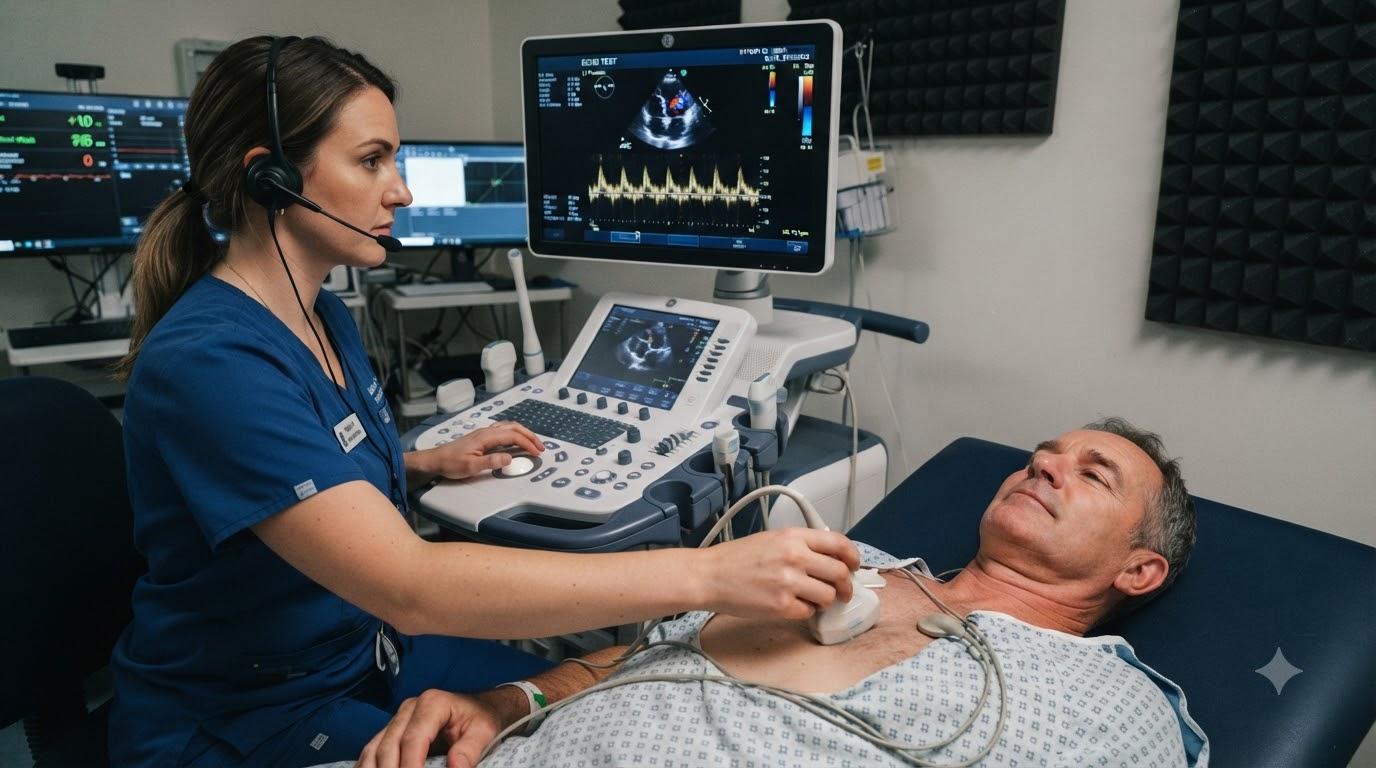
The idea of an echocardiography test done at home sounds immediately appealing — no travel, no waiting rooms, no logistical hassle, especially for elderly patients or those with limited mobility. But home-based cardiac imaging comes with a specific set of questions that most patients do not think to ask before confirming a booking, and the answers to those questions determine whether the result is clinically useful or not.
If you are considering this option, reviewing what an echo test at home in Bangalore through Ecotown Diagnostics involves is a sensible starting point before making any decision.
Why Patients Choose a Home Echo in the First Place
Echocardiography is not a painful or invasive test. But getting to a diagnostic centre can be genuinely difficult for certain patients:
-
Elderly individuals with limited mobility or post-surgical recovery constraints
-
Patients with severe heart failure or breathlessness who find travel exhausting
-
Those caring for a bedridden family member who has been advised cardiac imaging
-
Patients on strict bed rest following a cardiac event
-
Individuals managing multiple co-morbidities who find a clinical visit physically draining
In these situations, a home echo is not a luxury — it is a practical necessity. The question is not whether to do it at home, but how to ensure it is done properly.
What an Echocardiogram Actually Measures
Before evaluating providers, it helps to understand what the test is capturing. An echocardiogram uses ultrasound waves to create real-time images of the heart. Unlike an ECG, which records electrical activity, an echo shows the physical structure and movement of the heart.
A standard transthoracic echocardiogram assesses:
-
Cardiac chambers — size, shape, and wall thickness of all four chambers
-
Ejection fraction — the percentage of blood the left ventricle pumps out with each beat, a key indicator of heart function
-
Valve function — whether the mitral, aortic, tricuspid, and pulmonary valves are opening and closing correctly
-
Wall motion — whether all segments of the heart muscle are contracting normally
-
Pericardium — the sac surrounding the heart, checked for fluid accumulation
-
Doppler measurements — blood flow velocity and direction across valves and chambers
This is detailed cardiac imaging. The quality of information it provides depends entirely on the equipment used and the skill of the sonographer performing the scan.
The Core Challenge With Home-Based Echo Services
Portable Equipment Is Not Always Equal to Centre-Based Equipment
Portable echocardiography machines have improved significantly over the past decade. High-quality portable echo systems can produce diagnostically acceptable images in most patients. However, the range of portable machines available is wide — from advanced portable systems used by cardiologists in clinical settings to basic handheld devices that provide only limited imaging.
When you book an echo test at home in Bangalore, ask specifically what machine will be brought to your home. A reputable provider will be able to name the equipment and describe its capabilities without hesitation.
Image Quality Depends on the Sonographer
Even with excellent equipment, echocardiography is highly operator-dependent. Obtaining clear images of all cardiac structures requires skill, experience, and the ability to adjust technique for individual patient factors — body habitus, lung disease, or positioning limitations.
A trained cardiac sonographer or cardiologist performing the scan should have demonstrable experience with echocardiography specifically, not just general ultrasound.
Interpretation Must Be Done by a Cardiologist
The sonographer acquires the images. A cardiologist interprets them. These are two different roles, and both must be fulfilled for your report to be clinically meaningful. Confirm that the echo images will be reviewed and reported by a qualified cardiologist, not returned to you as raw footage.
Questions to Ask Before Confirming a Home Echo Booking
Do not confirm any home echo appointment before getting clear answers to these:
-
What specific echo machine will be used, and is it a diagnostic-grade portable system?
-
Who will perform the scan — a trained cardiac sonographer or a cardiologist?
-
Will the images be reviewed and reported by a cardiologist?
-
Will the report include ejection fraction, Doppler measurements, and a full valvular assessment?
-
How is the report delivered, and what is the turnaround time?
-
Is colour Doppler and tissue Doppler imaging available on the portable system being used?
-
What happens if image quality is insufficient due to patient-specific factors?
A provider that offers clear, specific answers to all of these questions is operating at a professional standard. Vague responses about "experienced technicians" and "high-quality equipment" without specifics are a reason to look further.
Setting Up the Right Environment at Home
The success of a home echo also depends on the conditions at the patient's location. When the sonographer arrives, the following setup makes the process smoother:
-
A firm surface for lying down — a bed is acceptable, but a firm mattress or examination table equivalent is better for image acquisition
-
Adequate lighting — the sonographer needs to see the screen clearly while scanning
-
A private, quiet space — minimising distractions helps the sonographer concentrate
-
Access to a power socket — portable machines require charging or direct power
-
Loose or easily removable upper clothing — access to the chest is required for the transducer
Inform the provider in advance about any positioning limitations the patient has, such as an inability to lie on the left side. Some echo views are acquired in the left lateral decubitus position, and the sonographer needs to know beforehand if this is not possible.
What the Echo Report Should Contain
A complete echocardiography report is not a single sentence. It should include structured measurements and descriptions covering:
-
Left and right ventricular dimensions and function
-
Left ventricular ejection fraction (LVEF) with the measurement method noted
-
Atrial dimensions
-
Valvular morphology and function for all four valves
-
Presence or absence of pericardial effusion
-
Doppler assessment of valve gradients and regurgitation severity
-
Any incidental findings
If the report you receive after an echo test at home in Bangalore contains only a brief summary without these measurements, it may not be sufficient for your cardiologist to base clinical decisions on. Share the report with your referring doctor and ask whether the detail level is adequate for their purposes.
When a Home Echo May Not Be Appropriate
There are specific situations where a home-based echo should not be the first choice:
-
Acute cardiac emergency — if the test is needed urgently due to a suspected cardiac event, a hospital setting with full imaging capability and immediate clinical backup is more appropriate
-
Complex congenital heart disease — detailed anatomical assessment of congenital defects often requires advanced imaging modes and expert interpretation available only at specialty cardiac centres
-
Pre-surgical planning — some pre-operative echo assessments require specific measurements or stress imaging that cannot be performed with portable equipment
-
Inadequate acoustic windows — patients with obesity, chronic lung disease, or chest wall deformities may produce poor images on portable systems, requiring a centre-based machine with better penetration
In any of these situations, the referring cardiologist's guidance should determine whether home-based imaging is appropriate.
Frequently Asked Questions
Is the echo test at home in Bangalore as accurate as a centre-based echo?
For most patients with standard imaging requirements, a home echo performed with diagnostic-grade portable equipment by a skilled sonographer produces clinically acceptable results. For complex assessments or patients with difficult acoustic windows, a centre-based machine may provide better image quality. Your cardiologist is best placed to advise.
How long does a home echocardiography appointment take?
The scan itself takes approximately 30 to 45 minutes. Allow additional time for the sonographer's setup and any positioning adjustments. The total visit is typically around one hour.
Does the patient need to prepare anything beforehand?
No fasting is required for a standard transthoracic echocardiogram. The patient should wear or have available loose upper clothing for easy chest access. Continue all regular medications unless the referring cardiologist has instructed otherwise.
Can the home echo detect a heart attack?
Echocardiography can identify wall motion abnormalities consistent with a previous heart attack — areas of the heart muscle that are not contracting normally due to prior ischaemic damage. It cannot diagnose an ongoing acute heart attack, which requires ECG changes and blood troponin levels alongside imaging.
How soon is the report available after a home echo?
Turnaround times vary by provider. Most established diagnostic services aim to deliver the cardiologist-interpreted report within 24 to 48 hours. Confirm this before booking, particularly if the report is needed for an upcoming cardiology consultation.
An echo test at home in Bangalore is a genuinely valuable option for patients who need it — but only when the equipment, the sonographer, and the reporting process meet the same standards you would expect at a clinical centre. Ask the right questions before you book, and the convenience of a home visit becomes an asset rather than a risk.

 English
 Arabic
 French
 Spanish
 Portuguese
 Deutsch
 Dutch
Dutch
 Italiano
 Russian
 Romaian
 Portuguese (Brazil)
 Greek
Greek