
EEG Test in Bangalore: Are You Choosing the Right Centre Without Knowing It?
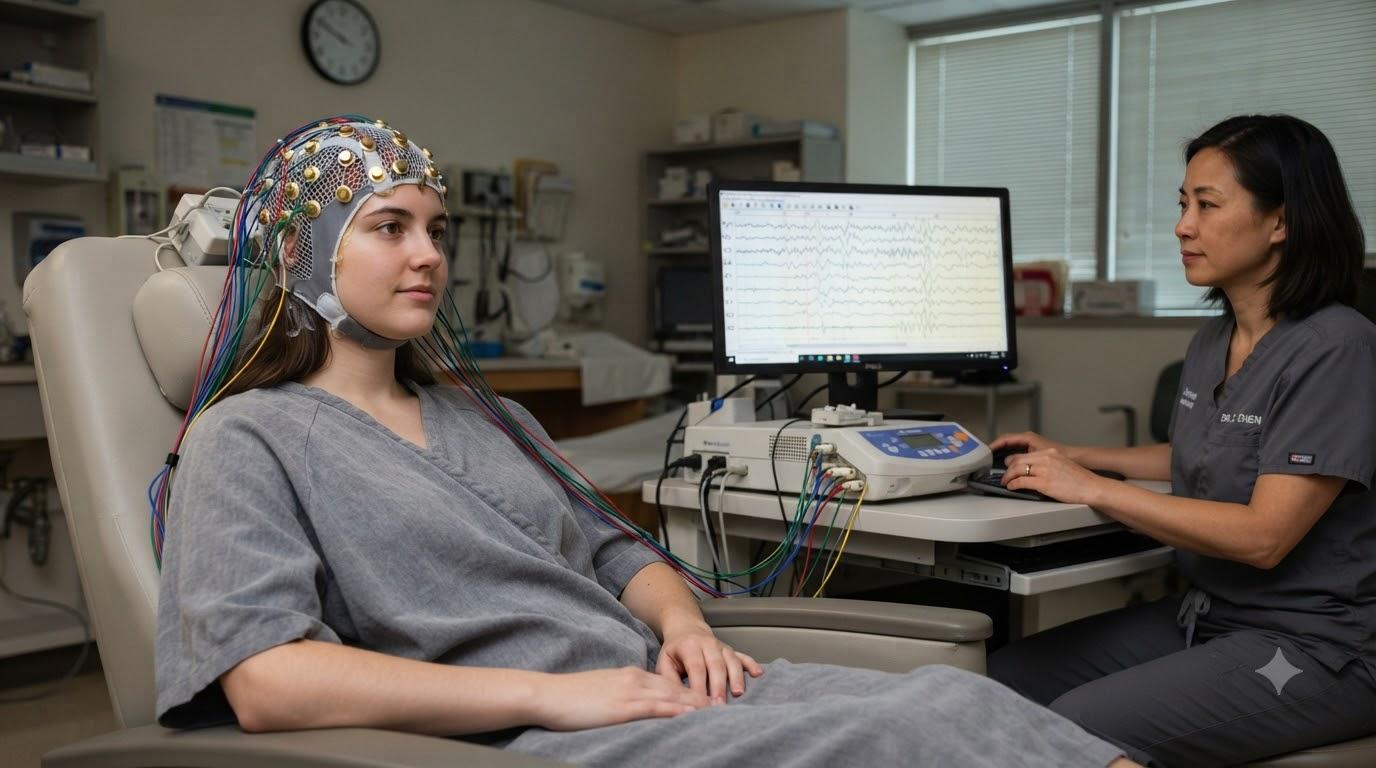
Most people searching for an EEG test in Bangalore have already been told by a neurologist that they need one. The test is scheduled, but the questions start piling up — where should I go, how do I prepare, will the results be accurate, and does the centre I choose actually matter?
It matters more than most people realise. If you want reliable results with certified equipment and a properly trained technician, look at getting your EEG test in Bangalore done at Ecotown Diagnostics, a centre known for clean recordings, experienced staff, and timely reporting.
What an EEG Actually Measures — and Why Quality Counts
An electroencephalogram records the electrical activity of your brain through small electrodes placed on your scalp. It is painless and non-invasive, but the quality of the recording depends heavily on the equipment used, the skill of the technician, and whether the environment is properly controlled.
A poor-quality EEG can produce artefacts — interference in the signal caused by muscle movement, poor electrode contact, or background electrical noise. These artefacts can obscure real findings or, more dangerously, mimic abnormal brain activity. That is why choosing the right centre is not a minor detail.
Why Doctors Recommend an EEG
Your neurologist may have recommended this test for a range of reasons. The most common include:
-
Epilepsy or seizure disorders — to identify abnormal electrical patterns linked to seizures
-
Sleep disorders — including certain forms of insomnia or parasomnias
-
Encephalopathy — to assess diffuse brain dysfunction
-
Unexplained fainting or blackouts — to rule out seizure activity
-
Monitoring after a head injury or stroke — to assess brain function over time
-
Pre-surgical evaluation — to localise seizure focus before epilepsy surgery
Understanding why you need the test helps you ask more informed questions when you book the appointment.
What Separates a Good EEG Centre from a Basic One
Equipment and Signal Quality
A digital EEG system with a sufficient number of channels (typically 21 or more in clinical practice) gives a much more detailed picture of brain activity than older or lower-channel systems. Ask whether the centre uses a full digital system and whether the recordings are reviewed by a qualified neurophysiologist or neurologist.
Technician Training
The person who applies the electrodes and monitors the recording must be trained in EEG acquisition. Electrode placement must follow the standard 10-20 system precisely. Errors in placement affect every reading that follows.
Report Turnaround
For most patients, waiting several days for an EEG report adds unnecessary anxiety. When looking for an EEG test in Bangalore, check whether the centre provides reports within 24 to 48 hours and whether the report is reviewed by a specialist rather than automatically generated.
Provocation Techniques
A standard EEG includes specific activation procedures — hyperventilation and photic stimulation — designed to bring out abnormal activity that might not appear during a resting state. A well-equipped centre will include these as part of the standard protocol. If a centre skips these steps, the diagnostic value of the recording is reduced.
How to Prepare for Your EEG Appointment
Preparation directly affects the quality of your results. Follow these steps:
-
Wash your hair the night before — clean, product-free hair allows electrodes to make better contact with the scalp
-
Avoid hair oils, gels, and conditioners on the day of the test
-
Sleep deprivation may be requested — your doctor might ask you to sleep fewer hours the night before, particularly if a sleep-deprived EEG is needed to capture certain types of activity
-
Take your regular medications unless your doctor has specifically told you to stop any of them
-
Avoid caffeine for a few hours before the test
-
Eat normally — do not arrive fasting unless instructed otherwise
The test itself typically takes between 30 minutes and one hour, depending on whether a sleep recording is included.
What Happens During the Test
You will be asked to lie or sit in a relaxed position. The technician will apply a small amount of conductive gel to specific points on your scalp and attach the electrodes. There is no needle involved. Once the electrodes are in place, you will be asked to remain still, breathe normally, and follow a few simple instructions.
During the recording, the technician will ask you to:
-
Open and close your eyes at intervals
-
Breathe deeply and rapidly for a few minutes (hyperventilation)
-
Look at a flashing light (photic stimulation)
If a sleep EEG has been requested, you may be asked to fall asleep during the recording. The technician monitors the signal throughout and may repeat segments if movement or interference affects the quality.
Understanding Your EEG Report
A neurophysiologist or neurologist reviews the raw EEG tracing and produces a written interpretation. The report will describe:
-
The background rhythm and whether it is normal for your age
-
Any focal or generalised abnormalities
-
The response to activation procedures
-
Whether epileptiform discharges (spikes, sharp waves) were present
A normal EEG does not automatically rule out epilepsy, and an abnormal EEG does not automatically confirm it. The report is always interpreted in the context of your clinical history. Your referring doctor will explain what the findings mean for your specific situation.
EEG vs. MRI — Which One Do You Need?
Some patients are confused about whether they need an EEG or an MRI of the brain. These are different tests answering different questions.
An MRI shows the structure of the brain — tumours, lesions, vascular changes, and anatomical abnormalities. An EEG measures the functional electrical activity of the brain. In many cases, a neurologist will request both. One does not replace the other.
If your neurologist has specifically requested an EEG test in Bangalore, that decision is based on the symptoms you have described. Do not substitute it with an MRI unless advised to do so.
Booking an EEG Test in Bangalore: Practical Checklist
Before confirming your appointment at any diagnostic centre, run through these points:
-
Does the centre use a digital multi-channel EEG system?
-
Is the test interpreted by a qualified neurologist or neurophysiologist?
-
Are activation procedures (hyperventilation and photic stimulation) included?
-
What is the report turnaround time?
-
Is the centre accredited or certified?
-
Is a referral required, or can you self-refer?
-
Are appointment slots flexible, including early morning options?
Centres that can answer these questions clearly and without hesitation are generally more reliable than those that offer vague reassurances.
Frequently Asked Questions
Is the EEG test painful?
No. The EEG is completely painless. The electrodes sit on the surface of the scalp and record electrical signals passively. There is no electric current sent into the brain.
How long does it take to get my EEG report?
At most well-equipped centres, reports are available within 24 to 48 hours. Some centres offer same-day reporting for urgent cases. Confirm this at the time of booking.
Can I drive myself to and from the EEG appointment?
For a routine EEG, most patients can drive themselves. However, if you have been asked to undergo a sleep-deprived EEG, it is safer to arrange transport, as you may feel drowsy during and after the test.
Does my child need a referral letter for a paediatric EEG?
Most centres require a referral from a neurologist or paediatrician. Bring any previous medical records, seizure diaries, or medication lists, as these help the interpreting doctor give a more clinically relevant report.
Will washing my hair after the test be difficult?
A small amount of conductive gel is used during the test. This washes out easily with shampoo and water. The gel does not permanently affect your hair.
Can a normal EEG result mean I do not have epilepsy?
Not necessarily. A single EEG captures a brief window of brain activity. Some patients with epilepsy show normal findings between seizures. Your neurologist may recommend a repeat EEG, a prolonged EEG, or video-EEG monitoring if initial results are inconclusive.

 English
 Arabic
 French
 Spanish
 Portuguese
 Deutsch
 Turkish
 Dutch
Dutch
 Italiano
 Romaian
 Portuguese (Brazil)
 Greek
Greek