
NCV Blood Test – Understanding Nerve Conduction Velocity Testing and What Results Mean
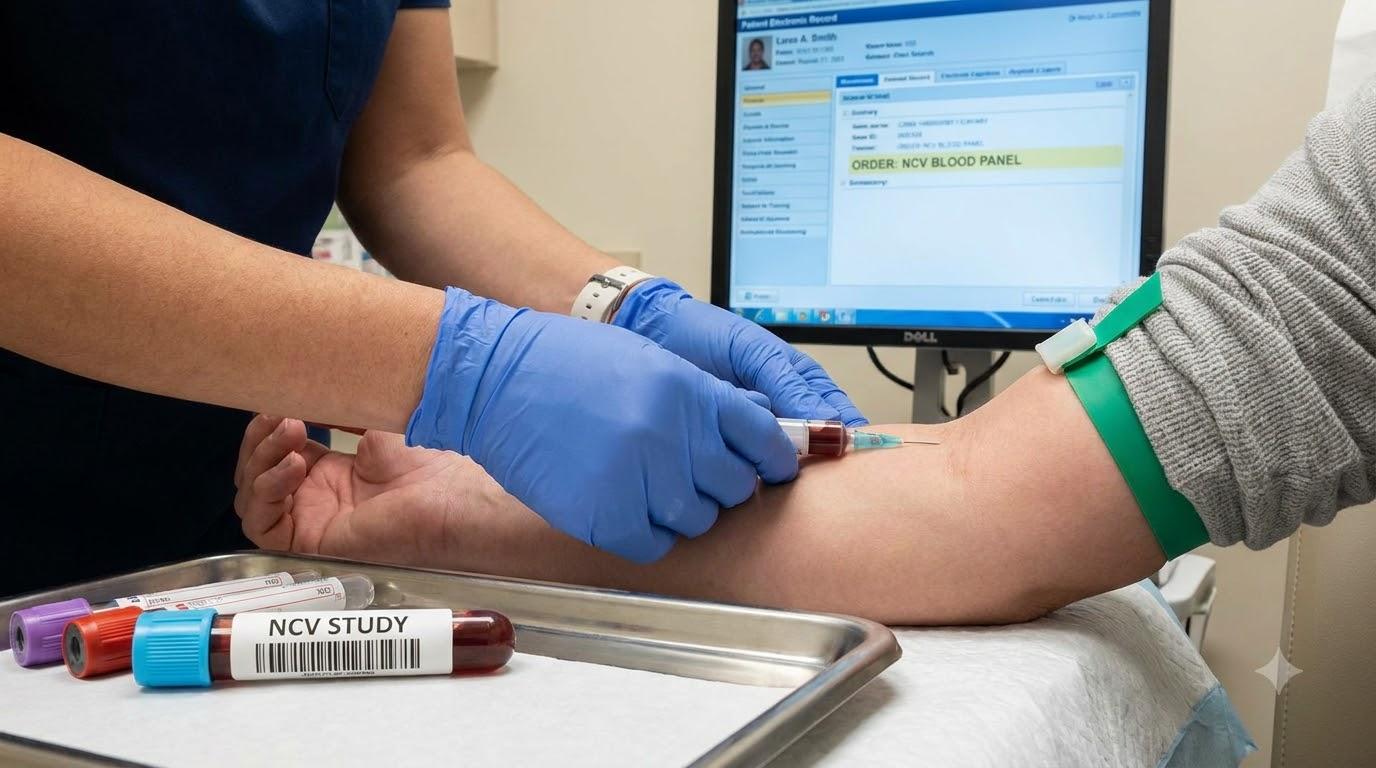
Clarifying NCV Testing: What It Actually Measures and Why Your Doctor Ordered It
Many patients receive a referral for "NCV blood test" and become confused about what they're actually getting. The confusion arises because NCV (Nerve Conduction Velocity) testing isn't technically a blood test—it's an electrophysiological test measuring how quickly electrical signals travel through nerves. However, understanding what an NCV blood test actually involves, why doctors order it, what it detects, and how results guide treatment is essential preparation. This comprehensive guide removes confusion by explaining the test in clear, practical terms and helping you understand what to expect when your doctor recommends NCV testing.
The term "NCV blood test" typically represents a miscommunication—the actual NCV test involves electrical stimulation and specialized equipment, not drawing blood. However, NCV testing often accompanies actual blood tests and neurological assessment, creating confusion about what's being tested and why. Clarifying these distinctions helps you prepare appropriately and understand your results.
NCV vs. Blood Tests: Understanding the Difference
Before diving into specifics, clarifying what NCV testing actually is prevents confusion about the testing process:
What NCV Testing Actually Is
Nerve Conduction Velocity (NCV) testing measures the speed at which electrical impulses travel along peripheral nerves. It's a specialized electrophysiological test, not a laboratory blood analysis.
The Process:
-
Electrodes are placed on your skin over specific nerves
-
An electrical stimulator delivers mild pulses to activate the nerve
-
Recording electrodes pick up the signal as it travels along the nerve
-
A computer calculates the speed of conduction
-
Slower than normal speed indicates nerve damage
Key characteristic: NCV testing directly measures nerve function through electrical signals, not blood chemistry.
Why Confusion Exists
Several factors create the "NCV blood test" terminology confusion:
Multiple Tests Often Ordered Together
When doctors suspect nerve problems, they typically order:
-
NCV test (electrophysiological)
-
EMG test (muscle electrical activity)
-
Blood tests (to identify metabolic causes of nerve problems)
A single doctor's order might say "nerve conduction study with blood work," creating confusion about what's actually being tested.
Comprehensive Nerve Workup
A typical workup for suspected neuropathy includes:
-
Blood tests checking glucose, thyroid, vitamin B12, kidney function (actual blood draws)
-
NCV/EMG testing (electrical stimulation, no blood draw)
-
Neurological examination
-
Sometimes imaging (ultrasound or MRI)
The entire workup involves blood testing, but NCV specifically doesn't.
Terminology Misunderstanding
Patients sometimes refer to any medical test as "blood test," not realizing NCV is a different type of testing entirely. This colloquial usage creates genuine confusion about what procedure to expect.
What NCV Testing Actually Requires
No blood is drawn during standard NCV testing. However, you may have:
-
Electrodes placed on skin
-
Mild electrical stimulation (tingling sensation)
-
Electrode gel applied
-
Muscle twitching from stimulation
-
No needles or blood draws
Why Doctors Order NCV Testing: Common Clinical Scenarios
Understanding why your doctor ordered the test clarifies its importance:
Suspected Peripheral Neuropathy
Peripheral neuropathy causes numbness, tingling, or weakness in hands and feet. NCV testing determines whether the problem originates in the peripheral nerves (as opposed to spinal cord, brain, or muscles).
Symptoms prompting NCV referral:
-
Progressive numbness or tingling in fingers or toes
-
Weakness in hands or feet
-
Loss of balance or coordination
-
Sensitivity to touch or temperature changes
-
Burning pain in extremities
What NCV shows:
Whether conduction velocity is slowed (indicating nerve damage) and which nerves are affected. This guides specific diagnosis and treatment.
Diabetic Neuropathy Assessment
Diabetes commonly damages peripheral nerves. NCV testing determines:
-
Whether nerve damage has occurred
-
Severity of the damage
-
Which nerves are most affected
-
Whether damage is progressing or stable
Clinical importance:
Detecting diabetic neuropathy early allows interventions (glucose control, medication, foot care) to prevent progression and complications.
Carpal Tunnel Syndrome Diagnosis
Before considering surgery for carpal tunnel syndrome, NCV testing confirms:
-
Whether median nerve compression actually exists
-
Severity of compression
-
Extent of nerve damage
-
Prognosis for recovery
Why it matters:
Not all hand numbness is carpal tunnel. NCV testing confirms the diagnosis before surgery, reducing unnecessary procedures.
Post-Nerve Injury Evaluation
After nerve injury or repair surgery, NCV testing tracks recovery:
-
Whether nerve regeneration is occurring
-
Speed of recovery
-
Prediction of functional recovery potential
-
Need for additional intervention
Timeline significance:
Serial NCV tests over weeks to months show whether healing is progressing appropriately.
Suspected Guillain-Barré Syndrome
This autoimmune condition affecting motor nerves causes rapidly progressive weakness. NCV testing shows characteristic patterns indicating GBS and severity.
Urgency:
GBS is a medical emergency. NCV testing helps confirm diagnosis quickly so treatment (immunoglobulin or plasmapheresis) can begin.
Motor Neuron Disease Suspicion
Conditions like ALS (amyotrophic lateral sclerosis) show specific NCV patterns. Testing helps differentiate ALS from other causes of progressive weakness.
Understanding NCV Test Results
Once testing completes, interpreting results correctly guides your medical decisions:
Normal NCV Results
What it means:
-
Electrical signals travel through tested nerves at expected speed for your age and body size
-
No significant nerve damage detected
-
Nerve insulation (myelin) is intact
-
Nerve fibers (axons) are functioning properly
Typical normal values:
-
Most peripheral nerves: 40–70 meters per second (m/s)
-
Values vary by nerve and individual factors
-
Your results are compared to age- and size-matched norms
What normal results don't mean:
-
You don't have nerve problems (other nerve problems might not show on NCV)
-
Your symptoms are psychological (symptoms are real; cause might be different)
-
No further investigation needed (depends on clinical situation)
Next steps with normal results:
-
If symptoms persist despite normal NCV, further investigation may be needed
-
Other causes (structural, metabolic, central nervous system) may require different testing
-
Your doctor will recommend appropriate next steps
Abnormal NCV Results: Slowed Conduction
What it means:
Electrical signals travel slower than normal through tested nerves, indicating nerve damage.
Possible causes:
-
Demyelination (insulation damage) – Signals can't travel as fast because myelin sheath is damaged
-
Axonal loss (nerve fiber damage) – Fewer healthy nerve fibers conducting signals
-
Nerve compression – Pressure on nerves slows conduction at compression site
-
Metabolic or toxic neuropathy – Diabetes, toxins, or metabolic problems damage nerves
Pattern analysis:
Neurologists examine the pattern of slowing:
-
Uniform slowing across long nerve distance suggests demyelination
-
Slowing at specific point suggests nerve compression
-
Amplitude reduction (smaller signal) suggests axonal damage
-
Specific nerve pattern suggests particular diagnosis
Severity assessment:
-
Mild slowing: Early or mild nerve damage
-
Moderate slowing: Established nerve damage
-
Severe slowing: Significant nerve dysfunction
What abnormal results mean for treatment:
-
Identifies specific nerve problem location
-
Guides specific diagnosis
-
Predicts recovery potential
-
Helps determine appropriate treatment
-
Establishes baseline for tracking progression or recovery
Abnormal NCV Results: Reduced Amplitude
What it means:
The electrical signal is smaller (lower amplitude) than expected, typically indicating axonal damage (nerve fiber loss).
Clinical significance:
-
Suggests nerve fibers have died rather than just insulation damage
-
Indicates worse prognosis than pure demyelination
-
Suggests cause may be metabolic toxicity, vitamin deficiency, or severe compression
What it means for recovery:
Axonal damage recovers more slowly and completely than demyelination. Regeneration of nerve fibers takes months to years and may be incomplete.
Demyelination vs. Axonal Damage: Why It Matters
Understanding which type of nerve damage you have guides treatment and prognosis:
Demyelination (Insulation Damage)
-
Pattern on NCV: Slowed conduction, relatively preserved amplitude
-
Speed of recovery: Faster (weeks to months)
-
Completeness of recovery: More complete, often near-normal
-
Examples: Early diabetic neuropathy, carpal tunnel syndrome, Guillain-Barré syndrome
-
Treatment: Often focuses on removing cause (glucose control, releasing compression, immune therapy)
Axonal Damage (Nerve Fiber Loss)
-
Pattern on NCV: Reduced amplitude, variable slowing
-
Speed of recovery: Slower (months to years)
-
Completeness of recovery: More incomplete, often partial
-
Examples: Advanced neuropathy, severe trauma, chronic compression
-
Treatment: Often supportive; focuses on preventing further damage and managing symptoms
Why knowing matters:
Your prognosis and recovery potential depend on damage type. Demyelination often recovers well with treatment; axonal damage may leave permanent deficits.
Interpreting Your Complete Nerve Workup Results
NCV testing is rarely ordered in isolation. A complete workup includes multiple components:
Typical Complete Nerve Assessment Includes
NCV Testing
-
Measures speed of electrical conduction through nerves
-
Identifies large fiber nerve damage
-
Shows demyelination vs. axonal pattern
EMG (Electromyography) Testing
-
Measures electrical activity in muscles
-
Identifies muscle damage vs. nerve damage
-
Shows pattern of muscle activation
Blood Testing
-
Glucose (screens for diabetes and blood sugar problems)
-
Thyroid function (hypothyroidism can cause neuropathy)
-
Vitamin B12 (deficiency causes neuropathy)
-
Kidney function (kidney disease causes uremic neuropathy)
-
Liver function (liver disease can cause neuropathy)
-
Metabolic panel (electrolyte abnormalities)
-
Sometimes: autoimmune markers, heavy metal screening, genetic testing
Neurological Examination
-
Doctor's clinical assessment of nerve function
-
Strength testing
-
Sensory testing
-
Reflex assessment
-
Proprioception (position sense) testing
Imaging (if indicated)
-
Ultrasound (shows nerve thickness, fluid around compressed nerves)
-
MRI (shows spinal cord, disc herniations, structural problems)
How Results Integrate
A complete diagnosis emerges from combining all test results:
Example 1: Carpal Tunnel Syndrome
-
NCV shows: Slowed conduction across wrist, preserved conduction elsewhere
-
EMG shows: Intact muscle (no denervation)
-
Blood tests: Normal (rules out metabolic causes)
-
Neurological exam: Positive Phalen's and Tinel's signs
-
Imaging: Ultrasound shows thickened median nerve at wrist
-
Diagnosis: Carpal tunnel syndrome (nerve compression)
-
Prognosis: Good with treatment (splinting, injection, surgery if needed)
Example 2: Diabetic Neuropathy
-
NCV shows: Slowed conduction in multiple nerves, reduced amplitude
-
EMG shows: Denervation pattern (suggests axonal loss)
-
Blood tests: High glucose, elevated HbA1c
-
Neurological exam: Reduced sensation in stocking-glove distribution
-
Imaging: Normal (rules out structural cause)
-
Diagnosis: Diabetic polyneuropathy (metabolic nerve damage)
-
Prognosis: Depends on glucose control; may progress or stabilize
What to Do With Your NCV Results
Understanding results is only half the battle. Using them appropriately guides your care:
If Results Are Normal
What to do:
-
Discuss with your doctor why symptoms persist despite normal NCV
-
Ask whether other testing is needed
-
Consider whether symptoms might have non-neurological causes
-
Ask about management of current symptoms while cause is investigated
Possible next steps:
-
Additional testing (EMG, imaging, blood work)
-
Referral to different specialist
-
Symptomatic treatment while diagnosis is clarified
-
Reassurance that major nerve damage has been ruled out
If Results Show Demyelination Pattern
What to do:
-
Discuss specific diagnosis with your doctor
-
Ask about treatment options for underlying cause
-
Inquire about prognosis and expected recovery timeline
-
Ask what can be done to prevent progression
Possible treatments:
-
Addressing underlying cause (glucose control for diabetes, compression release for carpal tunnel)
-
Medications (gabapentin, pregabalin for symptom management)
-
Physical therapy
-
Lifestyle modifications
-
Monitoring with repeat testing
If Results Show Axonal Damage
What to do:
-
Understand that recovery will be slower
-
Discuss long-term prognosis
-
Ask about preventing further damage
-
Develop symptom management strategies
-
Plan for functional recovery aids if needed
Prognosis factors:
-
Extent of damage (mild vs. severe)
-
Age and overall health
-
Underlying cause (reversible vs. permanent)
-
How quickly you start treatment
Common Misconceptions About NCV Testing
Clarifying common misunderstandings prevents unrealistic expectations:
"NCV Testing Will Show All My Nerve Problems"
Reality:
NCV testing is excellent for large fiber peripheral nerve problems but misses:
-
Small fiber neuropathy (affecting small unmyelinated nerves)
-
Central nervous system problems (brain or spinal cord)
-
Autonomic nerve damage (automatic nervous system)
-
Muscle disorders that mimic nerve problems
If NCV is normal but symptoms persist, additional testing (small fiber biopsy, imaging, autonomic testing) may be needed.
"If NCV is Normal, I Don't Have a Nerve Problem"
Reality:
Normal NCV specifically rules out large peripheral nerve damage but doesn't rule out:
-
Small fiber neuropathy
-
Nerve root problems (from disc herniation)
-
Spinal cord problems
-
Brain problems
-
Muscle disorders
Symptoms can be real and significant despite normal NCV. Further investigation is warranted.
"NCV Results Immediately Explain My Symptoms"
Reality:
NCV results are one component of diagnosis. Clinical context matters enormously. The same NCV pattern can indicate different conditions in different patients. Results must be interpreted by a neurologist considering:
-
Your specific symptoms
-
Symptom timeline and progression
-
Medical history
-
Physical examination findings
-
Other test results
"My NCV Test Hurt Because I Have Nerve Damage"
Reality:
NCV discomfort isn't related to whether you have nerve damage. Discomfort during testing depends on:
-
Skin sensitivity
-
Technician technique
-
Individual pain perception
-
Stimulation intensity used
-
Muscle thickness (affects stimulation sensation)
Some people without nerve damage find NCV uncomfortable; others with severe nerve damage tolerate it easily.
Frequently Asked Questions
Why is it called "NCV blood test" if no blood is drawn?
The term "NCV blood test" is technically incorrect and causes confusion. It likely arose because NCV testing is often ordered alongside blood tests (to identify metabolic causes of nerve problems). Patients sometimes combine these into "NCV blood test." The accurate term is simply "NCV test" or "Nerve Conduction Study."
Do I need to fast before NCV testing?
Fasting isn't required for NCV testing itself. However, if blood tests are being performed the same day (which is common), fasting may be required for accurate blood glucose and lipid results. Ask your testing centre about whether fasting is needed for your specific appointment.
Can NCV testing diagnose specific conditions?
NCV testing identifies patterns of nerve damage but doesn't definitively diagnose specific conditions on its own. Diagnosis requires integrating NCV results with:
-
Clinical symptoms
-
Physical examination findings
-
Other test results (blood work, imaging)
-
Medical history
Your neurologist uses all this information to reach a diagnosis.
How long does NCV testing take?
Typically 30–60 minutes depending on:
-
How many nerves are tested
-
Whether EMG is also performed
-
Technician efficiency
-
Your comfort and anxiety level
The actual test is quick; most time is spent setting up electrodes and explaining procedures.
Will I have side effects or complications from NCV testing?
NCV testing is very safe with minimal risk of complications. Possible minor effects include:
-
Mild skin redness where electrodes were placed (fades within hours)
-
Temporary soreness from stimulation (unusual)
-
Bruising from electrode gel (very rare)
-
Anxiety during testing (addressed by explaining procedure)
Serious complications are exceptionally rare when performed by trained technicians.
What should I do if my results are abnormal?
-
Schedule a follow-up appointment with the neurologist who ordered testing
-
Bring all results and ask for detailed explanation
-
Discuss underlying diagnosis and what it means
-
Ask about treatment options
-
Understand prognosis and recovery timeline
-
Follow recommended treatment plan
-
Ask about follow-up testing timeline
-
Get copies of all results for your records

 English
 Arabic
 French
 Spanish
 Portuguese
 Deutsch
 Turkish
 Dutch
Dutch
 Italiano
 Russian
 Romaian
 Portuguese (Brazil)