
Australia Student Visa Delays: Why Application Timing Matters
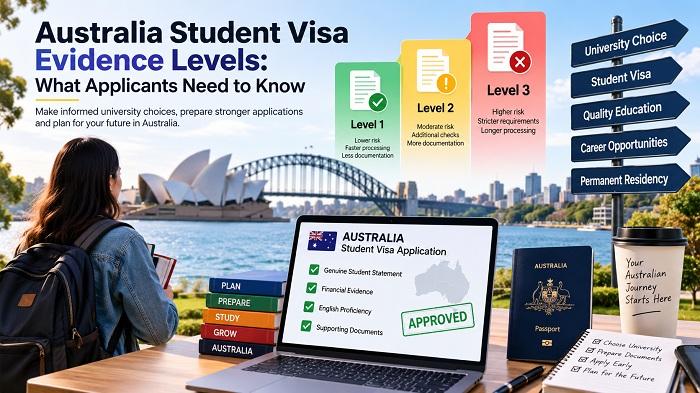
For international students, the timing of an Australian university application can matter almost as much as the application itself. A visa submitted with little time before the course starts leaves less room to respond if immigration authorities request additional documents or processing takes longer than expected.
That concern has become more relevant in 2026. Australia’s September evidence level review is taking place after a sharp increase in student visa refusals earlier in the year. The research paper reports that one in three student visa applications to Australian universities was refused in February, the highest monthly refusal rate recorded in 21 years of tracking.
The figures do not mean every applicant faces the same outcome. They do show why students should build more time into their plans and pay attention to the visa environment surrounding their chosen institution.
Why Processing Conditions Can Change
Australia's student visa system uses evidence levels to classify education providers and source countries according to visa-related risk. The system ranges from Level 1 to Level 3, with higher levels generally requiring more supporting evidence.
One unusual feature of the system is the weight given to refusal outcomes. The research paper says these outcomes account for roughly half of an institution's risk score. That means a sudden change in applicant behaviour can affect an institution's classification even when the university itself has not changed substantially.
The 2026 student market provides a clear example. Chinese demand fell by around 39% year-on-year in February, while universities increased their reliance on South Asian markets.
The difference in refusal rates between markets was substantial. The research reports rates of 65% for Nepal, 51% for Bangladesh, 40% for India, 38% for Sri Lanka and 36% for Bhutan.
This creates a potential knock-on effect. A university that attracts more applicants from higher-refusal markets may face greater scrutiny, which can then mean additional paperwork for future applicants.
For students, this is why a university should not be judged only by its reputation or ranking. Visa-related conditions deserve a place in the decision-making process.
Early Applications Create More Breathing Room
Applying early cannot guarantee a visa decision, but it can give students more time to deal with unexpected developments.
Suppose a student's course begins in February and their visa application is submitted only a few weeks before orientation. If the university moves into a stricter evidence category or immigration authorities request more documentation, the student has very little time to react.
An earlier application creates a buffer.
That buffer becomes particularly useful when financial documents, Genuine Student evidence or other supporting material needs clarification. Students should aim to have their key documents prepared before submitting rather than assembling them in response to a request.
Financial planning also needs attention. According to the research paper, Australia's student visa application fee is currently AU$2,000 and is non-refundable. A refusal followed by a new application therefore creates another substantial cost.
Students also have academic deadlines to manage. Preparing research projects or dissertations while dealing with university applications can quickly become difficult. For students looking for subject-specific academic assistance during a busy period, Expertsmind.com’s dissertation writing support can be a useful study resource.
The important point is organisation. Visa preparation, university deadlines and academic work should not be treated as separate calendars.
A Strong Application Still Matters
Students sometimes focus heavily on the risk classification of their university and overlook the quality of their own application.
That is a mistake.
Evidence levels describe broader patterns. They do not determine the individual circumstances of every student. Applicants should therefore concentrate on providing a coherent Genuine Student explanation, credible financial evidence and complete supporting documentation.
The study rationale should make sense. Why this course? Why Australia? Why this institution? How does the qualification connect with the student's previous education and future plans?
The stronger the connection between these answers, the easier it is for an application to present a clear story.
Students should also avoid assuming that a Level 2 or Level 3 institution offers poor education. The research specifically points out that evidence levels reflect aggregate visa refusal history rather than teaching quality or academic value.
A university can therefore be academically strong while still operating under a stricter visa-related classification.
Plan Beyond the First Visa
University selection should not stop at the point where a student receives a visa.
Students who want to remain in Australia after graduation should consider how their chosen qualification fits into their longer-term plans. A student visa itself does not automatically lead to permanent residency, so understanding possible future pathways can influence course and university decisions.
For students researching that transition, the guide to moving from a student visa to permanent residency in Australia provides relevant background for longer-term planning.
This does not mean students should select a course solely because they hope it will lead to residency. Academic fit and career prospects remain central. The better approach is to consider the complete journey before committing to a major financial and educational decision.
Australia's September evidence level review also raises a broader issue for universities. The research notes that industry bodies have pushed for changes to the way risk classifications respond to sudden market shifts. The International Education Association of Australia has called for a freeze, while Universities Australia has advocated greater access to refusal data.
For applicants, the message is straightforward. Visa conditions can change during an admissions cycle, and students cannot control every factor behind those changes.
They can control when they apply, how carefully they prepare and how clearly they explain their study plans.
The best strategy is therefore not to predict exactly what Australia’s visa system will look like next month. It is to leave enough time to handle uncertainty. Choose your university carefully, prepare your evidence early and make sure every part of the application supports the same study story.
When visa rules move, preparation becomes the one advantage students can carry with them.

 English
 Arabic
 French
 Spanish
 Portuguese
 Deutsch
 Dutch
Dutch
 Italiano
 Russian
 Romaian
 Portuguese (Brazil)
 Greek
Greek