
What Should Buyers Know About Gangnammould Storage Cabinet Mold Options
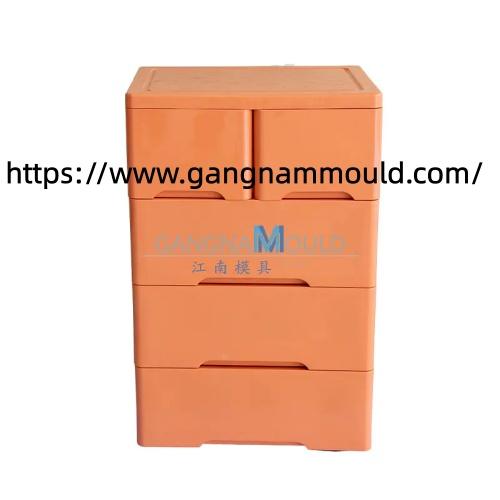
Storage Cabinet Mold decisions influence how smoothly manufacturing lines operate over extended periods. Careful selection of production tooling helps maintain consistent cycle times reduce scrap rates and support predictable output levels. Teams reviewing options focus on steel hardness cooling channel design and cavity configuration because these elements directly affect part quality and press uptime.
Material selection forms the foundation of reliable tooling. Common grades such as P20 718 and S136 offer different balances of hardness polishability and corrosion resistance. Matching the steel to the expected shot volume and resin type prevents premature wear. For higher volume runs a harder surface layer can extend intervals between maintenance while softer grades suit shorter campaigns or frequent design changes. Thermal conductivity also plays a role since efficient heat removal shortens cooling phases and stabilizes dimensions.
Design details further determine performance. Uniform wall sections across the formed part reduce sink marks and warpage. Proper draft angles ease ejection and protect surface finish. Vent placement avoids air traps that cause burns or incomplete fills. Gate location influences flow balance especially in multi cavity setups. When these features receive careful attention the resulting parts show tighter tolerances and fewer secondary operations. Cooling layout deserves equal focus because poorly placed channels create hot spots that lengthen cycles and increase internal stress.
Compatibility with existing presses remains essential. Tooling base size must fit the machine platen while clamp force requirements stay within available capacity. Hot runner systems can lower material waste and speed cycles yet they demand precise temperature control. Cold runner alternatives simplify maintenance for lower volume work. Checking ejection force and stroke ensures the press can handle the part without added cylinders or complex mechanisms. Early alignment of these parameters avoids costly adjustments after delivery.
Maintenance practices extend useful life. Regular cleaning of cooling lines prevents scale buildup that reduces heat transfer. Inspection of parting lines and ejector pins catches wear before it affects part quality. Proper storage of idle tooling in controlled humidity environments limits corrosion. Scheduled polishing restores surface finish after abrasive resins have been processed. Documenting shot counts and observed changes allows predictive planning rather than reactive repairs.
Customization options address specific project needs. Adjustable cavity inserts accommodate minor geometry updates without full retooling. Modular side actions handle undercuts while keeping overall size compact. Surface textures ranging from matte to high gloss can be built directly into the cavity. Collaboration during the design phase confirms that wall thickness draft and gate positions suit both the part function and the chosen resin. Such coordination reduces trial iterations and shortens time to stable production.
Gangnammould applies these principles when preparing tooling for household organization products. Attention to the points above supports steady results across multi shift schedules. Operators notice fewer interruptions and more predictable part dimensions once the tooling settles into routine use.
Review of available designs and technical data can be completed at https://www.gangnammould.com/product/ so project requirements can be matched with suitable configurations.

 English
 Arabic
 French
 Spanish
 Portuguese
 Deutsch
 Turkish
 Dutch
Dutch
 Italiano
 Romaian
 Portuguese (Brazil)
 Greek
Greek