
How to Build a Crypto Token for Your Web3 Project
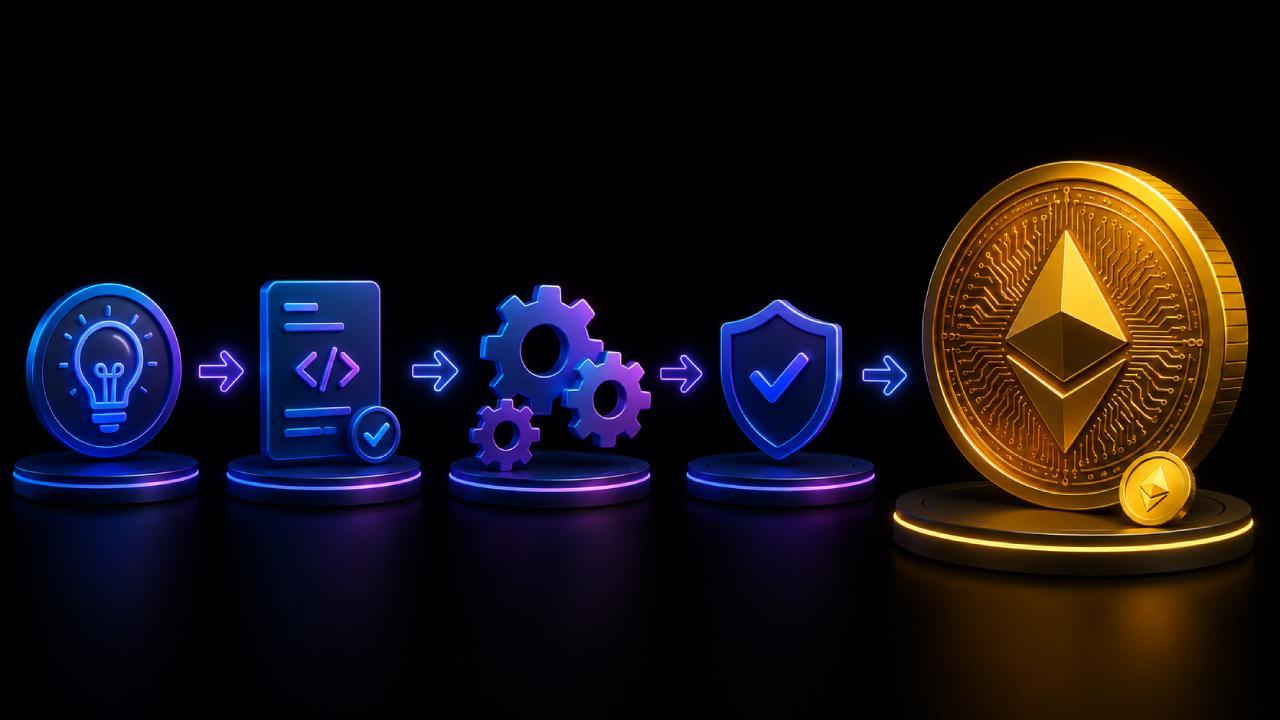
Crypto tokens have become an important component of the Web3 economy, powering decentralized applications, blockchain ecosystems, DeFi platforms, gaming projects, loyalty systems, governance models, and tokenized assets. For businesses entering Web3, creating a crypto token can provide a programmable digital asset that supports specific ecosystem functions.
However, building a crypto token involves much more than writing a smart contract. A successful token requires a clear purpose, appropriate tokenomics, blockchain selection, secure development, testing, compliance planning, wallet integration, and a strategy for long-term utility.
This guide explains how to build a crypto token for your Web3 project and the key decisions to consider throughout the development process.
What Is a Crypto Token?
A crypto token is a blockchain-based digital asset created on an existing blockchain network. Unlike a native cryptocurrency such as Bitcoin or Ether, which operates on its own blockchain, many tokens are issued using established blockchain standards.
Crypto tokens can support different purposes, including:
-
Utility
-
Governance
-
Payments
-
Rewards
-
Access
-
Staking
-
Ecosystem incentives
-
Asset representation
For example, a Web3 application can use a token to reward users for participating in its ecosystem, while a decentralized protocol can use one for governance or network-related incentives.
The token's functionality should be connected to the project's actual business or ecosystem requirements.
Why Build a Crypto Token for a Web3 Project?
A well-designed token can create an economic layer around a blockchain product.
It can help Web3 businesses:
Encourage user participation: Tokens can reward desired activities within an ecosystem.
Support governance: Token holders can potentially participate in eligible governance mechanisms.
Enable payments: Tokens can facilitate transactions within a platform.
Create utility: Tokens can provide access to products, services, features, or ecosystem benefits.
Support incentives: Token-based rewards can encourage liquidity, referrals, content creation, or other ecosystem contributions.
However, a project should not create a token simply because tokens are popular. The token should solve a genuine product, economic, or ecosystem requirement.
How to Build a Crypto Token Step by Step
1. Define the Token's Purpose
Start with the most important question:
Why does your Web3 project need a token?
Define exactly what the asset is expected to do.
For example, the token could provide:
-
Access to premium platform features
-
Governance rights
-
Payment functionality
-
Staking opportunities
-
User rewards
-
Ecosystem incentives
-
In-app utility
Create a clear connection between the token and the product.
A well-defined use case also makes tokenomics, development, marketing, and user education easier.
2. Choose the Right Token Type
The token type should match the project's requirements.
Common categories include:
Utility Tokens
These provide access to products, services, or ecosystem functions.
Governance Tokens
These can allow eligible participants to vote on predefined protocol decisions.
Payment Tokens
These are designed for transaction or payment use cases.
Reward Tokens
These can incentivize user participation and ecosystem activity.
Asset-Backed Tokens
These represent rights or economic interests associated with underlying assets, subject to the applicable legal structure.
The classification and regulatory treatment of a token can depend on its characteristics and jurisdiction, so appropriate legal advice should be obtained before launch.
3. Select a Blockchain
Blockchain selection is one of the most important technical decisions in crypto token development.
Evaluate factors such as:
-
Transaction cost
-
Network security
-
Scalability
-
Transaction speed
-
Developer ecosystem
-
Wallet support
-
Exchange compatibility
-
Existing liquidity
-
Smart-contract tooling
-
Interoperability
Ethereum remains a major ecosystem for token development, while networks such as BNB Chain, Polygon, Avalanche, Solana, and Layer 2 networks can serve different use cases.
There is no universally best blockchain.
The right network depends on the project's users, technical architecture, expected activity, budget, and long-term roadmap.
4. Design the Tokenomics
Tokenomics defines how the token operates economically.
Important parameters can include:
-
Total supply
-
Initial circulating supply
-
Token allocation
-
Team allocation
-
Investor allocation
-
Treasury allocation
-
Ecosystem incentives
-
Liquidity allocation
-
Vesting schedules
-
Lock-up periods
-
Emission mechanisms
-
Utility
For example, a project might allocate tokens among the treasury, ecosystem incentives, team, investors, liquidity, and community.
Tokenomics should be designed with long-term sustainability in mind.
An excessive supply, unclear distribution, or poorly planned unlock schedule can create economic pressure and undermine confidence.
5. Select the Token Standard
The blockchain determines which token standards are available.
For Ethereum and other EVM-compatible networks, ERC-20 is widely used for fungible tokens. ERC-721 and ERC-1155 are commonly associated with non-fungible or multi-token applications.
On Solana, projects can use its token infrastructure and standards.
The selected standard should support the intended functionality and integrations.
Consider:
Wallet compatibility
Exchange compatibility
Smart-contract capabilities
Security
Future integrations
Ecosystem support
6. Develop the Smart Contract
The smart contract controls how the token behaves.
Depending on the project, functionality can include:
-
Token minting
-
Burning
-
Transfers
-
Supply management
-
Pausing
-
Role-based access
-
Whitelisting
-
Vesting
-
Staking integration
-
Governance integration
The contract should be kept as simple as practical.
Adding unnecessary functionality can increase complexity and introduce additional security considerations.
For regulated or permissioned assets, the token contract may also require transfer restrictions or eligibility controls.
7. Test and Audit the Token
Security is critical in crypto token development.
A contract should undergo extensive testing before deployment.
Testing can include:
Unit testing: Validate individual functions.
Integration testing: Verify interactions with other components.
Testnet deployment: Test the contract in an environment without production value.
Static analysis: Detect potential code vulnerabilities.
Manual review: Examine logic and access controls.
Independent audit: Obtain a third-party smart-contract security review when appropriate.
Security should cover more than the contract itself.
The broader platform may also contain wallets, APIs, dashboards, databases, authentication systems, and administrative interfaces that require protection.
8. Integrate Wallets and Web3 Applications
Once the token is developed, connect it with the project's ecosystem.
Potential integrations include:
-
Web3 wallets
-
Decentralized exchanges
-
Centralized exchanges
-
Staking applications
-
Governance platforms
-
Portfolio trackers
-
Block explorers
-
DeFi protocols
A token's usefulness depends heavily on its ability to interact with the broader product ecosystem.
Clear transaction status messages and good wallet UX can also reduce user confusion.
9. Plan Legal and Compliance Requirements
Crypto token regulation differs across jurisdictions and can depend on the token's design, distribution method, underlying rights, investor profile, and use case.
Before launching, the project should evaluate relevant considerations such as:
-
Token classification
-
Distribution restrictions
-
KYC
-
AML requirements
-
Investor eligibility
-
Geographic restrictions
-
Disclosure obligations
-
Privacy requirements
Legal professionals with appropriate digital-asset expertise should be consulted where required.
Compliance requirements should be considered before the token architecture is finalized.
10. Deploy and Manage the Token
After development, security testing, and legal review, the token can be deployed.
Before mainnet deployment, verify:
-
Token supply
-
Contract address
-
Administrative permissions
-
Allocation
-
Vesting schedules
-
Wallet addresses
-
Integration settings
-
Contract configuration
Post-launch management is equally important.
The project may need to monitor:
-
Token activity
-
Holder distribution
-
Ecosystem usage
-
Liquidity
-
Governance participation
-
Staking activity
-
User retention
-
Security events
Token development should therefore be treated as an ongoing ecosystem process rather than a one-time coding task.
Key Features of a Modern Crypto Token
Depending on the project, a crypto token can support features such as:
Minting and Burning
Control token supply according to predefined ecosystem rules.
Vesting
Release tokens according to structured schedules.
Whitelisting
Restrict certain functions or transfers to eligible addresses where necessary.
Pausing
Provide emergency controls for supported token operations.
Governance Integration
Connect token ownership to defined governance mechanisms.
Staking
Allow users to lock tokens according to the project's staking model.
Multi-Chain Support
Enable the token ecosystem to operate across multiple supported blockchain networks where appropriate.
These features should be implemented only when there is a clear business or technical reason.
Common Mistakes in Crypto Token Development
Building a Token Without Utility
A token should serve a defined function within the ecosystem.
Ignoring Tokenomics
Technical quality cannot compensate for poor economic design.
Choosing a Blockchain Based Only on Fees
Transaction cost matters, but security, ecosystem support, liquidity, and user experience also matter.
Skipping Security Testing
Production contracts handling valuable assets should receive rigorous testing and appropriate security review.
Ignoring Regulatory Requirements
Legal considerations can influence how tokens are issued, distributed, transferred, and marketed.
Focusing Only on Launch
The token must continue to provide value after deployment through actual product usage and ecosystem development.
How INORU Can Help With Crypto Token Development
INORU provides blockchain and Web3 development solutions for businesses building token-based ecosystems.
For projects planning crypto token development, INORU can support different stages of the development lifecycle, including technical planning, token architecture, smart-contract development, blockchain integration, security testing, wallet integration, and Web3 ecosystem development.
Potential development capabilities include:
-
Custom crypto token development
-
Token smart-contract development
-
Tokenomics implementation
-
Multi-chain token development
-
Wallet integration
-
Staking and governance integration
-
Token-sale infrastructure
-
DeFi integration
-
Web3 application integration
-
Post-launch token support
The scope of development should be designed around the project's token utility, blockchain environment, target users, compliance requirements, and long-term roadmap.
How Much Does Crypto Token Development Cost?
The cost of crypto token development depends on the complexity of the project.
Factors that can affect development cost include:
-
Blockchain selection
-
Token standard
-
Smart-contract complexity
-
Custom features
-
Tokenomics
-
Wallet integrations
-
Staking
-
Governance
-
Multi-chain support
-
Admin dashboards
-
Security testing
-
Third-party audits
-
Compliance requirements
-
Web3 application integrations
A basic token contract requires significantly less development than an institutional-grade token ecosystem with complex permissions, vesting, governance, interoperability, and supporting applications.
Frequently Asked Questions
How long does it take to build a crypto token?
The development timeline depends on the blockchain, smart-contract complexity, number of features, integrations, security requirements, and testing scope. A basic token can be developed faster than a token ecosystem with staking, governance, vesting, and multi-chain infrastructure.
Which blockchain is best for crypto token development?
There is no single best blockchain. Ethereum, BNB Chain, Polygon, Solana, Avalanche, and Layer 2 networks can be suitable depending on the project's requirements, users, transaction needs, ecosystem, and budget.
What is tokenomics?
Tokenomics is the economic design of a token, including supply, distribution, utility, incentives, vesting, emissions, and governance.
Does a crypto token need a smart contract?
For tokens issued on smart-contract-enabled networks, smart-contract logic generally defines the token's behavior and functionality. The implementation depends on the selected blockchain and token architecture.
Is a token audit necessary?
A professional smart-contract audit is strongly recommended for production token contracts, particularly where meaningful financial value or complex functionality is involved. Auditing should complement internal testing and secure development practices.
Can one crypto token operate across multiple blockchains?
Yes, multi-chain token architectures are possible, but they require careful supply management, interoperability design, security controls, and consistent token economics.
Conclusion
Building a crypto token for a Web3 project requires a combination of product strategy, blockchain engineering, tokenomics, smart-contract development, security, compliance planning, and ecosystem integration.
The process starts by defining the token's purpose and continues through blockchain selection, tokenomics design, token-standard selection, smart-contract development, security testing, wallet integration, legal assessment, deployment, and post-launch management.
The most important principle is to build the token around real utility.
A successful Web3 token should have a clear purpose, transparent economics, secure technical infrastructure, appropriate compliance considerations, and a practical connection to the product.
For businesses planning crypto token development, working with an experienced blockchain development partner such as INORU can help create the technical foundation required for a secure and scalable token ecosystem.
The objective should not simply be to launch a token.
It should be to build a token that supports meaningful participation, product adoption, and sustainable Web3 ecosystem growth.

 Arabic
 French
 Spanish
 Portuguese
 Deutsch
 Turkish
 Dutch
Dutch
 Italiano
 Russian
 Romaian
 Portuguese (Brazil)
 Greek
Greek