
Danfoss Solenoid Valves for Industrial Automation: Applications and Benefits
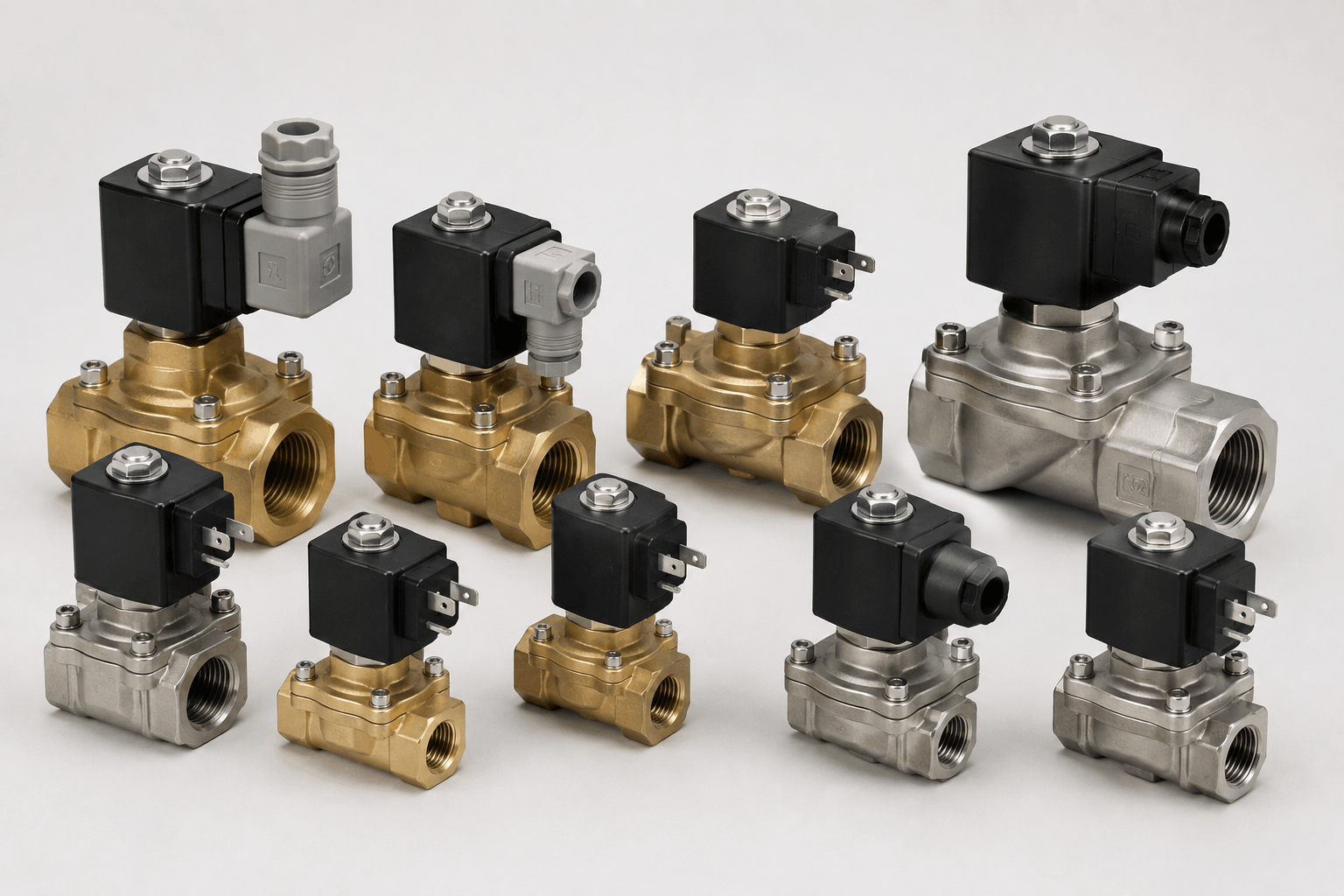
Industrial automation has revolutionized how modern facilities work. Automated equipment helps firms improve productivity, eliminate manual labor, and ensure consistent performance in a variety of settings, including manufacturing and processing plants, HVAC and refrigeration systems. Valves play a crucial function in these systems by controlling the flow of liquids and gasses.
Danfoss solenoid valves are popular among flow-control solutions because they provide rapid, dependable, and electrically controlled flow regulation. Their compact size and automated operation make them appropriate for a wide range of industrial systems.
What Are Solenoid Valves?
A solenoid valve is an electrically controlled valve that regulates the flow of a liquid or gas. An electromagnetic coil moves a plunger or internal mechanism, allowing the valve to open or close in response to an electrical signal.
Solenoid valves are especially useful in automated systems due to their simple functioning concept. Instead of relying on manual operation, a control system can operate the valve automatically using sensors, timers, pressure readings, or preprogrammed instructions.
Danfoss solenoid valves can thus play an essential role in automated flow-control systems when quick and dependable operation is required.
Applications in Industrial Automation
Manufacturing Systems
Manufacturing facilities frequently employ automated machinery that requires constant supplies of air, water, lubricants, or other fluids. Solenoid valves can control these supply based on the needs of the production process.
A programmed control system, for example, can turn on a valve at a precise point in the manufacturing cycle. This helps to ensure constant operation and reduces the need for manual intervention.
HVAC and Cooling Systems
Temperature regulation is critical in numerous industrial settings. Automated HVAC systems use valves to regulate refrigerants, water, and other fluids used in heating and cooling processes.
Danfoss solenoid valves can be used to regulate refrigerant flow and other media in appropriate HVAC and refrigeration applications. They are compatible with automated temperature management systems because they operate electrically.
Refrigeration Applications
Industrial refrigeration systems necessitate precise control of refrigerant flow. Solenoid valves can be used to initiate, halt, or adjust flow as part of an automated refrigeration system.
When coupled to appropriate control equipment, they can react to changes in temperature and operational conditions. This can promote constant cooling performance while also protecting refrigeration equipment.
Water and Fluid Management
Industrial facilities frequently use automated water distribution and fluid handling systems. Solenoid valves can control water flow using preprogrammed commands or sensor signals.
This is beneficial in a variety of applications, including process cooling, equipment cleaning, water treatment, and automated fluid distribution.
Key Advantages of Danfoss Solenoid Valves
Fast Electrical Operation
Solenoid valves have the advantage of being able to respond fast to electrical signals. This makes them appropriate for automated processes that require precise timing.
A control system can transmit a signal to open or close the valve without requiring a worker to do so manually.
Improved Process Control
Automation necessitates predictable and repeatable operations. Solenoid valves can help manage fluid or gas flow based on programd system requirements.
This can increase consistency across several industrial processes while reducing differences caused by manual operation.
Compact Design
Interior industrial equipment and control systems may have restricted space. Solenoid valves are often tiny, making them ideal for applications that need effective space utilization.
When the appropriate valve arrangement is chosen, their compact size can make integration into existing automated equipment easier.
Reduced Manual Intervention
Automation reduces the need for employees to manually activate individual valves throughout a facility. This saves time and allows employees to concentrate on monitoring, maintenance, and other critical responsibilities.
Automated operation can be especially useful in applications requiring frequent valve cycling.
Reliable Flow Control
Industrial systems rely on consistent flow control. Danfoss solenoid valves, when properly selected, can deliver dependable opening and closing performance in appropriate applications.
However, reliability is dependent on selecting the appropriate valve for the medium, pressure, temperature, flow requirements, and operating conditions.
Importance of Correct Valve Selection
Choosing the appropriate solenoid valve is critical for obtaining optimal performance. Before installation, evaluate the following:
-
Fluid type
-
Pressure range
-
Temperature
-
Flow capacity
-
Connection size
-
Voltage
-
Valve layout
It is also necessary to decide if the application requires a typically closed or normally open valve. The correct setup is determined by how the system should operate when the electrical power is turned off.
Professional advice can help guarantee that the valve chosen meets the unique needs of the automation system.
Maintenance for Long-term Performance
Although solenoid valves are supposed to be dependable, frequent maintenance can help prevent unexpected issues. Operators should look for leaks, strange noises, faulty wiring, clogged components, and uneven valve action.
Keeping the surrounding pipe clean and the valve operating within its recommended limits can also assist to extend its life.
Conclusion
Industrial automation relies on dependable components that react promptly and consistently to control signals. Danfoss solenoid valves are suitable for automated flow control in manufacturing, HVAC, refrigeration, water management, and other industrial applications.
Their electrical operation, compact size, and ability to interface with automated control systems make them a viable option for a variety of industrial settings. Solenoid valves, when properly selected, installed, and maintained, can help to make industrial operations more efficient, dependable, and automated.

 English
 Arabic
 French
 Portuguese
 Deutsch
 Turkish
 Dutch
Dutch
 Italiano
 Russian
 Romaian
 Portuguese (Brazil)
 Greek
Greek