
How Heat Treatment Improves the Strength and Durability of Alloy Chains
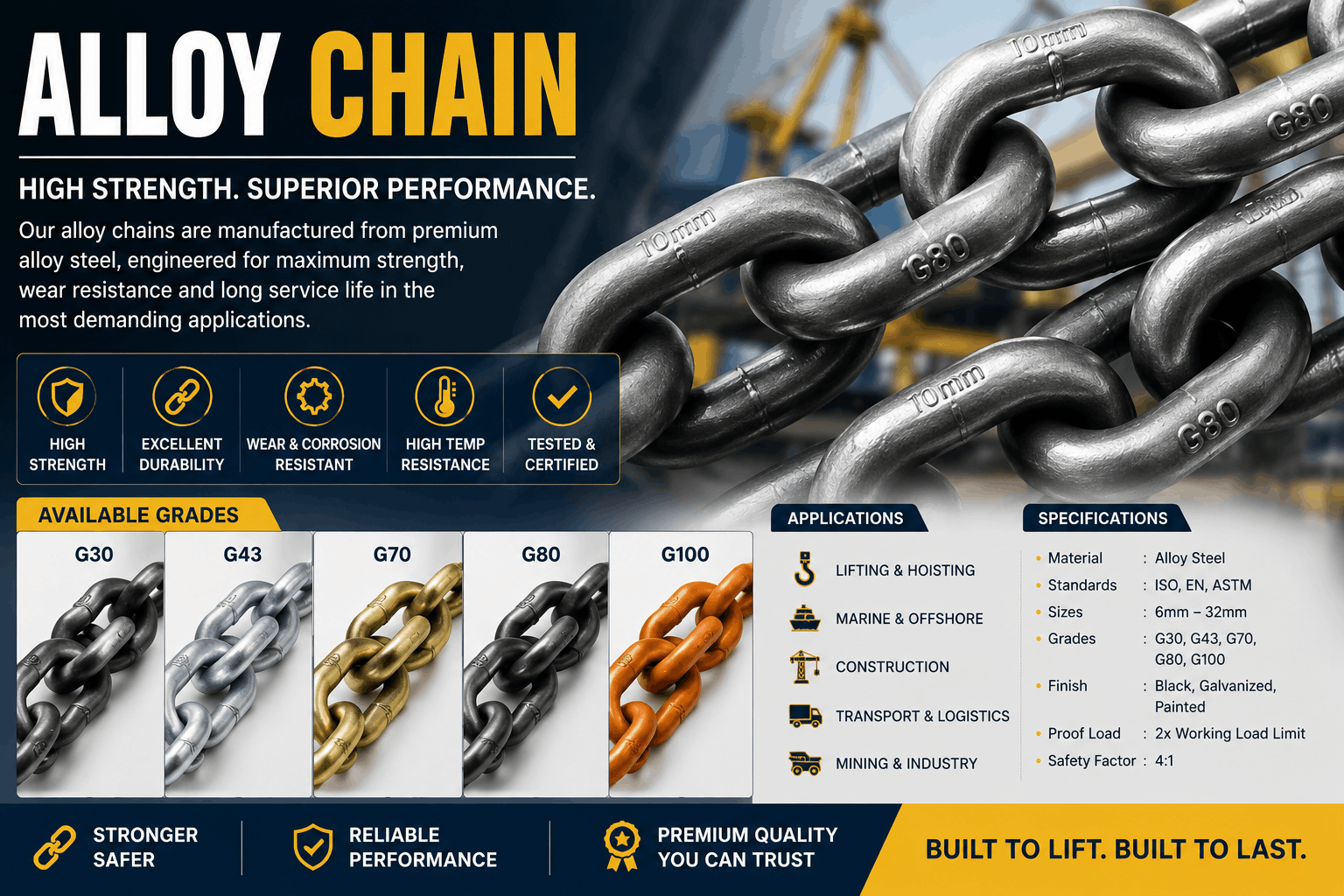
Heavy lifting and material handling necessitate equipment that can resist high loads, frequent use, and harsh working conditions. Alloy chains are frequently utilized in industries such as construction, manufacturing, transportation, shipping, and lifting due to their strength and dependability in carrying big loads.
However, the quality of an alloy chain is determined by factors other than the steel used in its fabrication. The manner the metal is treated has a significant impact on its performance. Heat treatment is an essential industrial procedure that can increase an alloy chain's strength, hardness, toughness, and durability.
Understanding how heat treatment works can help organizations make more informed selections when purchasing lifting and load-handling equipment.
What is Heat Treatment?
Heat treatment is a controlled manufacturing process in which metal is heated and cooled using particular processes to alter its internal structure and mechanical properties.
Heat treatment is performed on alloy chains to obtain a balance of strength and toughness. Simply hardening steel does not necessarily improve its suitability for lifting purposes. A chain must be able to tolerate shock, repetitive loading, bending, and other loads without becoming too brittle.
Manufacturers can make steel with high-performance qualities by adjusting temperature, heating duration, and cooling conditions.
Why Strength Matters in Alloy Chains
An alloy chain designed for hoisting must be capable of safely handling big loads. Its linkages are under strain and may be subjected to sudden forces while raising, lowering, or moving.
Heat treatment can increase the steel's strength, allowing the chain to withstand heavy loads when properly built and utilized within its rated capacity.
Higher strength can also help manufacturers achieve the desired performance without having to increase the size or weight of each component. This can make lifting equipment easier to manage.
Increasing Toughness and Resistance to Shock
Strength is just one aspect of chain performance. Toughness is similarly crucial.
Loads in real-world operations do not always travel smoothly. A suspended load may shift, come to a sudden stop, or be subjected to dynamic forces. These situations might generate shock loads, putting additional strain on the chain.
Proper heat treatment can increase the steel's toughness, allowing the chain to absorb and bear abrupt shocks more efficiently. This is especially useful in industrial settings where lifting circumstances can vary rapidly.
Enhancing Wear Resistance
Alloy chains can cause friction and contact with links, hooks, lifting attachments, and other components. Over time, frequent contact can cause surface wear.
Heat treatment can increase hardness and wear resistance in some steel grades. A tougher surface can aid to lessen the impacts of repetitive contact and abrasion, potentially increasing the chain's service life.
However, wear resistance must be balanced against toughness. Excessive hardness without adequate toughness might render steel more prone to fracture or brittle failure. This explains why controlled heat treatment is so critical.
Supporting Long-term Durability
Industrial lifting equipment is frequently used repeatedly. A chain may go through thousands of loading cycles over its operational life.
Heat-treated alloy steel can give a mix of strength and toughness to withstand repeated use. When paired with good design, manufacturing quality, inspection, and maintenance, heat treatment helps to ensure the chain's long-term durability.
This can help firms save money on unneeded replacements while also ensuring more reliable lifting operations.
Importance of Controlled Manufacturing
Heat treatment must be properly monitored. Incorrect temperature, heating time, or cooling rate might result in poor material qualities.
Professional manufacturers use controlled methods to provide consistent results across all chain components. Even little differences in material qualities can have an impact on performance, therefore quality control and testing are essential.
Businesses should evaluate the manufacturer's quality standards and product specifications when acquiring an alloy chain.
Heat Treatment and Safety
Heat treatment is vital for several reasons, one of which being safety. Lifting chains are crucial safety components that can fail under strain with devastating consequences.
A properly made and heat-treated chain can provide the mechanical qualities needed for its intended use. However, heat treatment does not render a chain resistant to injury or overuse.
Operators must always respect the chain's rated operating load limit and follow the manufacturer's recommendations. Regular inspections are also necessary to detect elongation, cracks, deformation, corrosion, excessive wear, and other symptoms of damage.
Maintenance Still Matters
Even a high-quality heat-treated alloy chain requires adequate maintenance. Chains should be stored in appropriate conditions and protected from corrosive chemicals.
Routine inspections should be performed according to the frequency and severity of use. Any chain that exhibits considerable damage or deformation should be removed from service and evaluated by a trained professional.
Good maintenance helps preserve the benefits of the manufacturing process and promotes safer long-term use.
Choosing the Right Alloy Chain
When selecting an alloy chain, firms need consider more than just strength. Important considerations include:
-
Chain grade
-
Diameter
-
Working load limit
-
Application
-
Operating environment
-
Compatibility with lifting equipment
-
Applicable requirements
A reputable supplier can assist you in selecting the best chain for your specific lifting needs. Using the appropriate chain for the work is critical since even a high-quality product might become dangerous if overloaded or handled inappropriately.
Conclusion
Heat treatment is critical to improve the performance of alloy chains. Manufacturers can achieve a balance of strength, toughness, hardness, and wear resistance by carefully managing the heating and cooling processes.
For industries that need heavy lifting, a properly made alloy chain can provide dependable performance when utilized within its rated capacity and properly maintained. Businesses should choose lifting chains based on production quality, product specifications, inspection methods, and application needs.
Finally, heat treatment is one of the fundamental steps that transforms high-quality alloy steel into a durable component for demanding lifting and material-handling applications.

 English
 Arabic
 French
 Spanish
 Portuguese
 Deutsch
 Turkish
 Dutch
Dutch
 Italiano
 Russian
 Romaian
 Portuguese (Brazil)