
Why Gangnammould Trash Bin Mould Design Influences Manufacturing Efficiency Levels
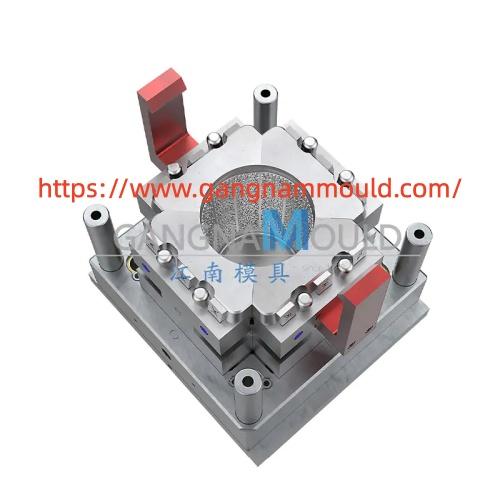
Trash Bin Mould design holds a central place in the creation of waste receptacles because it directly shapes how well the finished item performs in real world conditions. Every curve, wall section and ejection point decided at the drawing stage influences the strength of the container, the smoothness of its surface and the speed at which each unit can leave the machine. When these elements receive careful consideration the production line experiences fewer interruptions and the end product meets the demands of municipal and commercial users more reliably.
Geometry remains one of the earliest decisions that must be settled. A well balanced cavity ensures that molten material fills every section evenly so that thin spots do not appear in high stress areas such as handles or base corners. Uneven filling often leads to warping after cooling and that warping can cause lids to sit poorly or stacking to become unstable. By calculating wall thickness ratios and flow lengths in advance engineers avoid these outcomes and produce receptacles that hold their shape under repeated loading.
Cooling channels form another critical layer of the same process. Heat removal that occurs at a uniform rate shortens the time each unit stays inside the tool and lowers the risk of internal stresses. Channels placed too far from the surface leave residual heat that later shows up as distortion. Channels placed too close can create surface marks that users notice. Balanced placement therefore supports both faster cycles and cleaner appearance without requiring extra finishing steps after the part leaves the machine.
Ejection systems also deserve close attention. Pins, sleeves and air assists must operate in harmony so that the finished receptacle releases cleanly without scuffing or deformation. Poorly timed ejection can leave visible marks or even crack thin sections. When the system is matched to the specific shape and material of the container the tool runs with less downtime and operators spend fewer minutes clearing stuck parts.
Material selection for the tool itself adds a further dimension. Steel grades that resist wear under high volume conditions keep cavity dimensions stable across thousands of cycles. Surface treatments that reduce friction further protect the working faces and help maintain the original finish of the receptacle. These choices extend the interval between maintenance stops and keep production schedules predictable.
Custom features become useful when the end user requires special sizes, lid configurations or stacking methods. Adjustable inserts or modular sections allow one base tool to serve several similar but not identical product lines. This flexibility reduces the need for entirely new tools each time a small variation appears in the order book. Plants that adopt such modular thinking can respond more quickly to changing market requests while still controlling inventory of spare components.
Quality control during the design phase also pays dividends later. Simulation software can highlight potential air traps or weld lines before any metal is cut. Addressing those points early prevents costly trial runs and material waste. Once the tool is built regular measurement of cavity dimensions confirms that wear remains within acceptable limits and that every receptacle continues to meet the same dimensional targets.
Gangnammould applies these principles across its range of forming tools for waste receptacles. The focus stays on practical geometry, balanced cooling and reliable ejection so that factories can maintain steady output.
Environmental considerations increasingly shape design choices as well. Reduced material volume in non critical areas lowers the weight of each finished item and cuts the energy needed for transport. Longer tool life means fewer replacements and therefore less scrap metal generated over the service period. Together these factors support plants that aim to lower their overall footprint while still delivering containers that perform as expected in daily collection routines.
Operators benefit when the tool is designed with ease of maintenance in mind. Accessible cooling circuits, replaceable wear plates and clear marking of adjustment points reduce the time required for routine service. Training new staff becomes simpler when the layout follows logical patterns rather than ad hoc solutions. Over months and years these small advantages accumulate into measurable gains in overall equipment effectiveness.
In short the decisions made while the tool is still on the drawing board determine how smoothly the entire manufacturing sequence will run. Attention to flow, cooling, ejection and material durability creates a foundation for consistent production of waste receptacles that serve their purpose without frequent interruption.
Teams looking for forming tools built around these practical considerations can review current options at https://www.gangnammould.com/product/ and match available configurations to their specific production requirements.

 English
 Arabic
 French
 Spanish
 Portuguese
 Deutsch
 Turkish
 Dutch
Dutch
 Russian
 Romaian
 Portuguese (Brazil)
 Greek
Greek