
Pacific Scuba Divers: Your Complete Guide to Bay Area Scuba Training, Gear & Monterey Diving
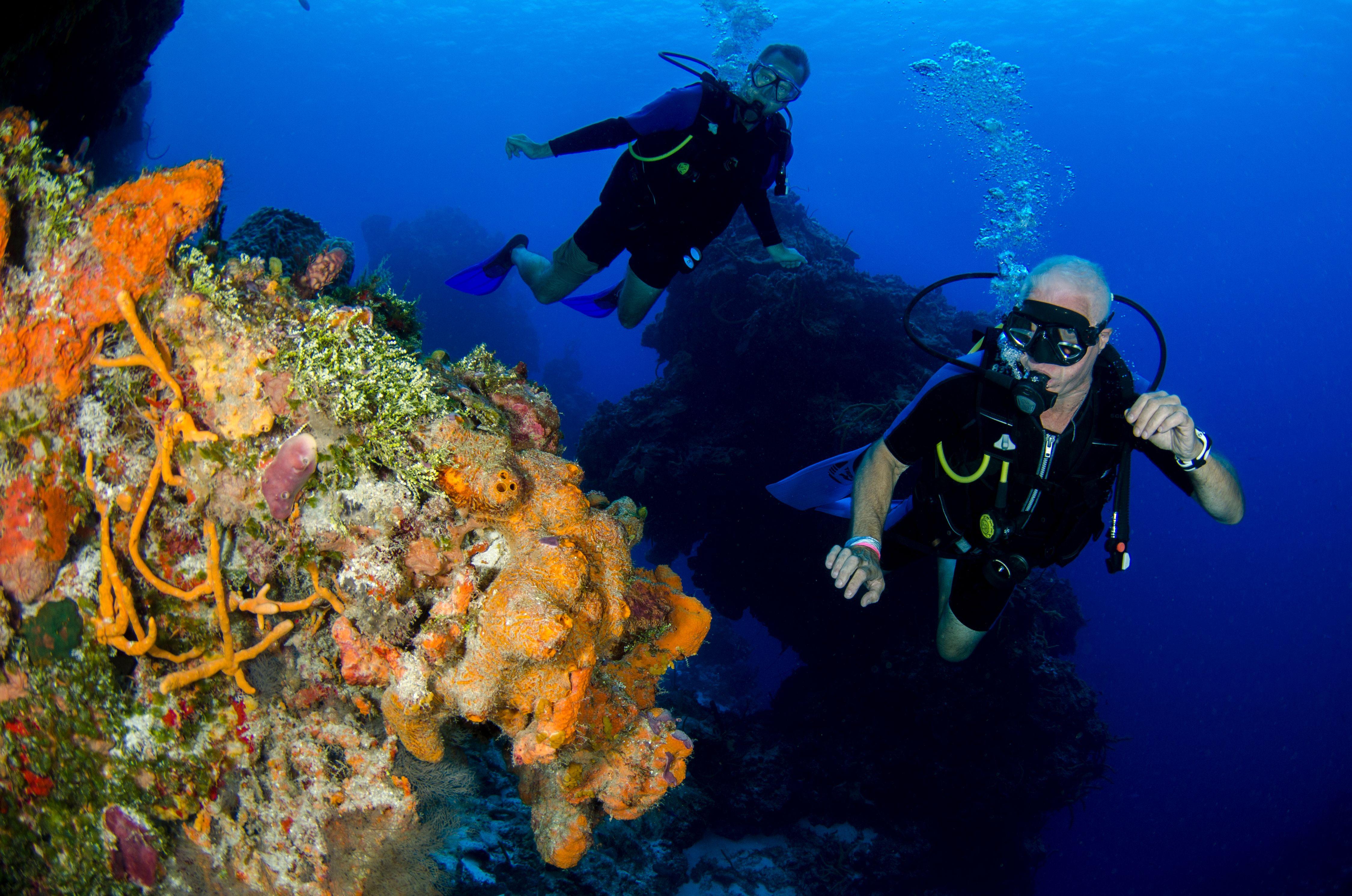
Nestled in Silicon Valley, Pacific Scuba Divers has been the Bay Area's gateway to underwater exploration for over a decade. Whether you're a tech professional seeking adventure or someone who's dreamed of breathing underwater, becoming a certified diver starts with choosing the right training center and understanding what makes Northern California diving uniquely spectacular.
Choosing the right dive center is crucial. Quality instruction, reliable equipment, and access to local diving opportunities shape your entire experience as a diver. Gear fit matters just as much — divers who wear glasses or contacts often find that a prescription scuba diving mask makes the difference between squinting at a dive computer and actually reading it. This comprehensive guide covers everything you need to know about scuba diving in the Bay Area, from certification courses to understanding what makes Northern California's cold water diving exceptional.
Understanding PADI Certification: From Open Water to Advanced Training
The Professional Association of Diving Instructors (PADI) is the world's largest diver training organization, certifying over 1 million divers annually across 186 countries. Their standardized curriculum ensures consistent, high-quality training whether you certify in Sunnyvale or Sydney.
PADI Open Water Diver: Your Entry into Scuba Diving
The PADI Open Water Diver certification is your ticket to independent diving up to 60 feet deep. The course consists of three phases:
Knowledge Development begins with PADI eLearning, an interactive online program you complete at your own pace, or traditional book study with classroom sessions. The curriculum covers dive physics, physiology, equipment, and dive planning. Expect 8-12 hours for this phase.
Confined Water Training happens in a pool across five sessions (typically 2-3 weekends). You'll master essential skills: assembling gear, achieving neutral buoyancy, clearing your mask underwater, recovering your regulator, and handling emergency scenarios. These skills progress logically until they become second nature.
Open Water Certification Dives bring everything together. You'll complete four ocean dives at Monterey's Breakwater Beach or similar locations, demonstrating pool skills while experiencing real diving conditions. These dives occur over a weekend, two per day.
Total time commitment is 4-5 days spread over 2-3 weekends. Costs range from $450-$650 depending on the dive center, including equipment rental, eLearning materials, and certification.
Advanced Certifications and Specialties
The PADI Advanced Open Water Diver course deepens skills through five adventure dives: a mandatory deep dive to 100 feet, underwater navigation, and three specialty dives of your choice.
For Northern California divers, dry suit certification is essential. The Pacific's 48-58°F temperatures demand serious thermal protection. This specialty teaches diving in sealed suits that keep you dry, dramatically extending comfortable dive times year-round.
The Rescue Diver course transforms your perspective from personal focus to buddy awareness and emergency response. Many divers call it their most demanding but rewarding certification.
Specialty courses like Underwater Photography, Peak Performance Buoyancy, and technical diving represent paths for continued growth. PADI 5-Star IDC Centers offer the highest tier of training, including Divemaster and Instructor Development Courses for those pursuing professional diving careers.
Diving Monterey Bay: Northern California's Underwater Kelp Forests
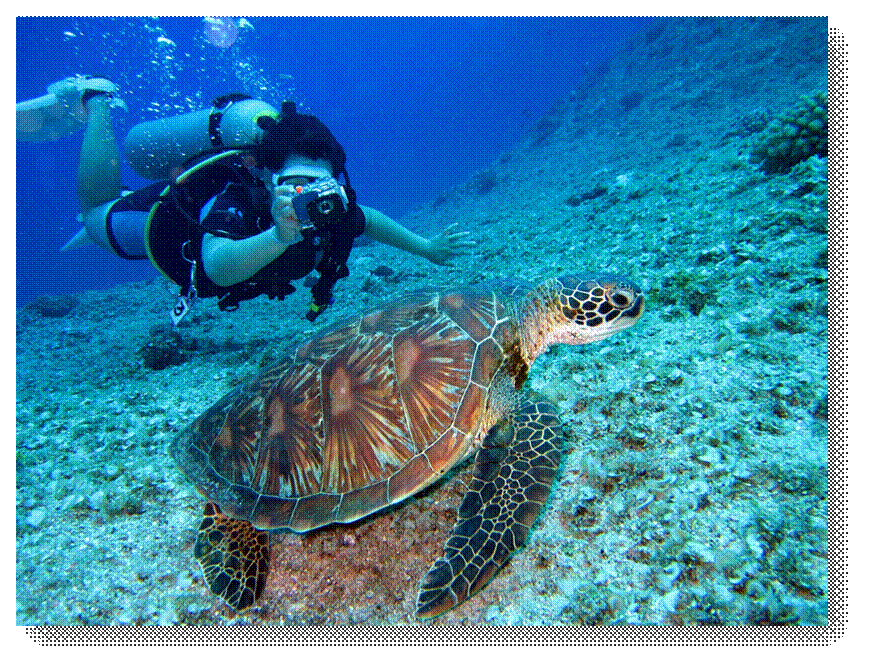
Just an hour south of San Francisco, Monterey Bay National Marine Sanctuary protects 276 miles of coastline and encompasses one of North America's largest underwater canyons. This creates conditions that support extraordinary biodiversity.
What Makes Monterey Bay Diving Special
Giant kelp forests define Northern California diving. These brown algae (Macrocystis pyrifera) grow up to two feet daily in optimal conditions, creating underwater cathedrals where sunlight filters through golden fronds. Swimming through mature kelp feels like flying through submerged redwood groves.
The marine life rivals tropical destinations. Harbor seals and California sea lions are playful dive companions, often approaching divers with genuine curiosity. Giant Pacific Octopuses hunt through kelp, their camouflage ability phenomenal. Nudibranchs paint rocks in neon colors, with over 100 species documented in Monterey Bay. The forest supports bat rays, lingcod, and occasional sevengill sharks.
Seasonal considerations matter significantly. Summer and fall (July through November) offer best visibility, sometimes reaching 60-80 feet, though 15-30 feet is common. Water temperatures peak in late summer at 55-58°F. Winter brings reduced visibility but fuels the food chain supporting abundant marine life.
Popular dive sites include:
● Breakwater Beach: Primary training site with protected conditions and easy beach access
● Monastery Beach: Stunning walls and dramatic topography, but demanding surf entries requiring experience
● Point Lobos State Natural Reserve: Pristine kelp forests with exceptional marine life, limited permits required
● The Metridium Fields: Thousands of white plumose anemones covering underwater structures
Cold Water Diving: Equipment and Preparation
Northern California water stays cold year-round: 48-58°F. Proper thermal protection is essential for safety and enjoyment.
Thermal protection comes as thick wetsuits (7mm with hood, gloves, boots) or dry suits. Wetsuits work for 45-60 minute dives. Dry suits create waterproof barriers using air for insulation, requiring additional training but allowing longer, more comfortable year-round diving. Investment is significant ($1,200-$2,500 plus undergarments), but the comfort pays dividends for regular divers.
For divers needing vision correction, prescription dive masks eliminate underwater squinting and enhance safety. Clear vision is crucial for reading dive computers, monitoring gauges, and spotting marine life.
Visibility expectations require adjustment from Caribbean clarity. Monterey's 15-30 foot average creates intimacy. You're surrounded by life at every scale rather than scanning distant reef formations. Many divers prefer this intimate experience once they adjust to the conditions.
Weight requirements increase dramatically in cold water. Thick neoprene or dry suit air requires substantial weight for neutral buoyancy, often 30-40 pounds versus 10-15 pounds in tropical conditions wearing 3mm wetsuits.
Boat Charters and Shore Diving
Boat charters access offshore sites with pristine kelp forests and less diver traffic. Charters provide navigation, surface support, and safety coverage, typically running morning trips with two-dive itineraries. Local operators like Sanctuary Charters and Monterey Express offer regular weekend departures.
Shore diving offers flexibility and lower cost. Sites like Breakwater Beach let you dive on your schedule. Shore diving requires hauling gear across beaches and timing surf entries, but rewards you with independence and the ability to dive multiple days without charter costs.
Many Bay Area dive centers organize regular Monterey trips: weekend charters, shore diving meetups, and night diving adventures. These provide built-in buddies and local expertise for newer divers still building confidence.
Choosing Your Scuba Equipment: A Bay Area Diver's Guide
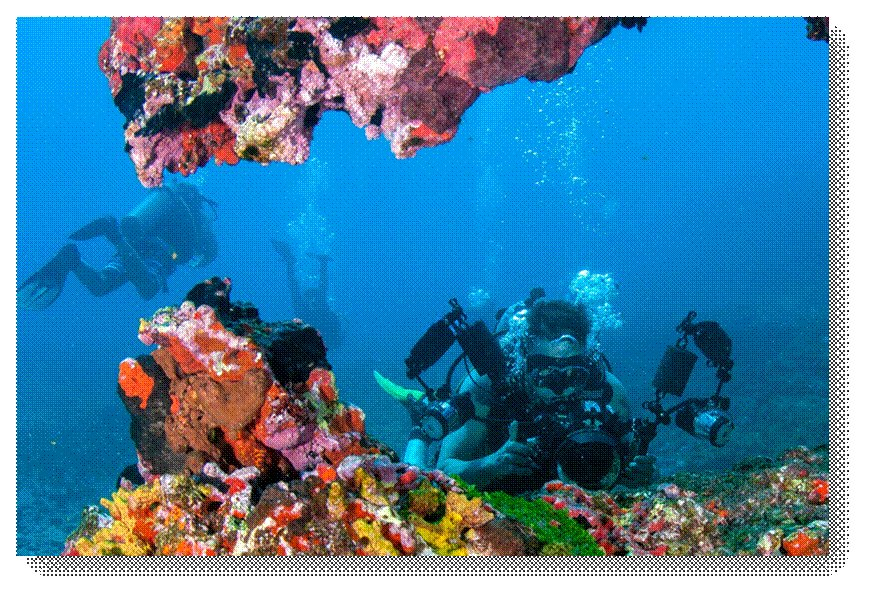
Understanding what you need and when to buy versus rent helps you invest wisely.
Essential Gear for Getting Started
Personal gear priorities follow logical progression:
1. Mask: Most important choice. Must seal perfectly without gaps. Try multiple masks with your instructor. Consider prescription lenses if you wear glasses. Poor underwater vision affects safety and enjoyment.
2. Boots: 5mm or 7mm neoprene for cold water and rocky entries. Northern California beaches aren't Caribbean sand.
3. Fins: Open-heel fins work with boots, offering power for currents and surge conditions common in Monterey.
4. Wetsuit or Dry Suit: Your largest investment ($300-600 for quality wetsuits, $1,200-2,500 for dry suits with proper undergarments).
Major equipment like BCDs, regulators, and dive computers can wait. Rental gear works fine while you're diving occasionally and building experience.
Budget planning: Minimal investment (mask, snorkel, fins, boots, wetsuit) runs $500-800. Full equipment package including BCD, regulator, and dive computer pushes $2,500-4,000 for quality gear.
For vision correction, custom prescription dive masks transform underwater experience by providing clear vision without contact lenses. Quality dive lights enhance early morning or late afternoon dives when kelp forests become dramatic with light filtering through the canopy.
Local Dive Shop Services
Quality dive centers provide:
● Equipment sales with expert fitting and personalized recommendations
● Annual equipment service and maintenance (regulators need professional servicing)
● Air and Nitrox fills ($8-18 per fill depending on gas mixture)
● Gear storage options for members
● Organized dive trips and continuing education
Ongoing costs for active Bay Area divers average $100-200 monthly, including fills, maintenance, and boat charters. These reflect regular diving (2-4 times monthly). Quarterly divers spend proportionally less.
The Certification Process: What to Expect
Before Your First Pool Session
Enrollment involves meeting instructors, reviewing course requirements, and starting PADI eLearning. Complete online academics before your first pool session. This allows pool time to focus entirely on physical skills rather than theory.
Medical clearance requires completing PADI's medical questionnaire. Conditions like asthma, heart issues, or certain medications need physician approval before diving. This protects your health and safety underwater.
Pool Training and Skill Development
Confined water sessions progress from basic skills to complex scenarios. Session one covers equipment assembly, regulator breathing, mask clearing, and basic buoyancy control.
Progressive skill building continues through five sessions:
● Controlled descents and ascents with proper equalization
● Neutral buoyancy control at various depths
● Emergency procedures including air-sharing and equipment recovery
● Underwater navigation using compass and natural references
● Rescue skills and problem-solving scenarios
Common challenges include mask clearing (getting water out while underwater), achieving neutral buoyancy (hovering motionless), and breathing normally underwater (trusting your regulator completely). Instructors guide thousands through these challenges. Trust their expertise and give yourself permission to learn at your own pace.
Ocean Certification Dives
Weekend trips to Monterey complete certification. Four dives over two days demonstrate skills in ocean environments at 30-40 feet depth. You'll experience real kelp forests, encounter marine life, and prove you can handle actual diving conditions beyond the controlled pool environment.
Expect some nerves before your first ocean dive. This is normal. Your instructor will review everything beforehand and stay close throughout the dive. Most students report their certification dives as the highlight of training.
Post-certification, your permanent PADI card arrives within 2-3 weeks. You're qualified to dive with a buddy anywhere worldwide up to 60 feet deep. Your certification never expires, though continuing education is strongly recommended if you take extended breaks from diving.
Building Your Diving Skills and Community
Continuing Education and Specialty Courses
Don't stop at Open Water certification. The Advanced Open Water course (five adventure dives) builds confidence and expands depth limits to 100 feet. Most divers complete Advanced within their first year.
Dry suit diving becomes essential for year-round Bay Area diving. The specialty course teaches air management, buoyancy control, and safety procedures specific to dry suits. Consider this certification before purchasing dry suit equipment.
Nitrox certification (enriched air diving) extends bottom time by reducing nitrogen absorption. Popular for repetitive diving days, Nitrox requires additional training on gas analysis and dive planning modifications.
Peak Performance Buoyancy transforms your diving. Perfect buoyancy control reduces air consumption, protects fragile marine life, and makes diving effortless rather than work. This specialty pays immediate dividends.
Finding Dive Buddies and Regular Trips
Never dive alone. Beyond safety requirements, diving with buddies enhances enjoyment through shared experiences.
Local dive centers organize regular trips:
● Weekly pool practice sessions for skill maintenance
● Monthly Monterey shore diving meetups
● Quarterly boat charter trips to offshore sites
● Special events like night dives, photography workshops, and conservation activities
Online communities like Bay Area Underwater Explorers connect local divers for informal trips. Social media groups coordinate shore diving, carpools to Monterey, and equipment exchanges.
Monterey Diving Throughout the Year
· Spring (March through May) brings plankton blooms reducing visibility but fueling the ecosystem. Water temperatures stay cold (48-52°F). Fewer divers mean peaceful sites.
· Summer (June through August) offers improving visibility and peak water temperatures (55-58°F). Popular sites get crowded on weekends. Book boat charters early.
· Fall (September through November) provides best overall conditions. Visibility reaches yearly peaks (30-60 feet common), water stays relatively warm, and summer crowds diminish. Many divers consider this prime season.
· Winter (December through February) tests cold water skills. Visibility varies widely with storms. Water drops to 48-50°F. Dry suits become essential. Winter diving rewards hardy divers with active marine life and empty dive sites.
Diving Safety and Best Practices
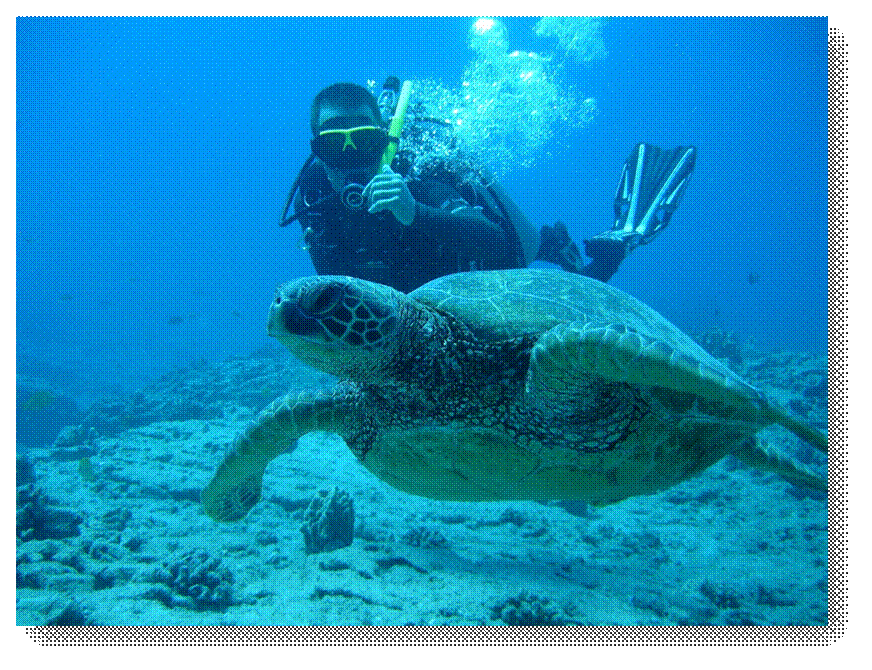
Essential Safety Protocols
Pre-dive planning prevents problems. Check weather forecasts, ocean conditions, and site-specific hazards. Monterey's conditions change rapidly. What looks calm from shore may hide dangerous currents or surge.
Buddy checks (BWRAF: BCD, Weights, Releases, Air, Final check) catch equipment issues before descent. Never skip buddy checks, even with familiar partners.
Dive planning includes maximum depth, bottom time, air management, and emergency procedures. Discuss the dive plan thoroughly before entering water. Agree on hand signals, separation protocols, and abort criteria.
Surface signaling devices are mandatory in California. Carry safety sausages (inflatable signal tubes), whistles, and dive lights. Currents can separate divers from boats quickly.
Environmental Considerations
Kelp forest etiquette protects fragile ecosystems. Maintain excellent buoyancy to avoid crushing reef structure. Never touch, chase, or harass marine life. Octopuses stressed by divers may not eat, potentially starving.
Photography ethics require patience. Approach slowly, observe behavior, and retreat if animals show stress. Reading those subtle signals depends on actually seeing them, which is why divers who need vision correction often shoot with a prescription mask from a specialist lab like See the Sea rather than relying on contacts under a standard mask. Never rearrange marine life for better shots. The image isn't worth harming creatures.
Conservation participation through organizations like Reef Check California or Monterey Bay National Marine Sanctuary allows divers to contribute scientific data. Many dive centers organize beach cleanups and habitat restoration projects.
Investment Returns: Why Scuba Diving Is Worth It
The Intangible Benefits
Stress relief and mindfulness happen naturally underwater. Focused breathing, weightlessness, and complete immersion create meditative states. Many divers report diving as their most effective stress management tool.
Physical fitness improves through swimming, equipment handling, and cardiovascular conditioning. Diving burns 400-700 calories per hour depending on conditions and activity level.
Travel opportunities expand dramatically. Certified divers access destinations and experiences impossible otherwise. Imagine diving Australia's Great Barrier Reef, Indonesia's coral triangle, or Mexico's cenotes.
The Bay Area Diving Community
Silicon Valley's diving community includes tech professionals, marine scientists, underwater photographers, and adventure seekers. Regular dive trips build friendships through shared experiences and mutual trust (your dive buddy literally keeps you alive).
Local dive centers host social events, equipment demos, and travel presentations. Many divers report their dive buddies becoming their closest friends, connected through unique experiences few others understand.
Your Next Steps Toward Underwater Adventure
Whether taking first breaths underwater or advancing to technical diving, the Bay Area offers excellent scuba training and unique diving in Monterey Bay's kelp forests. Quality instruction, proper equipment, and community support transform certification from achievement into lifestyle.
Learning scuba diving opens a world covering 70% of our planet. In Northern California, exceptional diving waits an hour down Highway 1 in kelp forests teeming with sea lions, camouflaged octopuses, and landscapes that change with seasons.
Ready to start your adventure? Visit a local PADI 5-Star IDC center to discuss certification options, try equipment, and learn about upcoming courses and Monterey Bay dive trips. Most shops welcome prospective students for introductory conversations without pressure or sales pitches.
Consider scheduling a Discover Scuba Diving experience. These introductory pool sessions let you try scuba before committing to full certification. You'll breathe underwater, practice basic skills, and determine if diving suits you. Many programs credit the experience toward Open Water certification if you continue.
For current divers looking to advance, consider which specialty matches your interests. Underwater photography lets you share kelp forest beauty with non-divers. Rescue Diver certification builds critical emergency response skills. Technical diving opens deeper wrecks and advanced exploration.
The underwater world doesn't wait. Every weekend, certified divers experience Northern California's kelp forest magic. The seals play with bubble streams, octopuses hunt among rocks, and kelp sways in the surge like wind through wheat fields. Filtered sunlight creates cathedral effects. Marine life thrives in abundance rivaling tropical destinations.
Your diving journey begins with one decision: choosing to explore what lies beneath the waves. The certification process takes weeks. The memories and experiences last lifetimes. Monterey Bay's kelp forests have waited millions of years. They'll still be there when you're ready to discover them firsthand.
Start browsing certification courses today. Research local dive centers, read reviews, and schedule introductory visits. Ask about instructor experience, class sizes, and Monterey dive trip frequency. The right dive center makes learning enjoyable and builds confidence for independent diving.
Northern California diving challenges you with cold water, requires proper equipment, and demands respect for powerful ocean conditions. In return, it offers some of the planet's most unique marine ecosystems, accessible diving every weekend, and a welcoming community of passionate divers. The investment in training and equipment pays returns every time you slip beneath the surface into that golden kelp forest world.
Welcome to scuba diving. Welcome to a lifetime of underwater exploration. The Bay Area diving community looks forward to seeing you on future Monterey trips, sharing stories of seal encounters and octopus sightings, and watching you grow from nervous student to confident diver to perhaps instructor yourself someday.
The kelp awaits. The adventure starts now.

 English
 Arabic
 French
 Portuguese
 Deutsch
 Turkish
 Dutch
Dutch
 Italiano
 Russian
 Romaian
 Portuguese (Brazil)
 Greek
Greek