
PVC Coated Stainless Steel Tubing: Maintenance Tips for Longer Service Life
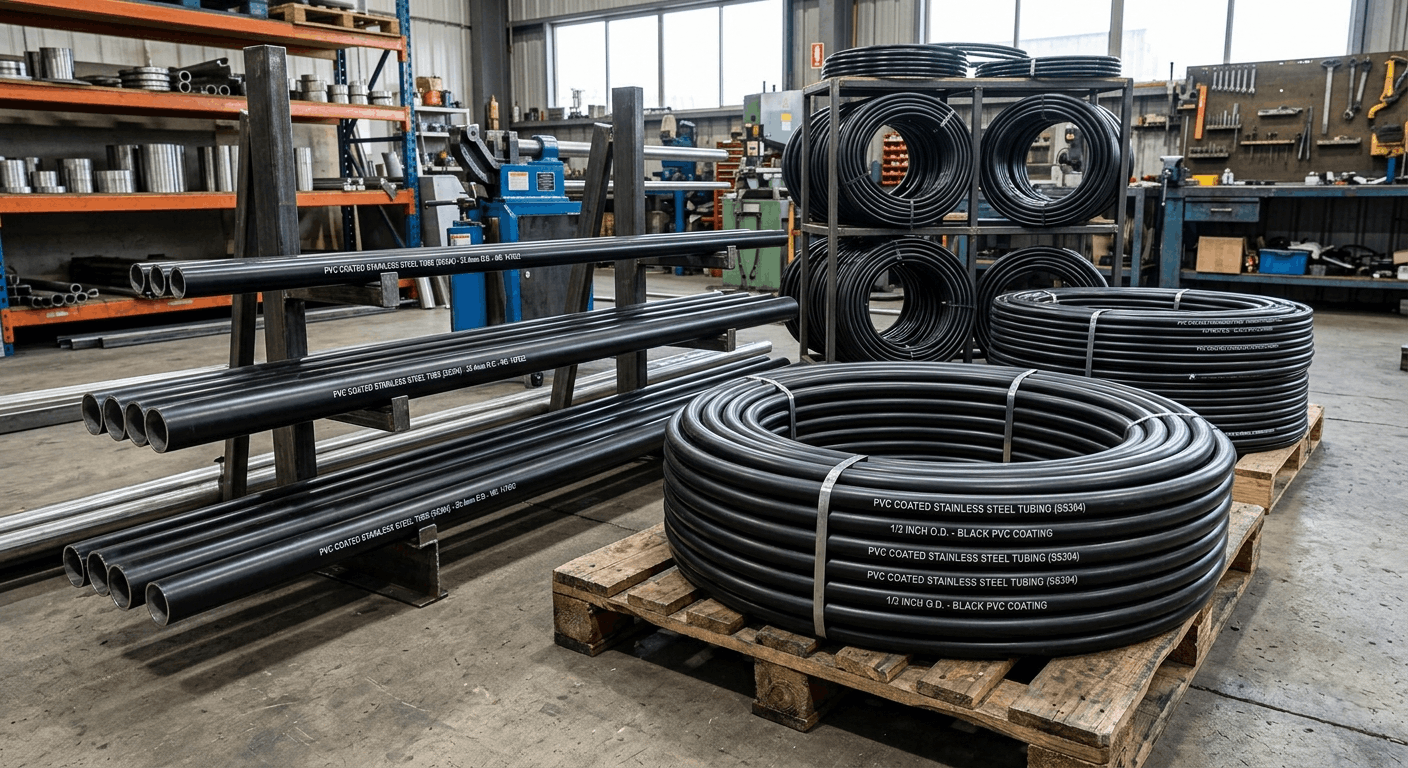
PVC coated stainless steel tubing is widely utilized in industrial, commercial, construction, marine, and outdoor applications that require dependable protection and long-term performance. The stainless steel core ensures strength and corrosion resistance, while the PVC covering adds additional protection against moisture, chemicals, abrasion, and environmental exposure.
However, even high-quality tubing benefits from routine maintenance. Proper maintenance can help retain the coating, safeguard the stainless steel underlying, and increase the product's usable life. Understanding the Benefits of PVC coated stainless steel tubes and following easy maintenance procedures can help businesses get more out of their investment.
What Is PVC-Coated Stainless Steel Tubing?
PVC coated stainless steel tubing is made out of stainless steel tubes that have been coated with polyvinyl chloride (PVC). The stainless steel provides structural strength and resistance to corrosion, while the PVC outer layer serves as a protective barrier.
The coating can help protect the tube against scratches, moisture, chemicals, and physical damage. It can also provide electrical insulation in some applications and boost visibility when certain coating colors are applied.
Despite this added safety, the tubing should be inspected and serviced on a regular basis, especially when subjected to rigorous operating circumstances.
Why is maintenance important?
The PVC coating is intended to protect the stainless steel tube from environmental factors. If the coating is broken, moisture, chemicals, or impurities may enter the underlying metal.
Regular maintenance helps to spot minor issues before they become major ones. It can also aid to maintain the coating's look, flexibility, and protective properties.
Proper care is especially critical for tubes installed outside, near water, in industrial settings, or in places subjected to chemicals and temperature fluctuations.
1. Inspect the tubing regularly
Routine visual inspections are one of the most basic methods for maintaining coated tubing. Look for cracks, cuts, peeling, discolouration, swelling, or spots where the PVC covering has loosened.
Pay special attention to bends, joints, connection points, and regions that are subjected to frequent movement or physical contact.
Early detection of damage allows for necessary repair action to be conducted before the problem spreads to a wider area of the tube.
2. Keep the surface clean
Dust, filth, oil, salt, and industrial wastes may collect on the surface over time. Regular cleaning helps to preserve the protective layer and prevent impurities from lingering on the tubes for long periods of time.
When necessary, use clean water and a gentle, nonabrasive cleaning solution. A soft cloth or sponge can be used to clean surface dirt without needlessly harming the PVC layer.
Avoid using abrasive scrubbing materials that may harm or weaken the coating.
3. Avoid harsh chemicals
Although PVC is resistant to a wide range of environmental conditions, not all chemicals are appropriate for extended contact with the coating.
Before using cleaning agents, solvents, or industrial chemicals around the tubing, make sure they are compatible with the PVC material. Strong or inappropriate chemicals might cause coloring, softening, cracking, or degradation.
When chemical exposure is unavoidable, it is critical to use tubing that is specifically built for the operating environment.
4. Protect the Coating from Physical Damage
The added protection offered by the outer PVC coating is one of the main Benefits of PVC coated stainless steel tubes. Sharp items, high impact, incorrect handling, and rough installation techniques can all cause damage.
Transport and install tubing with care. Do not drag it across uneven surfaces or place heavy objects directly on it.
Tools should be used with caution around the coating, especially while cutting, attaching, or connecting the tubing.
5. Check the bends and connections
Connections and bends may encounter additional mechanical stress. Inspect these areas on a regular basis for cracks, separation, or movement of the coating.
Ensure that the fittings are properly installed and that no undue pressure is applied to the tube. Poorly supported tubing may undergo extra stress, affecting both the PVC coating and the stainless steel core.
6. Consider the installation environment
The surrounding environment has a significant impact on maintenance requirements. Tubes put outside may be exposed to sunlight, rain, humidity, temperature variations, and airborne contaminants.
In marine or coastal locations, salt exposure may necessitate more frequent cleaning and inspection. Chemical, heat, or mechanical action may necessitate further inspections of industrial installations.
A maintenance schedule should thus be tailored to specific operating conditions rather than a one-size-fits-all approach.
7. Repair or replace the damaged sections
Small coating damage should not be ignored. If the PVC layer is significantly cracked, peeled, or split, contact the manufacturer or supplier to see if the section may be repaired or replaced.
Attempting improper repairs can result in further problems or weaken the tubing's protective efficacy.
Benefits of Proper Maintenance
Benefits of PVC coated stainless steel tubes can be maximized with regular maintenance, which includes:
-
Longer service life.
-
Better protection against environmental exposure
-
Reduced chance of coating deterioration.
-
Improved appearance.
-
Reduced maintenance and replacement expenses.
-
More consistent performance
-
Better protection for the stainless steel core.
These advantages make frequent inspection and cleaning a viable aspect of managing tubing systems.
Conclusion
PVC coated stainless steel tubing provides a powerful mix of stainless steel durability and PVC surface protection. However, adequate care is required to preserve these benefits over time.
Regular inspection, gentle cleaning, cautious handling, chemical compatibility checks, and prompt repair to coating damage can all help to extend service life and ensure reliable operation. Whether in industrial, maritime, construction, or outdoor applications, a basic maintenance program may help organizations get the most out of their PVC coated stainless steel tubing investment.

 English
 Arabic
 French
 Portuguese
 Deutsch
 Turkish
 Dutch
Dutch
 Italiano
 Russian
 Romaian
 Portuguese (Brazil)
 Greek
Greek