
Why Railway Authorities Are Investing in Advanced X-Ray Baggage Scanners
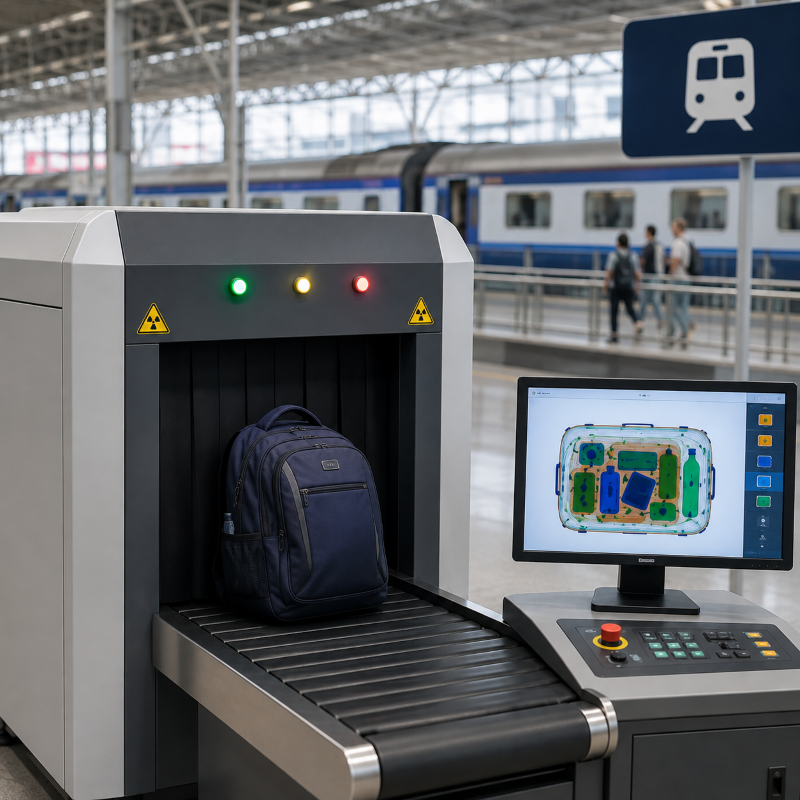
Railway networks across the country are handling more passengers, more luggage, and more daily footfall than ever before. Busy platforms, multiple entry points, and constantly moving crowds make security screening more demanding than it used to be. As passenger volumes grow, X-Ray Baggage Scanners have become a central part of how railway stations manage safety without slowing down the flow of travellers.
At the same time, choosing the right equipment isn't simple. Railway authorities need screening infrastructure that can keep up with real-world station conditions, not just perform well in a demonstration. This is why many procurement teams now spend significant time evaluating X-ray baggage Scanner manufacturers in India before finalizing a purchase, looking closely at reliability, image quality, and long-term support rather than price alone.
Why Railway Security Needs Advanced Screening
Railroad stations present a unique security problem compared to other public venues. Passenger numbers can skyrocket during festivals, holidays, and peak commute times. Multiple entry points, linked platforms, and open station design make regular monitoring more difficult to achieve.
Furthermore, travelers frequently carry a variety of luggage, ranging from little bags to enormous trunks and bundles. Security teams must check all of this quickly, without causing long lines or upsetting travelers.
Manual inspection struggles to keep up with these conditions. It is time-consuming, inconsistent across shifts, and difficult to scale at peak traffic times. This is one of the primary reasons why railroad authorities are transitioning to automated, technology-assisted screening.
What Are Advanced Baggage Screening Systems?
At its most basic, a baggage screening system uses X-ray equipment to inspect luggage without physically opening it. Baggage is transported through the scanner on a conveyor belt, and the device generates an image based on how X-rays pass thru various materials.
Denser materials, such as metal, often appear differently than lighter materials, such as fabric or paper. Trained operators examine these photographs on a screen, looking for anything strange or alarming.
Modern systems make substantial improvements to this basic operation. Better imaging technology yields sharper, more detailed images. Some systems also incorporate software that highlights specific objects or materials, making it easier for operators to identify those that require further inspection – without replacing their judgment.
Why Railway Authorities Are Investing in Advanced Screening Technology
1. Improving Passenger Safety
Effective baggage screening identifies potentially prohibited or worrisome items before they reach a station's protected areas. This provides a crucial layer of protection for both passengers and railroad staff, particularly in high-density areas where early detection is critical.
2. Handling High Passenger Volumes
Instead of checking bags one at a time by hand, conveyor-based screening allows them to travel throughout the system continuously. This makes it much easier for stations to handle high passenger volumes, particularly during peak travel seasons.
3. Faster Security Screening
Clearer images and intelligent support features enable operators to make faster, more confident judgments. This avoids unnecessary checkpoint waits, which is important when thousands of people need to travel thru a station in a short period of time.
4. Supporting Security Personnel
Technology does not replace skilled security personnel; rather, it enhances their performance. Advanced technologies allow operators to interpret images more precisely and consistently, minimizing the likelihood of fatigue-related errors during lengthy shifts.
5. Improving Operational Efficiency
Improved screening workflows allow railroad officials to make better use of their workforce. Instead of spreading people thin across several manual checks, teams may direct attention where it is most needed.
6. Protecting Critical Infrastructure
Railroad stations are more than just passenger spaces; they also include platforms, control rooms, and other important places. Layered security procedures, including baggage screening, aim to defend the overall infrastructure from potential threats.
7. Preparing for Future Security Challenges
Security requirements change over time, and railroad authorities are increasingly looking for technology that can be modified instead of replaced. Scalable systems enable stations to add capabilities as needs change, without requiring a total infrastructure rebuild.
The Role of AI in Modern Railway Security
Artificial intelligence is playing a growing role in how screening systems support security teams. An AI X-ray baggage Scanner can assist with image analysis, helping to identify patterns or objects that may need closer attention.
Common AI-supported capabilities include:
- Automatic threat recognition to flag potential items of concern
- Object identification based on shape and material characteristics
- Pattern recognition across large volumes of scanned images
- Image enhancement for clearer visual interpretation
- Intelligent alerts that draw operator attention to specific areas
- Reduced operator workload during high-volume periods
- Faster decision support during time-sensitive checks
It's important to understand that AI functions as a support tool, not a replacement for human judgment. Final decisions still rest with trained security personnel, who bring context and experience that automated systems cannot fully replicate.
Advanced Features Railway Authorities Should Consider
| Feature Practical | Practical Value |
|---|---|
| High-resolution imaging | Clearer images make it easier to identify objects accurately |
| Dual-energy technology | Helps distinguish between different material types |
| Material discrimination | Supports more informed operator assessment |
| Automatic threat recognition | Draws attention to potential items of concern |
| Multiple image views | Allows objects to be examined from different angles |
| Image enhancement tools | Improves visibility of unclear or overlapping items |
| User-friendly interface | Reduces training time and operator error |
| Emergency stop systems | Adds a critical safety layer during operation |
| Radiation shielding | Protects operators and nearby personnel |
| Remote diagnostics | Supports faster troubleshooting and reduced downtime |
| Performance monitoring | Helps track system health over time |
Benefits Beyond Security
Advanced screening technology not only improves safety, but also influences the overall passenger experience. Faster processing shortens queues and reduces waiting time at checkpoints, improving passengers' perceptions of station efficiency.
Consistent screening methods let station managers schedule staffing and shifts more predictably. Over time, this also contributes to better long-term infrastructure planning because authorities can predict equipment requirements as passenger numbers increase.
The goal is to establish a balance between safety, operational efficiency, and passenger convenience—not to prioritize one above the others.
How to Choose the Right Screening Solution
Selecting screening equipment involves more than comparing specifications on paper. Railway authorities should evaluate:
- Expected passenger and baggage volume
- Tunnel size relative to typical baggage dimensions
- Required throughput during peak hours
- Available installation space at the station
- Image quality and resolution
- AI-assisted capabilities, if relevant to security needs
- Built-in safety features
- Compliance with relevant regulatory requirements
- Ongoing maintenance requirements
- Availability of spare parts
- Operator training support
- Warranty coverage
- After-sales technical support
- Scalability for future upgrades
- Total cost of ownership, not just upfront price
Why Krystalvision Is Relevant to Modern Railway Security
Krystalvision specializes in the sophisticated security screening space, with a focus on developing dependable systems for harsh locations such as railroad stations. Our strategy focuses on quality manufacturing, continuous technology development, and practical technical support for our customers.
For railroad authorities selecting long-term screening partners, this type of support is as important as the equipment itself. Krystalvision's commitment to maintenance help and customized security solutions mirrors a larger movement in the market - toward manufacturers who remain active long after installation, rather than merely at the moment of sale.
Conclusion
Advanced baggage screening is gradually becoming an integral feature of modern railroad security infrastructure, rather than an optional improvement. As station settings become more complicated, the same evaluation concepts that apply to a well-designed Airport X-ray baggage Scanner setup—reliability, picture clarity, throughput, and long-term support—become increasingly important for railroad stations.
Railroad authorities considering new or upgraded screening systems should consider security performance, technology capabilities, reliability, safety features, operational efficiency, maintenance support, scalability, and total long-term value in tandem, rather than focusing on any single factor separately. If your business is considering screening options for your station's specific passenger volume and layout, we'd be happy to speak with you about your needs.
Frequently Asked Questions
Q: Why do railway stations need baggage screening systems?
Answer: Railroad stations handle big, continuously moving populations with many types of luggage. Screening technologies assist in identifying potentially dangerous objects rapidly, enhancing passenger safety without needing each bag to be physically opened and scrutinized.
Q: How do advanced baggage scanners improve railway security?
Answer: They offer crisper imaging, faster processing, and tools to assist operators in reading images more precisely. This enables security officers to reliably screen more baggage, especially during peak passenger volume periods.
Q: What can an X-ray baggage scanner detect?
Answer: These technologies disclose the form, density, and material properties of goods in a bag, assisting skilled operators in identifying those that require more physical inspection or additional evaluation.
Q: Are baggage scanners safe for railway passengers?
Answer: Baggage screening equipment is designed with shielding and safety devices to protect both operators and those nearby. Systems are often tested against applicable safety and regulatory standards prior to deployment.
Q: How does AI improve baggage screening?
Answer: AI can help with visual analysis, identifying unexpected patterns and highlighting potential sources of worry, allowing operators to work more effectively. It augments, rather than replaces, human decision-making.
Q: What features should railway authorities look for in a baggage scanner?
Answer: High-resolution photography, material discrimination, automatic hazard recognition, a user-friendly interface, safety systems, and remote diagnostics are all important elements that make maintenance and troubleshooting easier.

 English
 Arabic
 French
 Spanish
 Portuguese
 Deutsch
 Dutch
Dutch
 Italiano
 Russian
 Romaian
 Portuguese (Brazil)
 Greek
Greek