
How to Choose the Right Skin Doctor for Your Skin Concern
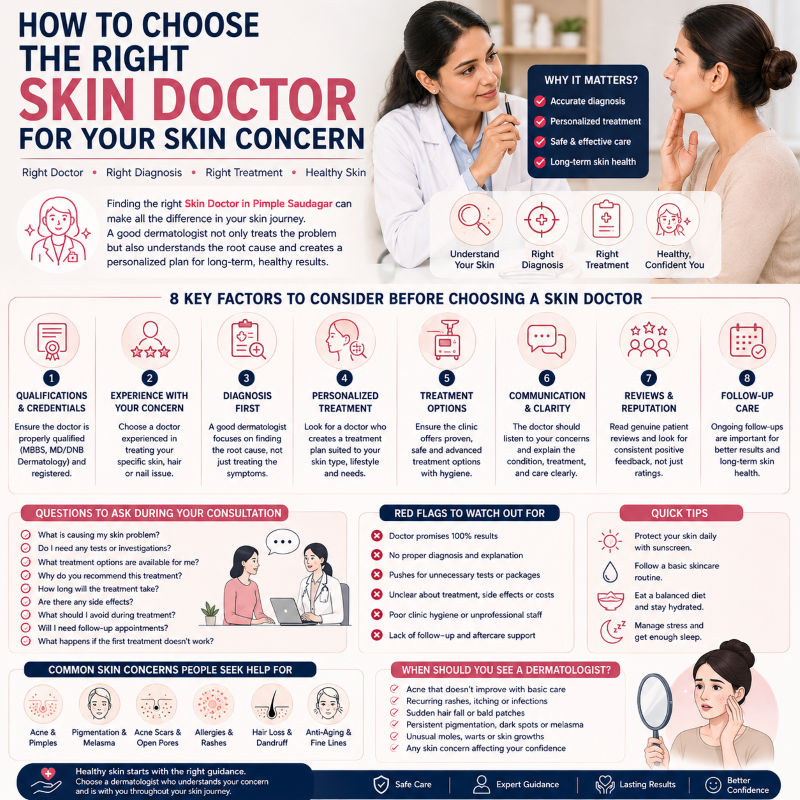
Maybe you've tried three different face washes, a home remedy your neighbour swore by, and an over-the-counter cream and your acne, pigmentation, or itching is still there. At that point, most people start searching for a Skin Doctor in Pimple Saudagar, hoping someone can finally explain what's actually going on. But picking a dermatologist isn't as simple as choosing the clinic with the most stars on Google. It means looking at qualifications, real experience with your specific concern, how the doctor diagnoses a problem, how they plan treatment, and whether they stick with you after the first visit.
Why Choosing the Right Skin Doctor Matters
Skin disorders that appear identical on the surface frequently require quite diverse treatment options. Hormonal acne responds differently than a fungal illness that mimics acne. Pigmentation caused by sun exposure requires a different method than dark marks left behind after a breakout heals.
The same is true for allergies versus infections, medical dermatology versus cosmetic issues, and short-term irritation versus chronic disorders such as eczema or psoriasis. Treating merely what is visible, without understanding why, often results in transient relief followed by the recurrence of the problem. This is exactly why "who" is as important as "what."
8 Things to Check Before Choosing a Skin Doctor
1. Check the Doctor's Qualifications
Begin with the basics: a recognized medical degree, followed by specialized dermatology training. In India, this normally entails obtaining an MBBS paired with an MD or a diploma in dermatology, or comparable recognized training. You are not required to pursue a specific international certification; what matters is verifiable medical qualification, dermatology specialization, and continued professional training in the field.'
2. Look for Experience With Your Specific Skin Concern
A doctor who primarily treats hair loss situations may not be the best option for acne scars, and vise versa. If you have pigmentation, psoriasis, a fungal infection, or acne scars, ask your doctor if they treat those conditions on a regular basis. Years of practice are less important than practical, hands-on experience with issues like yours.
3. Make Sure the Doctor Focuses on Diagnosis First
This is one of the most critical items to examine. A responsible consultation follows a set protocol: symptoms, examination, diagnosis, treatment plan, and follow-up. If a doctor advises a specific cream, peel, or operation before adequately inspecting your skin or inquiring about your history, it's worth thinking about. Diagnosis-first care typically produces more accurate, long-term results than speculation.
4. Look for Personalized Treatment Planning
Two people can have the same apparent acne or pigmentation yet require completely different treatment strategies. Before recommending anything, a reputable Skin Specialist in Pimple Saudagar will consider your skin type, age, medical history, current medications, previous treatments, lifestyle, and the severity of your condition. A one-size-fits-all prescription is rarely the best option for skin.
5. Understand the Treatments Offered
It helps when a clinic provides a variety of choices, such as prescription skincare, chemical peels, microneedling, laser treatments, and scar or pigmentation-specific procedures. However, having more treatments available does not guarantee better care. What counts is whether the doctor suggests a treatment because it is appropriate for your situation, rather than because it is available for sale.
6. Read Reviews — But Don't Rely on Reviews Alone
Reviews might be beneficial when searching for trends rather than just star ratings. Pay attention to recurring remarks concerning consultation quality, the doctor's communication style, staff behavior, cost transparency, and whether patients mention follow-up care. A high rating alone cannot tell you whether a doctor is the best fit for your unique skin condition; trends throughout several reviews reveal more than a single five-star comment.
7. Check Whether the Doctor Explains Your Treatment Clearly
A successful consultation should leave you with a clear understanding of what is causing your condition, what treatment is being offered and why, how long it will take to see benefits, potential side effects, aftercare instructions, and any other alternatives. If you leave a session feeling more puzzled than when you came, it's time to ask additional questions - or seek a second perspective.
8. Consider Follow-Up and Long-Term Care
Many skin diseases, including acne, pigmentation, eczema, psoriasis, hair loss, and chronic allergies, require continual monitoring rather than a single visit. A positive doctor-patient relationship does not stop when a prescription is given out. Inquire about follow-up procedures and whether the strategy changes depending on how your skin responds over time.
Which Dermatologist Should You Choose for Different Skin Concerns?
| What | What to Look For |
|---|---|
| Acne | Experience with acne severity and scarring |
| Pigmentation | Ability to identify the type and underlying trigger |
| Acne Scars | Experience with procedure-based and medical options |
| Fungal Infection | Accurate diagnosis before antifungal treatment |
| Skin Allergy | Identification of possible triggers |
| Psoriasis/Eczema | Long-term management approach |
| Hair Loss | Proper assessment of underlying causes |
| Cosmetic Concerns | Realistic treatment expectations |
Questions to Ask During Your First Dermatologist Consultation
Keep this list handy for your first visit:
- What could be causing my skin problem?
- Do I need any tests?
- What treatment options are available?
- Why do you recommend this treatment?
- How long might treatment take?
- Are there possible side effects?
- What should I avoid during treatment?
- Will I need follow-up appointments?
- What happens if the first treatment doesn't work?
How to Prepare for Your First Dermatology Appointment
A little preparation makes your consultation far more useful:
- List any medications you're currently taking
- Note down previous treatments you've tried, including home remedies
- Bring relevant medical reports, if you have any
- Take photos of skin issues that come and go, in case they're not visible during your visit
- Write down your questions in advance
- Mention any known allergies and relevant medical history
- Be honest about skincare products you've used, even if they didn't work
This kind of preparation is also supported by guidance from the American Academy of Dermatology, which recommends organising your medication list, questions, medical history, and test results before a dermatology visit.
Ready to Get Your Skin Concern Properly Assessed?
If a skin condition has persisted despite your best efforts at home, it may be time to seek expert advice rather than try another product. A knowledgeable Dermatologist in Pimple Saudagar can assist you in determining the root cause of the problem and a realistic treatment plan for your skin. Consultations with Dr. Vrushali Nikam at Bodysutra Clinique begin with a proper diagnosis before any treatment is recommended. If your problem is persistent or recurring, consider scheduling a consultation and taking your next action based on professional advice rather than trends you've discovered online.
Frequently Asked Questions
Q: How do I choose a good dermatologist?
Answer: Look for confirmed medical and dermatology credentials, relevant experience with your particular issue, a diagnosis-first approach, and straightforward communication. Reviews and follow-up care are valuable supplementary signs, but they should not be the only ones you evaluate.
Q: What qualifications should a dermatologist have?
Answer: A recognized medical degree combined with specialized dermatology training or certification. In India, this often entails obtaining an MBBS along with an MD or a diploma in dermatology, or an equivalent recognized qualification.
Q: How do I find the right dermatologist for acne?
Answer: Look for a doctor who has specific experience treating acne and acne scars, rather than just general skin care. Before proposing treatment, inquire about how the type and severity of acne are diagnosed.
Q: Should I choose a dermatologist based on reviews?
Answer: Reviews can provide important information, but they should not be the deciding factor. Look for repeating trends in communication, transparency, and follow-up rather than relying solely on the total star rating.
Q: What should I ask my dermatologist during the first visit?
Answer: Inquire about the likely cause of your problem, whether any tests are required, the recommended therapy and reasoning behind it, the estimated timeline, potential side effects, and what the follow-up would be like.

 English
 Arabic
 French
 Spanish
 Portuguese
 Deutsch
 Dutch
Dutch
 Italiano
 Russian
 Romaian
 Portuguese (Brazil)
 Greek
Greek