
KP AUTOMATIONS Pasta Making Machine for Efficient Industrial Pasta Production
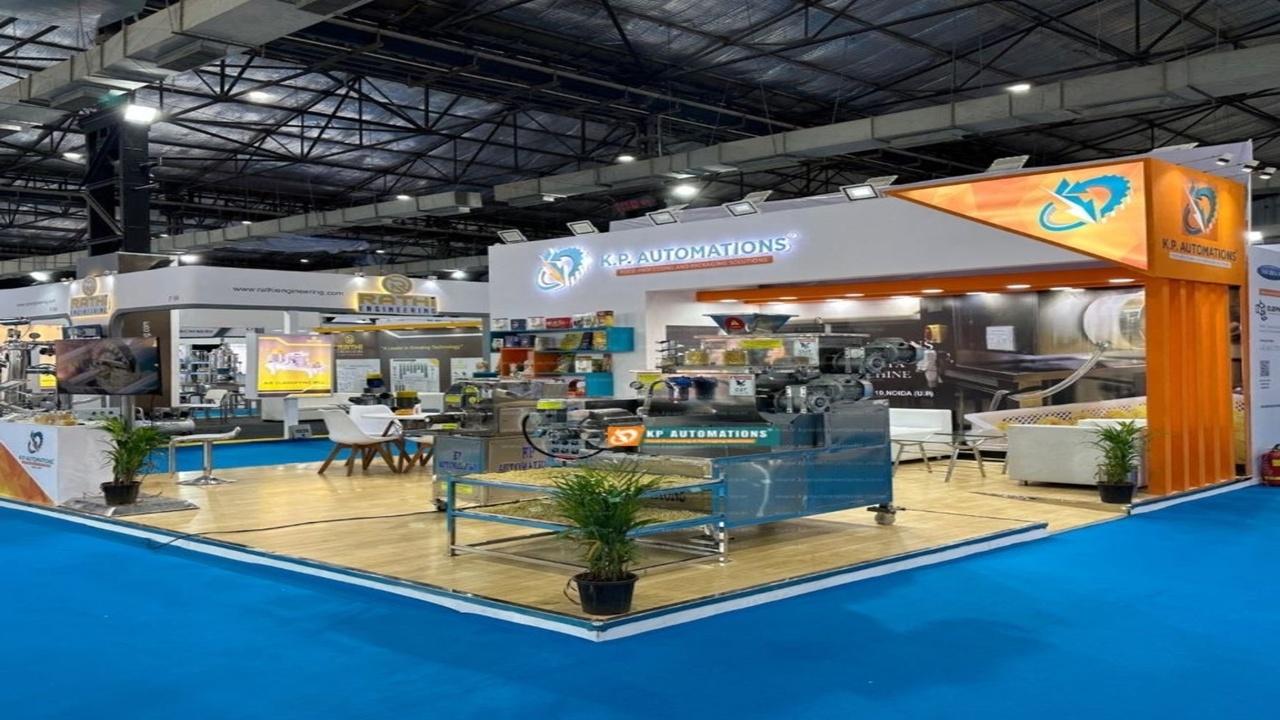
The modern food industry demands faster production, consistent quality, hygienic processing, and dependable machinery. A professionally engineered pasta making machine can help manufacturers meet these requirements while reducing manual intervention across essential production stages. From dough mixing and extrusion to shaping and cutting, an efficient production system can create a smoother workflow for commercial pasta manufacturers.
KP AUTOMATIONS develops pasta processing solutions for businesses looking to establish, expand, or modernize their pasta manufacturing facilities. With suitable automation and production planning, manufacturers can achieve consistent output while preparing their operations for future growth.
What Makes a Pasta Making Machine Important?
A pasta making machine is the core of a modern pasta production process. Instead of relying heavily on manual preparation, industrial machinery can coordinate several stages of production with greater consistency.
The dough is prepared according to the required formulation before being processed through the extrusion system. Precision extrusion helps create the desired shape and dimensions, while cutting mechanisms provide consistent product lengths.
For manufacturers producing pasta commercially, this consistency is important because customers expect the same appearance, texture, and cooking characteristics from every batch.
How Modern Pasta Production Works
A typical production process begins with accurately measured raw materials. Flour or semolina is combined with water and processed into a suitable dough consistency.
The prepared dough then enters the extrusion system, where pressure pushes it through a selected die. The die determines the shape of the pasta, allowing manufacturers to produce formats such as macaroni, penne, fusilli, spaghetti, and other varieties.
After shaping and cutting, the fresh pasta moves toward controlled drying. The drying stage gradually reduces moisture under carefully managed conditions before the product proceeds toward cooling, handling, and packaging.
A properly planned production line connects these stages to create a continuous and efficient workflow.
Benefits of Industrial Pasta Machinery
Commercial manufacturers require more than basic equipment. Industrial machinery must withstand demanding operating schedules while maintaining stable production performance.
A suitable pasta making machine can help improve production consistency, reduce dependence on manual labor, minimize product variation, and increase overall manufacturing efficiency.
Automation also makes it easier for operators to monitor important production parameters. This can support better quality control and help manufacturers identify process variations before they become larger production problems.
Selecting the Right Machine Capacity
Production capacity should be one of the first considerations when selecting pasta machinery. A small manufacturer may have very different requirements from an established food-processing company supplying distributors or export markets.
Choosing equipment according to current production requirements is important, but manufacturers should also consider future expansion. A machine that provides adequate capacity for expected growth can help avoid unnecessary equipment replacement later.
Factory space, available utilities, product range, operating schedule, and planned packaging capacity should also be considered when designing the production system.
Pasta Shapes and Product Flexibility
Consumer preferences continue to evolve, encouraging manufacturers to offer a wider selection of pasta products. A flexible production system can make it easier to respond to these changes.
Interchangeable dies and suitable extrusion configurations can support different pasta shapes. This gives manufacturers greater freedom to develop new products and target different market segments.
Product flexibility can be especially valuable for businesses supplying retail, food-service, institutional, and export customers with different requirements.
The Importance of Drying After Extrusion
Extrusion is only one part of successful pasta production. Once pasta has been shaped, moisture must be reduced carefully to achieve the desired finished characteristics.
An appropriately designed drying system helps control temperature, humidity, and airflow throughout the drying process. Gradual moisture reduction can help minimize cracking, deformation, and uneven drying.
For large-scale production, integrating controlled drying into the overall manufacturing line can improve consistency while reducing unnecessary handling between processing stages.
Automation and Manufacturing Efficiency
Automation has become increasingly important for food manufacturers seeking greater productivity. Automated systems can coordinate multiple production stages while reducing repetitive manual tasks.
A modern pasta production setup may combine dough preparation, extrusion, cutting, drying, conveying, and packaging into a coordinated workflow. This approach can reduce production bottlenecks and make better use of available labor.
Automation can also improve repeatability, which is particularly important when manufacturers need to produce large quantities of uniform products.
Hygiene and Food-Grade Construction
Food-processing machinery must be designed with hygiene in mind. Surfaces that come into contact with food should be suitable for regular cleaning and maintenance.
Stainless-steel construction is commonly used in industrial food-processing environments because it provides durability and supports hygienic production practices.
Machine accessibility is also important. Equipment should allow operators and maintenance teams to inspect, clean, and service relevant components without unnecessarily disrupting production.
Why Choose KP AUTOMATIONS?
KP AUTOMATIONS provides pasta machinery solutions for commercial and industrial food manufacturers. The company focuses on practical automation, reliable engineering, food-grade construction, and production systems designed around individual manufacturing requirements.
Its solutions can support businesses establishing new pasta plants as well as manufacturers looking to improve existing production facilities.
KP AUTOMATIONS also provides technical assistance for machinery selection and project requirements, helping manufacturers evaluate equipment according to capacity, product type, factory configuration, and production objectives.
Building a Future-Ready Pasta Manufacturing Facility
Investing in pasta machinery should be considered a long-term business decision rather than simply an equipment purchase. Production capacity, automation, energy consumption, maintenance requirements, product flexibility, and future expansion should all be evaluated before finalizing a system.
A well-designed production line can help manufacturers improve efficiency while maintaining consistent quality. It can also provide the foundation for introducing additional pasta varieties as market demand develops.
For businesses planning to compete in increasingly demanding food markets, reliable machinery and process control can become important competitive advantages.
Conclusion
A professionally designed pasta making machine can transform the way commercial manufacturers approach pasta production. From controlled dough processing and precise extrusion to consistent shaping and efficient downstream processing, the right equipment can improve productivity and product uniformity.
KP AUTOMATIONS provides pasta machinery solutions for businesses seeking dependable and scalable production capabilities. Manufacturers planning a new facility, expanding capacity, or upgrading existing equipment can discuss their requirements with the company to develop a suitable pasta production solution.
Frequently Asked Questions
What is a pasta making machine used for?
A pasta making machine is used to process prepared dough into different pasta shapes through controlled extrusion, shaping, and cutting processes.
Can one pasta making machine produce different pasta shapes?
Yes. Depending on the machine configuration and available dies, suitable equipment can be adapted to manufacture different pasta formats.
What should I consider before purchasing pasta machinery?
Production capacity, pasta varieties, automation level, factory space, energy requirements, maintenance, hygiene, and future expansion should all be considered before purchasing machinery.
Is automation useful for commercial pasta production?
Automation can reduce repetitive manual work, improve production consistency, and help manufacturers coordinate multiple stages of the manufacturing process.
Does KP AUTOMATIONS supply industrial pasta machinery?
Yes. KP AUTOMATIONS provides pasta processing machinery and related production solutions for commercial and industrial food manufacturers.
How can I contact KP AUTOMATIONS?
KP AUTOMATIONS can be contacted at +91-9310738142 or [email protected]. Its website is https://pastamachines.in/.

 English
 Arabic
 French
 Portuguese
 Deutsch
 Turkish
 Dutch
Dutch
 Italiano
 Russian
 Romaian
 Portuguese (Brazil)
 Greek
Greek