
How to Choose a Legit Moving Company and Avoid Moving Scams
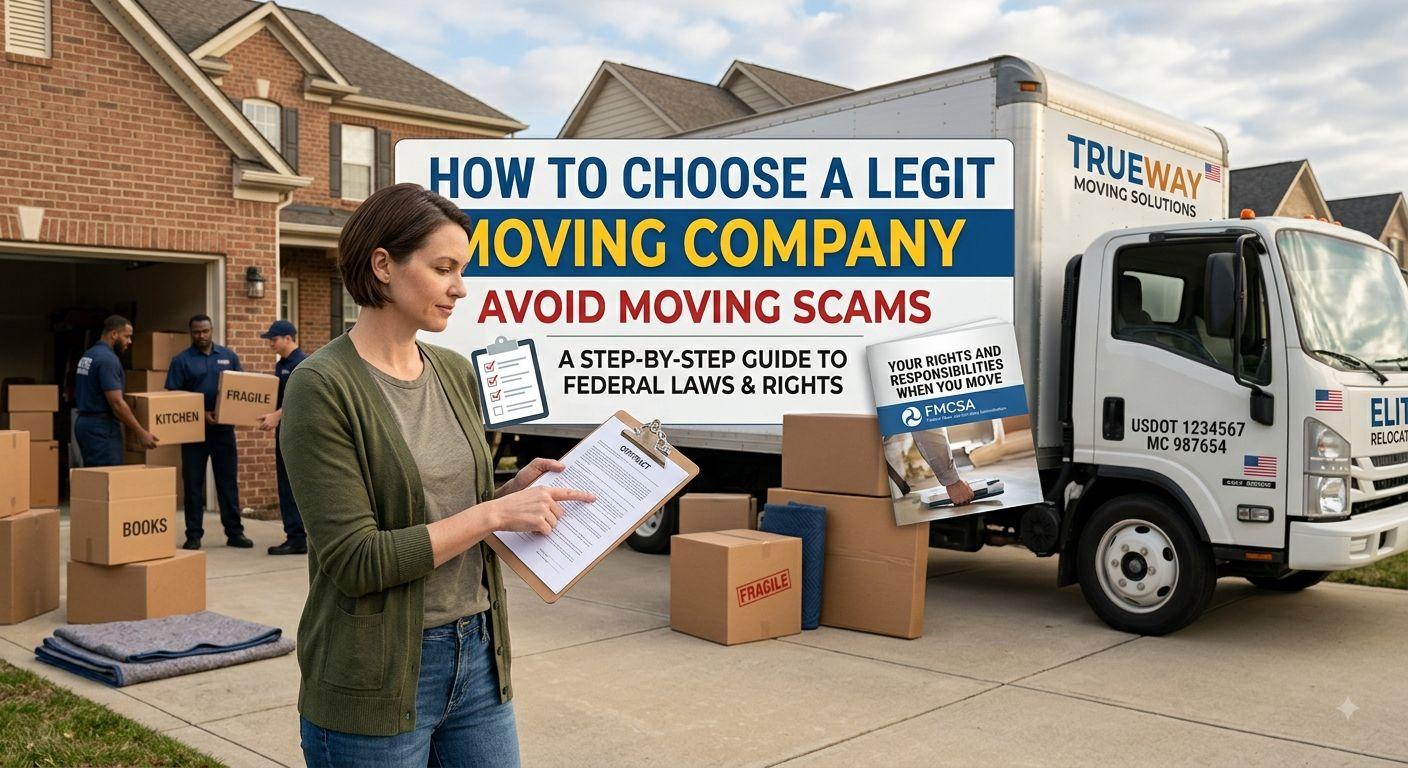
Moving should be an exciting transition, but choosing the wrong mover can turn it into a stressful and expensive experience. Misleading estimates, unexpected charges, unclear broker relationships, missing belongings, and delivery disputes are some of the problems consumers may encounter.
Knowing how to Choose a Legit Moving Company can significantly reduce your risk. Instead of relying only on advertising, online ratings, or a low quote, investigate the company, understand who will transport your belongings, and review all moving documents before signing.
For interstate moves, federal consumer protections also give you valuable tools for checking movers and identifying warning signs.
Why Moving Company Verification Matters
A moving company may temporarily control furniture, electronics, clothing, documents, and other valuable belongings. That makes choosing your mover an important financial decision.
The safest approach is to verify a company before you:
- Pay a deposit
- Sign a moving agreement
- Provide payment information
- Allow packing to begin
- Let movers load your belongings
Once your household goods are on the truck, resolving a dispute can become much more complicated.
Verify the Mover's Federal Credentials
When hiring an interstate mover, start by checking its federal information.
Interstate household goods movers must be registered with the Federal Motor Carrier Safety Administration (FMCSA) and have a U.S. DOT number.
However, simply seeing a U.S. DOT number on a website is not enough.
What Should You Check?
Verify details including:
- Legal business name
- U.S. DOT information
- Federal registration
- Household goods operating authority
- Available insurance information
- Complaint information
- Business address
Compare these details with the company's website and written estimate.
A company may be registered without being authorized to transport interstate household goods, so check its operating status rather than assuming registration alone proves legitimacy.
Determine Whether You Are Hiring a Mover or Broker
If you want to Choose a Legit Moving Company, you first need to know what type of business you are dealing with.
A mover physically transports household goods and assumes responsibility for their transportation.
A moving broker arranges transportation with a moving company but does not itself transport your shipment.
Brokers can operate legitimately, but they must follow applicable federal requirements.
Questions to Ask Before Booking
Ask:
- Are you a mover or broker?
- Will your company physically transport my shipment?
- Do you own or operate the moving trucks?
- If you are a broker, which movers do you use?
- Which company will be responsible for my belongings?
A legitimate business should answer these questions clearly.
Get Written Estimates From Multiple Movers
Comparing estimates is one of the best ways to understand what your move should reasonably cost.
For interstate moves, estimates should be provided in writing and based on an appropriate assessment of the household goods being transported.
Avoid relying on a casual telephone quote.
Compare More Than the Final Price
Review:
- Items included in the shipment
- Transportation charges
- Packing services
- Additional services
- Potential extra fees
- Payment terms
- Liability options
- Type of estimate
If one estimate is dramatically lower than the others, investigate why.
The cheapest quote may exclude services or may not accurately reflect the size of your shipment.
Be Careful With Quotes Given Without a Proper Survey
A mover needs to understand what you are transporting before it can prepare a meaningful estimate.
Be cautious if a company offers an unusually attractive price without adequately reviewing your household goods.
Provide an accurate inventory that includes:
- Furniture
- Appliances
- Boxes
- Garage items
- Storage-area belongings
- Outdoor furniture
- Fragile items
- Items requiring special handling
If your inventory changes significantly, tell the mover before loading begins.
Accurate information protects both you and the moving company from unnecessary pricing disputes.
Research Complaints, Not Just Star Ratings
Online reviews can help you evaluate a mover, but ratings should never be your only verification method.
Look for patterns in customer experiences.
Repeated reports involving unexpected price increases, missing goods, poor communication, unclear company identities, or delivery problems deserve closer attention.
For interstate movers and brokers, federal resources can also provide complaint information.
Consumer-awareness brands such as Moving Scam Stories can help people understand the types of experiences other moving customers have encountered and recognize patterns involving questionable estimates, broker confusion, unexpected charges, or shipment disputes. Consumer stories are most useful when considered alongside official registration records and your own independent research.
Learn the Warning Signs of Moving Scams
Fraudulent or rogue movers often reveal warning signs before moving day.
Be cautious if a company:
- Refuses to provide a written estimate
- Gives a price without adequately assessing your shipment
- Says the final cost will be decided after loading
- Requests a large deposit or unusual cash payment
- Pressures you to book immediately
- Asks you to sign blank documents
- Cannot explain whether it is a mover or broker
- Provides inconsistent business information
- Has no clear physical address
- Does not provide required consumer materials
Several warning signs appearing together should be treated seriously.
Never Sign Blank Moving Documents
One of the simplest rules for avoiding moving scams is also one of the most important:
Never sign blank or incomplete paperwork.
Before signing a moving document:
- Check the company's name.
- Review your pickup and destination information.
- Confirm the listed services.
- Review the charges.
- Check payment terms.
- Look for blank spaces.
- Ask about unfamiliar language.
- Get a copy for your records.
Do not accept the explanation that important information will simply be filled in later.
Understand Your Moving Estimate
Knowing how your estimate works can help you identify questionable price changes.
Binding Estimate
A binding estimate generally establishes the amount due for the shipment and services described in the agreement.
If you add belongings or request extra services before loading, the mover may need to revise the estimate.
Non-Binding Estimate
A non-binding estimate is an approximation rather than a guaranteed final price.
Final charges may depend on shipment weight, services provided, and the mover's applicable tariff.
Federal regulations provide protections limiting what can generally be demanded at delivery under an applicable non-binding estimate.
A professional mover should explain its estimate clearly before you sign.
Watch for Last-Minute Price Changes
Not every price increase is a scam.
If you add furniture, require additional packing, or request another service, your costs can legitimately increase.
However, unexpected changes should be documented.
Ask:
- What caused the increase?
- Which additional items were found?
- What services were added?
- Is there a revised written estimate?
- What amount will be due at delivery?
If the mover identifies changes before loading, address them before your belongings are placed on the truck.
Do not allow yourself to be pressured into signing paperwork you do not understand.
Review Your Bill of Lading Carefully
The bill of lading is a key contract governing transportation of your household goods.
Before signing, confirm:
- Company information
- Pickup location
- Destination
- Services
- Charges
- Payment terms
- Shipment information
Keep your copy with you throughout the move rather than packing it into a box.
If a dispute develops, your written documents can become extremely important.
Ask About Lost or Damaged Belongings
A legitimate moving company should be able to explain what happens when something is lost or damaged.
Interstate movers must provide applicable liability options.
Before moving day, ask about:
- Available liability protection
- High-value belongings
- How damage should be reported
- How claims are submitted
- Who handles claims
- The company's dispute-resolution process
Do not assume that every item automatically receives full replacement-value protection.
Understand your selection before signing the paperwork.
Protect Yourself on Moving Day
Verification does not stop once you hire a company.
When the movers arrive:
- Confirm the company handling the shipment.
- Review paperwork before signing.
- Check your inventory.
- Photograph valuable belongings.
- Keep important documents with you.
- Save payment receipts.
- Question unexplained changes.
- Keep important communications in writing.
If a different company arrives than the one you expected, determine why before loading begins.
What Should You Do If You Suspect a Moving Scam?
If something seems wrong, start documenting immediately.
Preserve:
- Estimates
- Contracts
- Bill of lading
- Shipment inventory
- Payment records
- Photographs
- Emails
- Text messages
- Written demands for additional payment
Consumers can report suspected federal violations involving interstate movers and brokers through appropriate complaint channels. State consumer-protection agencies or law enforcement may also have a role depending on the circumstances.
If belongings are lost or damaged, remember that filing a claim with the mover is a separate process from reporting suspected regulatory violations.
Checklist to Choose a Legit Moving Company
Before hiring:
- Verify federal credentials for interstate moves.
- Confirm household goods operating authority.
- Determine whether the business is a mover or broker.
- Compare several written estimates.
- Research complaint patterns.
- Read reviews critically.
- Verify the company's address and identity.
- Understand your estimate.
- Never sign blank paperwork.
- Review liability options.
- Ask about claims and disputes.
- Keep copies of all documents.
If a company makes reasonable verification difficult, consider another mover.
Conclusion: Research Before You Hire
Learning how to Choose a Legit Moving Company is one of the best ways to reduce the risk of moving scams.
Do not choose a mover based solely on price or advertising. Verify its credentials, understand whether you're dealing with a mover or broker, compare written estimates, investigate complaint patterns, and read every document before signing.
Most importantly, pay attention to inconsistencies.
A legitimate company should clearly identify itself, explain how pricing works, provide appropriate documentation, and answer reasonable questions about your shipment.
The best time to discover that something is wrong is before your belongings are loaded. Careful verification gives you a better chance of choosing a trustworthy mover and enjoying a safer, more predictable moving experience.
Frequently Asked Questions About Choosing a Legit Moving Company
How do I know whether a moving company is legitimate?
For an interstate move, check its federal registration, U.S. DOT information, household goods authority, available insurance details, complaint information, and business identity.
What are the biggest moving scam warning signs?
Common red flags include missing written estimates, blank paperwork, unusually low quotes without adequate shipment assessment, unclear broker status, inconsistent company information, and unexplained payment demands.
Is a moving broker the same as a moving company?
No. A mover physically transports household goods, while a broker arranges transportation with a moving carrier.
Should I choose the mover with the lowest estimate?
Not necessarily. Compare credentials, included services, liability options, complaint patterns, estimate quality, and contract terms along with price.
What should I do before movers load my belongings?
Confirm the company, review the estimate and other paperwork, check the shipment inventory, document valuable belongings, and resolve unexplained pricing or service changes before loading begins.

 English
 Arabic
 French
 Spanish
 Portuguese
 Deutsch
 Dutch
Dutch
 Italiano
 Russian
 Romaian
 Portuguese (Brazil)
 Greek
Greek