
How Antimicrobial Hospital Furniture Can Support Better Infection Prevention
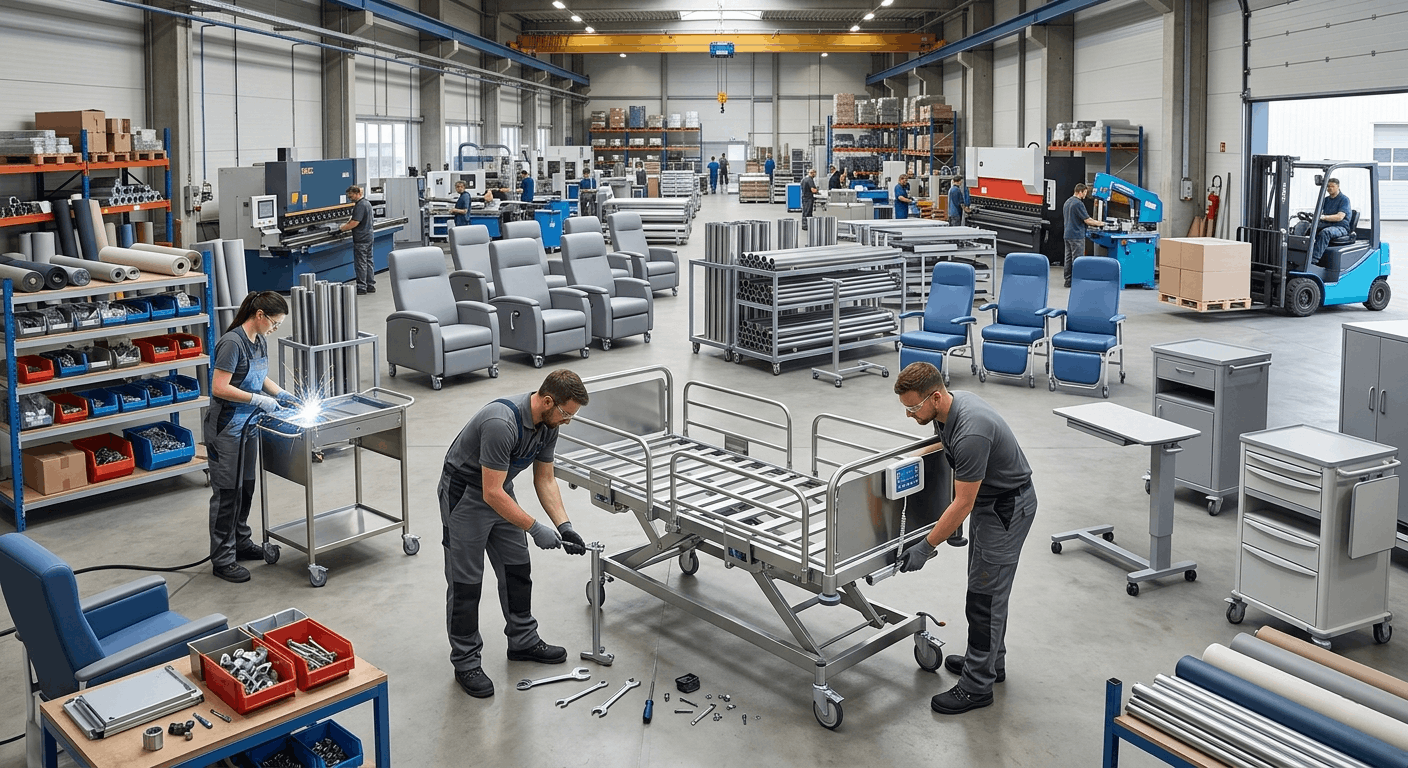
Infection prevention is one of the top goals in healthcare facilities. Patients, visitors, and healthcare workers are constantly moving via hospitals, clinics, laboratories, and care facilities. As a result, constantly touched surfaces and furnishings require meticulous hygiene and cleaning.
Hospital furniture plays an unexpectedly crucial function in this setting. Beds, seats, examination tables, bedside cupboards, trolleys, waiting room seating, and other furnishings are frequently touched during the day. Choosing appropriate materials and designs can make cleaning easier and contribute to overall infection prevention strategies.
This is where an expert hospital furniture manufacturer can help by creating furniture with hygienic materials, easy-to-clean surfaces, long-lasting construction, and designs appropriate for healthcare settings.
What is Antimicrobial Hospital Furniture?
Antimicrobial hospital furniture uses materials or surface treatments that prohibit or limit the growth of specific germs on the treated surface.
These solutions can be used on regularly touched furniture surfaces, depending on the product design and manufacturer's criteria. Patient beds, chairs, tables, cabinets, examination furniture, and other healthcare equipment are all possible examples.
However, antimicrobial characteristics should be seen as a supplement to, rather than a replacement for, regular cleaning, disinfection, hand hygiene, and established infection control methods.
1. Promoting Cleaner Healthcare Environments
Hospital furniture comes into contact with a large number of individuals throughout the day. Surfaces such as armrests, knobs, bedside tables, and examination surfaces may come into constant touch.
Furniture made with hygienic, easy-to-clean materials can make routine cleaning easier. Smooth surfaces with less unneeded gaps, seams, and difficult-to-reach spots can also assist cleaning personnel in more effectively maintaining furniture.
These specifications might be considered by a skilled hospital furniture manufacturer during the design and production process.
2. Choosing Materials That Are Easy to Clean
Material selection is an essential component of hospital furniture design. Healthcare furniture must resist repeated cleaning and disinfection without rapidly degrading.
Materials should be chosen based on the intended application, cleaning needs, durability expectations, and manufacturer recommendations.
Non-porous or properly sealed surfaces are especially beneficial since they are easier to clean and maintain than materials that absorb moisture or pollutants.
3. Targeting High-Touch Areas
Not all hospital furniture receives equal amounts of interaction. Handles, rails, armrests, tabletops, adjustment controls, and other commonly used locations may require special attention.
Designers can identify high-touch spots and select appropriate materials and finishes for them.
Combining careful design with proper cleaning techniques can help healthcare facilities maintain a more sanitary environment.
4. Supporting Regular Cleaning Procedures
Antimicrobial furniture does not remove the necessity for regular cleaning. Healthcare facilities still require standardised cleaning and disinfection processes that are appropriate for the environment and the type of furniture.
These routines can be supported by furniture that is both accessible and easy to clean. Simple designs, accessible surfaces, replaceable components when suitable, and long-lasting coatings can all help to make maintenance easier.
When buying products, healthcare facilities should constantly consider whether cleaning chemicals and processes are appropriate for the furniture.
5. Improving Durability in Healthcare Settings
Hospital furniture is subjected to stringent conditions. It may be moved regularly, cleaned several times, and used continuously throughout the day.
When surfaces deteriorate, fracture, peel, or become difficult to clean, maintaining good hygiene becomes more difficult.
When choosing materials and building processes, a quality-conscious hospital furniture manufacturer can take into account both antibacterial effectiveness and long-term durability.
6. Ensuring Patient and Staff Comfort
Infection prevention is not the only factor to consider while selecting hospital furniture. Comfort, accessibility, safety, and functionality are all equally vital.
Patient chairs, beds, examination tables, and waiting room furniture should be tailored to the people who use them. Ergonomic designs, proper dimensions, smooth finishes, and sensible controls can all enhance the entire healthcare experience.
The greatest furniture options strike a balance between sanitation and patient/staff demands.
7. Considering Various Healthcare Areas
Diverse areas of a healthcare center require diverse furniture. Beds, bedside cabinets, visiting chairs, and overbed tables are examples of items needed in patient rooms, whereas examination couches and seating are needed in outpatient sections. Emergency departments may require highly transportable and sturdy furniture that can survive heavy use.
A hospital furniture manufacturer can create or offer solutions based on the specific environment, anticipated usage, cleaning needs, and available space.
8. Integrating Antimicrobial Features and Good Hygiene Practices
Antimicrobial furniture should be considered as part of a broader infection prevention strategy.
Healthcare facilities should maintain proper practices, such as:
-
Regular cleaning and disinfecting
-
Proper hand hygiene.
-
Proper handling of medical equipment
-
Correct trash management.
-
Routine maintenance of furniture and amenities.
-
Staff training and infection control methods
No single furnishing element can substitute these critical precautions.
How to Select Antimicrobial Hospital Furniture
Before acquiring antimicrobial furniture, healthcare facilities should evaluate more than just the antimicrobial promise. They should assess the product's construction, material quality, cleaning compatibility, durability, ergonomics, safety, maintenance needs, and intended use.
It is also advisable to request information from the manufacturer on antimicrobial technology, testing or supporting paperwork, recommended cleaning practices, and projected product performance.
Choosing a renowned hospital furniture manufacturer can help healthcare organisations make more educated judgements based on their unique operating needs.
Conclusion
Antimicrobial hospital furniture can give an extra degree of protection for sanitary healthcare facilities. Healthcare institutions can improve the suitability of their furniture for demanding clinical conditions by combining appropriate antimicrobial materials, easy-to-clean surfaces, durable construction, careful design, and regular maintenance.
However, antimicrobial furniture should never be used as a replacement for established infection prevention methods. Its greatest value is realised when it is integrated into a larger strategy that includes cleaning, disinfection, hand hygiene, personnel training, and proper facility management.
Working with an experienced hospital furniture manufacturer can assist healthcare professionals select furniture solutions that strike a balance between hygiene, durability, comfort, safety, and daily functionality.

 English
 Arabic
 French
 Portuguese
 Deutsch
 Turkish
 Dutch
Dutch
 Italiano
 Russian
 Romaian
 Portuguese (Brazil)
 Greek
Greek