
What Happens When You Stop Buying Equipment Parts One at a Time
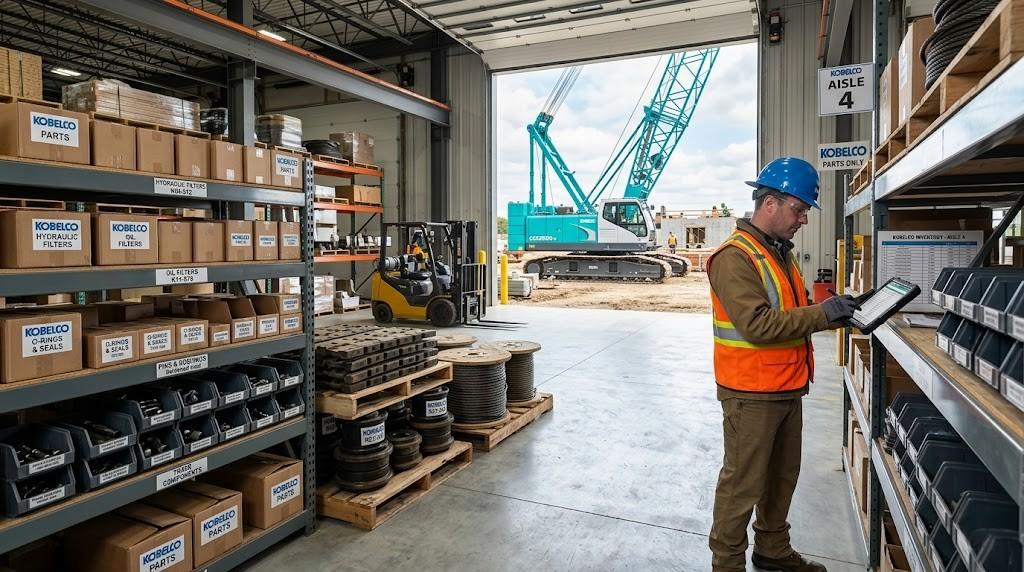
Margins in construction rarely leave room for waste. An idle crane costs you money every hour it sits silent on the job. If you operate Kobelco machinery, you have experienced their toughness firsthand. Still, even dependable equipment has an expiration date on its moving parts. Eventually, something gives.
Most builders respond to breakdowns by picking up the phone and ordering a single replacement. It feels disciplined — spend only what the moment demands. No excess inventory sitting around. No cash locked up on a shelf.
That approach, while understandable, quietly inflates your operating costs from multiple directions. Transitioning to bulk purchasing reshapes the entire cost structure. It attacks waste in shipping, pricing, labor, and scheduling simultaneously. The sections below walk through each benefit in practical detail.
How Idle Equipment Erodes Your Project Budget
When a crane stops working, the consequences extend far beyond the machine itself. An operator draws a paycheck while producing nothing. Supporting trades lose their reference point for lifting operations. The project schedule compresses, forcing overtime or penalties downstream.
Calling a supplier for an emergency order puts you in a weak negotiating position. Expedited freight becomes unavoidable. If the warehouse lacks the item, the delay multiplies. The replacement part itself might cost a few hundred dollars, but the total financial damage runs into thousands.
Keeping critical crane parts in your own inventory eliminates this vulnerability. Your maintenance team grabs a component from the shelf and begins the repair immediately. The machine returns to service the same day. No premium shipping. No idle crew. No schedule panic.
Freight Fees Eat Into Savings You Didn't Know You Were Losing
Moving heavy machinery components across any distance requires significant logistics investment. Carriers charge based on weight, distance, and handling requirements. Each small order you place carries the full burden of those charges independently.
Walk through a typical month without any purchasing plan. Early in the week, you order a set of seals. A few days later, filters become necessary. Before the month ends, you need bushings and pins. Three shipments, three freight bills, three handling fees. None of those individual orders is large enough to earn a discount.
Consolidation resolves the problem at its root. When you purchase Kobelco parts in calculated quantities, everything ships together. You absorb one freight charge instead of several. Many distributors remove shipping costs entirely once a transaction reaches a certain dollar amount. Bulk orders reach that threshold almost effortlessly. The delivery savings alone can cover the difference between scattered buying and strategic purchasing.
Supply Chain Instability Demands a Backup Plan
The global logistics network that feeds the construction industry has grown unreliable. Delivery windows that once seemed guaranteed now stretch unpredictably. Shipping bottlenecks, factory slowdowns, and material scarcities emerge without much advance notice.
If your procurement strategy waits until failure forces your hand, you inherit every risk that the supply chain carries. A component expected in three days might take three weeks. Your entire job site absorbs the consequences of that uncertainty.
Building an advance inventory of essential crane parts protects your operations from these fluctuations. When your distributor cannot deliver a specific item promptly, your business continues without interruption. The Kobelco part you need already occupies a space on your shelf. You work. Competitors without that preparation wait and watch their timelines collapse.
Committing to Larger Orders Drives Down Unit Costs
Suppliers reward reliability and volume. Customers who place consistent, substantial orders become priorities within a distributor's allocation system. That priority translates into pricing advantages that sporadic buyers never access.
Most wholesale operations use tiered pricing structures. The more you purchase per order, the less each unit costs. This benefit scales quickly with items that cycle through your maintenance routine repeatedly. If your fleet consumes a predictable quantity of crane parts each quarter, buying the full quarterly allotment at once produces a lower cost on every single item.
Bulk purchasing also shields you from market-driven price increases. Manufacturers raise list prices periodically in response to material costs and economic conditions. If you have already purchased six months of inventory at current pricing, the next increase applies to your competitors instead of you. That differential represents a direct, measurable reduction in your cost of ownership.
The Paperwork Burden You Can Eliminate Almost Entirely
Consider every human touchpoint in a single parts transaction. Someone identifies the need in the field. A supervisor reviews and authorizes the purchase. An office administrator creates a purchase order. The supplier generates and sends an invoice. Your accounting staff processes the payment.
Replicate that sequence across a dozen or more monthly orders and you have consumed a significant amount of administrative labor. Each transaction demands attention, documentation, and follow-through. Mistakes occur during data entry. Invoices get delayed or misrouted. Phone calls to resolve discrepancies consume additional time.
Consolidating purchases into bulk orders compresses the entire workflow. One purchase order replaces many. One invoice replaces many. One payment reconciliation replaces many. The labor hours your office staff recovers can be redirected toward scheduling, safety documentation, or client coordination — work that actively supports revenue generation instead of merely consuming overhead.
Prioritize the Components That Make Sense for Volume Buying
Not every crane component benefits from bulk acquisition. Assemblies like engines, transmissions, or complete boom sections only justify stockpiling for companies with large fleets of identical models.
The most effective bulk purchasing strategy concentrates on consumables and items subject to regular wear. These components leave your inventory on a predictable, repeating cycle:
- Oil, fuel, and hydraulic filters
- Brake pads and friction discs
- Pins, bushings, and retention hardware
- Wire rope and hoisting cables
- Seals, O-rings, and hydraulic gaskets
- Track pads, rollers, and undercarriage wear parts for crawler units
Every one of these items stores safely without deterioration. Map out the service intervals for each crane under your care. Cross-reference which Kobelco parts appear most consistently in routine maintenance records. Those components become your first candidates for a consolidated order.
Storage Discipline Separates Savings from Waste
Volume purchasing delivers its promise only if executed with proper storage management. Filters left in a humid environment corrode. Rubber seals exposed to temperature extremes degrade. Components that spoil on the shelf transform your savings strategy into a net loss.
Designate a specific area for parts storage. Keep it dry, organized, and secure. Implement a straightforward first-in, first-out rotation. When new shipments arrive, place them behind existing stock. This practice ensures the oldest inventory gets consumed first, preventing any item from aging past its useful life.
You do not need a warehouse management system or dedicated inventory staff. Clean shelving, basic organization, and a spreadsheet accomplish the objective. The standard is simple: a technician searching for a stored part should locate it within moments. If the process takes longer, your system needs adjustment.
Your Supplier Relationship Changes Dramatically
Purchasing at scale transforms how distributors view and treat your account. You shift from being an occasional emergency buyer to a valued recurring customer. That shift carries tangible benefits beyond pricing alone.
Technical questions receive faster responses. Backordered items get flagged for your account when inventory arrives. Rare or limited-production items get reserved for loyal buyers before reaching the general market. These advantages develop gradually, but placing bulk orders accelerates the relationship more effectively than any other single behavior.
For operations that consistently require Kobelco parts, this partnership becomes a competitive differentiator. Your phone calls get returned promptly. Your special requests receive genuine consideration. The vendor has a financial incentive to keep your business, and that alignment of interests pays dividends in service quality, reliability, and long-term cost management.
The Mental Shift That Changes Everything
Ordering replacements only when something fails keeps your entire maintenance philosophy anchored in reaction. You respond to emergencies rather than preventing them. The resulting stress affects your team and your budget equally.
Bulk procurement forces a more disciplined, anticipatory approach. You study maintenance calendars well in advance. You allocate funds proactively rather than absorbing unpredictable emergency expenses. You identify requirements before the moment of crisis demands it.
This change in perspective extends beyond individual transactions. It reshapes how you manage your entire fleet. Preventive maintenance catches deterioration early. Major failures become less frequent. Equipment service life extends. When your technicians have crane parts readily available, they perform scheduled service without delays caused by missing stock. Routine care happens as designed, stopping minor issues from escalating into catastrophic and costly breakdowns.
The Overall Financial Case
Operating a construction business demands relentless attention to costs. Purchasing replacements individually may seem like the careful choice, yet it creates compounding financial friction across your operation.
Shipping charges multiply with every small order. Administrative labor grows with every transaction. You pay higher per-unit prices than bulk rates would require. And every hour your equipment waits for parts to arrive represents revenue lost permanently. Consolidating your purchases into strategic bulk orders addresses each of these pressures simultaneously.
Per-unit costs decline. Freight consolidates into fewer, cheaper shipments. Supply chain uncertainty loses its ability to disrupt your schedule. Your equipment operates more consistently. Your crews remain engaged and productive. Over time, the cumulative savings reshape your company's financial trajectory in ways that compound with every project cycle.

 English
 Arabic
 French
 Spanish
 Portuguese
 Turkish
 Dutch
Dutch
 Italiano
 Russian
 Romaian
 Portuguese (Brazil)
 Greek
Greek