
From Ink to Intelligence: How Digital Fingerprinting and AI Are Changing Modern Verification
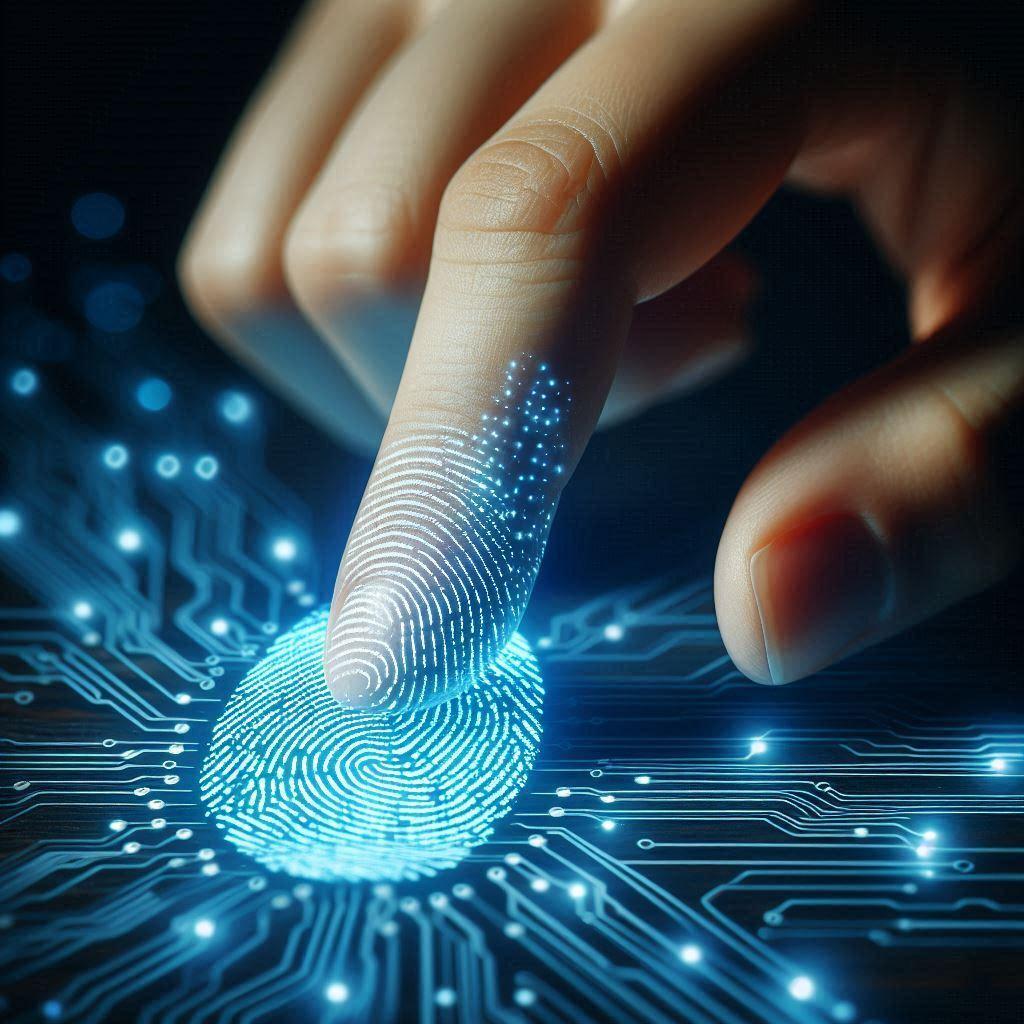
Quick Summary
Fingerprint verification has evolved dramatically from ink-covered cards and manual comparisons to sophisticated biometric systems capable of capturing, analyzing, and matching fingerprint data electronically. Today, Digital fingerprinting is becoming an important part of modern identity verification because it combines biometric technology with faster digital processing and increasingly intelligent software.
Artificial intelligence does not simply replace traditional fingerprinting. Instead, it enhances different stages of the verification process, from determining whether a fingerprint image is usable to identifying distinctive ridge patterns and comparing them against reference records. At the same time, the technology introduces important responsibilities involving privacy, security, accuracy, consent, and responsible data management.
From Ink Cards to Intelligent Identity Verification
For decades, fingerprint collection depended on ink and paper. An individual's fingers were coated with ink and carefully pressed or rolled onto a fingerprint card. Although this method could produce valuable identification records, it was labor-intensive and vulnerable to issues such as smudging, inconsistent pressure, incomplete impressions, and manual handling.
The introduction of electronic fingerprint scanners changed the process considerably. Instead of transferring ridge patterns onto paper, sensors could capture a digital representation that could be transmitted and processed electronically.
This transition laid the foundation for Digital fingerprinting as we understand it today.
Modern systems can capture fingerprint images using optical, capacitive, and other sensor technologies. The resulting images can be assessed for quality, converted into suitable biometric representations, and compared using automated matching systems.
The change is more than a shift from paper to computers. It represents a transformation in how identity information is collected, evaluated, transmitted, and verified.
The National Institute of Standards and Technology, or NIST, has developed fingerprint evaluation methods and standards designed to support interoperability, image quality, and reliable recognition. NIST's NFIQ 2 technology, for example, connects fingerprint image quality measurements with recognition performance and is formally standardized through ISO/IEC 29794-4.
How Digital Fingerprinting Works in Modern Verification
At its core, Digital fingerprinting converts the physical characteristics of a person's fingerprints into electronic information that can be processed by a biometric system.
A typical workflow involves several stages.
1. Fingerprint Capture
A scanner captures the fingerprint pattern. Depending on the system, the sensor may use optical imaging, electrical sensing, or another approved acquisition technique.
The objective is to obtain a clear representation of the friction-ridge structure.
2. Image Quality Assessment
A fingerprint cannot be reliably matched if the captured image is too poor.
Modern systems can examine characteristics such as ridge clarity, contrast, missing areas, distortion, and other quality indicators. If the image does not meet the required threshold, the system may request another capture.
NIST emphasizes that biometric-system performance depends strongly on the quality of acquired samples. Quality assessment can therefore play an important role in deciding whether a sample should be reacquired or processed differently.
3. Feature Extraction
The system identifies distinctive characteristics within the fingerprint. These can include ridge endings, bifurcations, ridge flow, and other measurable characteristics.
These features can then be represented in a format suitable for comparison.
4. Matching
The system compares the captured information with an existing fingerprint record or database.
Depending on the application, the task may involve verification, where a person claims a specific identity, or identification, where the system searches a database to determine which record may correspond to the fingerprint.
5. Decision Support
The system generates a matching score or other result that can be evaluated according to predetermined thresholds and procedures.
This is where artificial intelligence and advanced algorithms can significantly expand the capabilities of modern biometric systems.
How AI Is Transforming Digital Fingerprinting
Artificial intelligence is becoming increasingly important in biometric technology because fingerprint images are not always perfect.
People have different skin conditions, fingerprints can be affected by age or physical work, and sensors may capture images under imperfect conditions. AI-based systems can assist with interpreting complex visual information and identifying meaningful patterns.
In advanced research, deep learning models have been investigated for fingerprint feature representation and matching. Research has demonstrated that neural-network-based representations can achieve strong search performance on benchmark fingerprint databases, illustrating the potential of machine learning for large-scale biometric matching.
However, impressive laboratory results should not be interpreted as a guarantee of perfect performance in every real-world situation. Biometric accuracy depends on the sensor, image quality, population, database, algorithm, operating threshold, and intended use.
This is one reason standardized testing remains essential.
AI can support Digital fingerprinting by helping systems:
- Detect poor-quality fingerprint captures.
- Improve image processing.
- Identify ridge structures.
- Extract distinctive biometric features.
- Compare complex fingerprint patterns.
- Rank potential database matches.
- Detect unusual or suspicious patterns.
- Automate repetitive verification tasks.
- Reduce the amount of manual review required.
The result is a verification process that can become faster and more scalable without eliminating the need for human oversight.
Why Image Quality Still Matters More Than the Hype
Artificial intelligence may sound like a solution to every biometric challenge, but the quality of the original fingerprint remains fundamental.
If a fingerprint is badly captured, an advanced algorithm cannot necessarily reconstruct every missing detail accurately.
NIST's research into contactless fingerprint technologies illustrates this point. Its assessments compare contactless acquisition with conventional contact-based capture and examine factors such as interoperability and matching performance. In one NIST assessment, contact-based systems remained superior to the evaluated contactless technologies for matching captured prints against database images.
This demonstrates an important principle: better software does not remove the importance of better data.
For organizations using Digital fingerprinting, the quality of the capture device, operator procedures, environmental conditions, image standards, and verification workflow can all influence the final outcome.
That is why responsible biometric systems combine technology with standardized procedures rather than relying exclusively on an AI model.
Digital Fingerprinting in Background Checks and Identity Verification
One of the most important applications of Digital fingerprinting is identity verification for background screening.
Governments, employers, regulated organizations, immigration-related processes, licensing authorities, and other institutions may require fingerprints when a conventional name-based search is insufficient or when biometric confirmation is specifically required.
A fingerprint can provide a stronger identity linkage than relying solely on names and dates of birth, particularly when multiple people share similar identifying information.
Electronic processing can also reduce some of the administrative problems associated with physical fingerprint cards.
Instead of manually transporting paper records, appropriately captured digital information can be transmitted through authorized systems and processed according to applicable requirements.
This can help organizations improve efficiency while maintaining a more structured audit trail.
The Role of AI in Fraud Detection
Modern verification is not only about determining whether two fingerprints match. It is also increasingly concerned with whether the biometric information itself appears trustworthy.
AI and machine learning can potentially assist in identifying unusual capture patterns, detecting attempts to manipulate biometric systems, and supporting presentation-attack detection.
For example, sophisticated systems may evaluate whether a fingerprint presented to a sensor appears consistent with characteristics expected from a genuine biometric sample.
This area is particularly important because biometrics are not equivalent to passwords.
A password can be changed after a compromise. A person's physical fingerprint cannot simply be replaced.
Consequently, biometric information requires strong protection throughout its lifecycle, including collection, storage, transmission, processing, and deletion.
Privacy and Security Must Grow Alongside Innovation
The future of Digital fingerprinting cannot be discussed without addressing privacy.
Fingerprint information is highly sensitive personal information because it is directly connected to an individual's physical identity. Organizations handling biometric information should therefore establish clear policies covering why data is collected, how it is used, who can access it, how long it is retained, and how it is protected.
Encryption, access controls, secure transmission, system monitoring, appropriate retention policies, and controlled database access can all contribute to stronger biometric security.
Organizations should also avoid treating biometric technology as automatically accurate or inherently unbiased.
A responsible verification program should be tested against realistic operating conditions and monitored for errors.
Transparency is equally important. Individuals should understand when biometric information is being collected and, where applicable, what purpose it serves.
What the Future Looks Like
The next generation of biometric verification is likely to combine multiple technologies rather than rely on a single breakthrough.
Fingerprint systems may increasingly incorporate artificial intelligence, advanced sensors, mobile devices, contactless acquisition, automated quality assessment, and improved interoperability standards.
Contactless fingerprint capture is one example of this evolution. Research and evaluation efforts have explored whether fingerprints can be captured without requiring physical contact with a conventional scanner. However, NIST's work also demonstrates why new acquisition methods must be carefully evaluated before being treated as equivalent to established approaches.
Future systems may become increasingly capable of recognizing difficult fingerprint images while simultaneously detecting poor-quality samples and potential attacks.
Another important development is the movement toward faster identity verification across distributed environments. As organizations become more digital, biometric systems may need to operate across different devices, locations, and databases while maintaining interoperability and security.
Standards will therefore remain just as important as artificial intelligence.
Why Human Oversight Still Matters
Despite the rapid development of AI, automated biometric verification should not be treated as infallible.
A system can produce false matches or false non-matches. Poor-quality fingerprints can create uncertainty, and unusual cases may require additional examination.
Human review can therefore remain valuable, particularly in situations involving legal, immigration, employment, licensing, or other high-consequence decisions.
AI should be viewed as an advanced decision-support technology rather than a substitute for responsible procedures.
The most effective future systems will likely combine automated processing with defined quality standards, trained professionals, documented procedures, and appropriate safeguards.
From Ink to Intelligence: The Bigger Transformation
The evolution from ink fingerprint cards to intelligent biometric platforms represents a much larger transformation than a simple technological upgrade.
Traditional fingerprinting created physical records. Electronic systems created searchable digital records. Artificial intelligence is now helping systems interpret those records more efficiently and intelligently.
The real strength of Digital fingerprinting lies in this combination of reliable biometric science, quality-controlled data capture, standardized formats, automated processing, and increasingly sophisticated analytical technology.
At the same time, technology should never overshadow the fundamentals. Accurate capture, secure handling, interoperability, privacy protection, appropriate thresholds, and human accountability remain essential.
For organizations seeking dependable identity verification, the goal should not simply be to adopt the newest technology. It should be to build a verification process that is accurate, secure, transparent, scalable, and appropriate for its intended purpose.
Final Thoughts
The journey from ink to intelligent verification is already changing how organizations approach identity.
Digital fingerprinting provides the electronic foundation, while artificial intelligence can enhance image analysis, feature extraction, matching, quality assessment, and fraud detection. Together, these technologies can make biometric verification faster and more adaptable than traditional paper-based processes.
Yet the future of fingerprint technology will not be determined by AI alone. Its success will depend on how effectively technology is combined with standards, cybersecurity, privacy protections, trained professionals, and responsible governance.

 Arabic
 French
 Spanish
 Portuguese
 Deutsch
 Turkish
 Dutch
Dutch
 Italiano
 Russian
 Romaian
 Portuguese (Brazil)
 Greek
Greek