Understanding where Pakistani painting comes from makes it a lot easier to appreciate where it's headed. The country's visual art tradition didn't appear out of nowhere — it's the product of centuries of technique, several waves of colonial and post-independence change, and a steady stream of artists who kept reworking what came before them into something new. Here's a broad look at that story, from the earliest roots through to the contemporary scene you'll find in Lahore's galleries today.
The Mughal Foundation
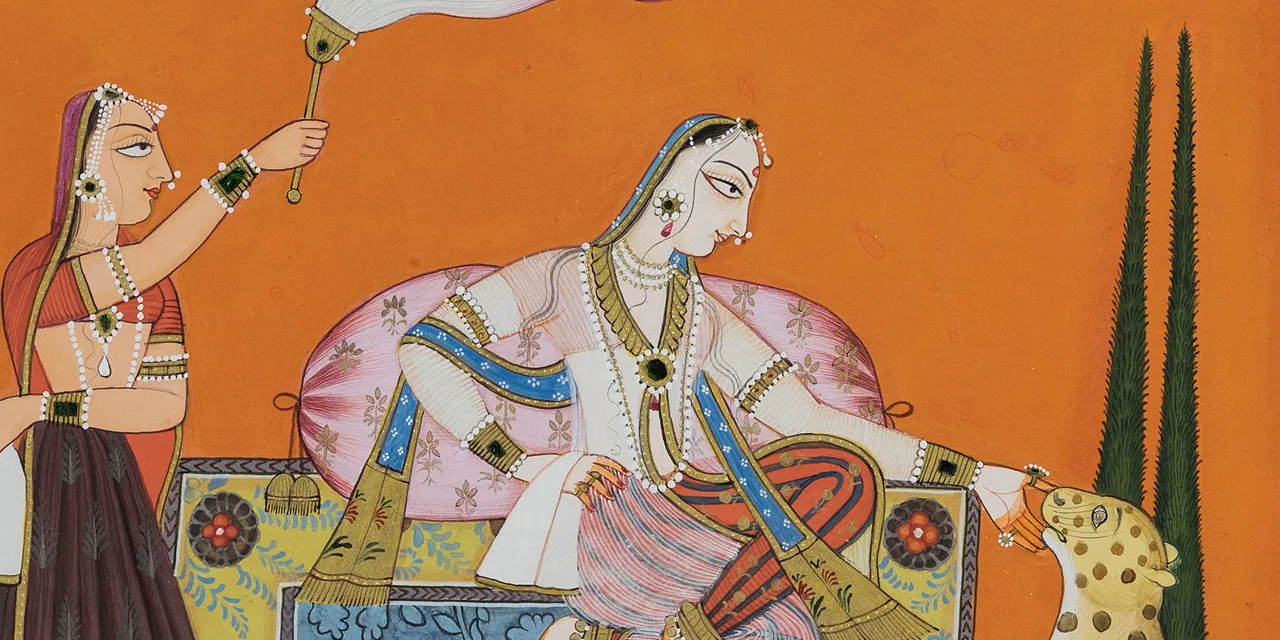
Much of what we now think of as classical Pakistani painting traces back to the Mughal era, roughly the 16th through 18th centuries, when court-sponsored artists produced highly detailed miniature paintings for manuscripts, portraits, and decorative works. This period established many of the technical foundations that still define traditional miniature painting today — fine brushwork, layered natural pigments, careful composition within a small, precise format.
Lahore played a meaningful role during this period as an important city under Mughal rule, which is part of why the city retains such a strong connection to this tradition centuries later. The techniques developed during this era weren't just decorative flourishes; they represented a genuinely sophisticated visual language, one that later generations of artists would return to again and again, whether to preserve it faithfully or to push against it.
The Colonial Period and Formal Art Education
The 19th century brought significant change to how art was taught and practiced in the region, largely through the introduction of formal art schools established during the colonial period. These institutions introduced Western academic techniques — oil painting, formal life drawing, European approaches to composition and perspective — alongside the existing local traditions. This created an interesting tension that's persisted in various forms ever since: a pull between locally rooted technique and imported Western academic training.
Lahore became one of the centers for this kind of formal art education, and the institutions established during this period laid the groundwork for what would eventually become some of the country's most respected art colleges. This educational foundation is a big part of why Lahore continued to produce a steady stream of trained artists well after independence, rather than that tradition fading with the end of colonial rule.
Independence and the Search for a National Visual Identity
After 1947, Pakistani artists faced a genuinely interesting creative question: what does art look like for a newly formed nation, one trying to define its own cultural identity separate from both its colonial past and its pre-partition history? This period saw artists actively grappling with that question, some leaning into calligraphy and Islamic visual traditions as a way of expressing a distinctly Pakistani, Islamic identity, others continuing to work within more Western-influenced modernist styles while incorporating local subject matter and themes.
This era produced some of the country's most significant painters, working across a range of approaches — from calligraphic abstraction to figurative modernism to continued engagement with miniature technique. What united much of this generation wasn't a single shared style, but a shared project: figuring out what Pakistani art could actually be, on its own terms, rather than simply an extension of what had come before.
The Miniature Revival
One of the more distinctive developments in Pakistani art history has been the sustained revival and reinvention of traditional miniature painting, particularly from the late 20th century onward. Rather than treating miniature technique as a historical relic to be preserved in a museum, a generation of artists — many trained at Lahore's leading art institutions — began using the same painstaking, centuries-old process to explore entirely contemporary subject matter: personal identity, political commentary, urban life, gender, and more.
This movement became one of the more internationally recognized threads of Pakistani contemporary art, precisely because it represented something genuinely distinctive — a technique with deep historical roots being used to say something unmistakably of the present moment. It's a good example of how Pakistani art history isn't a straight line from "traditional" to "modern," but more of an ongoing conversation between the two.
Calligraphy's Continued Significance
Calligraphy has remained a consistently significant thread throughout Pakistani art history, carrying particular weight given its deep roots in Islamic visual tradition. Rather than staying static, calligraphic art has continued to evolve, with various artists developing distinctive personal styles and approaches within the broader tradition, sometimes incorporating poetry or literary text, sometimes pushing the calligraphic line into more abstract or painterly territory. This continued evolution is part of why calligraphy remains such a popular and respected category in galleries across Lahore today, rather than being treated as a purely historical or purely religious art form.
Contemporary Pakistani Art Today
The current contemporary scene in Pakistan reflects the accumulated weight of everything that came before it — Mughal technical precision, colonial-era academic training, post-independence identity questions, and the ongoing miniature and calligraphic revivals — while also actively engaging with distinctly current subject matter. Contemporary Pakistani painters today work across an enormous range: some continue the miniature tradition directly, others work in bold abstraction, others focus on social and political commentary, and a growing number engage with newer technology and digital themes as both subject matter and material.
What's notable about the current moment is how comfortable the scene has become holding all of this simultaneously — a gallery exhibition might feature deeply traditional calligraphic work alongside a piece incorporating digital or technological themes, without either feeling out of place. This kind of range reflects a maturing art scene, one confident enough in its own foundations to embrace genuinely diverse contemporary approaches rather than needing to settle on a single defining style.
That range extends to how technology itself has entered the conversation directly — some recent exhibitions in Lahore have explored digital art and its intersection with more traditional visual practice quite directly. Ejaz Art Gallery hosted an exhibition exploring exactly this kind of digital-era work, bringing together artists engaging with coding, digital installation, and technology-driven visual practice — a useful example of just how far the conversation has extended beyond painting in the traditional sense, while still sitting alongside more classical work in the same gallery calendar.
Why This History Matters for Anyone Looking at Pakistani Art Today
Knowing even a rough outline of this history changes how you experience contemporary Pakistani painting. A miniature-style piece addressing a modern political theme reads very differently once you understand it's part of a decades-long revival movement, not just a stylistic choice. A calligraphic painting carries more weight once you know it's part of a tradition that's remained continuously significant since well before the country's founding, rather than being treated as purely decorative.
This is part of why spending time with the history, even briefly, tends to deepen appreciation for the work you'll actually see hanging in Lahore's galleries. It's not a prerequisite for enjoying a painting, but it does add real texture to the experience for anyone genuinely curious about what they're looking at.
Where to See This History Reflected Today
If you want to see this entire arc represented in one place — from traditional miniature and calligraphic work through to bold contemporary painting — visiting a gallery with a genuinely broad collection is the most direct way to do it. ejazartgallery.com represents artists working across this full range, from classical technique to distinctly contemporary approaches, which makes browsing the collection a reasonable way to see this history play out in actual, current work rather than just reading about it.
Frequently Asked Questions
1. What period is considered the foundation of traditional Pakistani miniature painting? The Mughal era, roughly the 16th through 18th centuries, is generally considered the foundational period for the miniature painting techniques that continue to influence Pakistani art today.
2. How did colonial-era art education affect Pakistani painting? Formal art schools established during the colonial period introduced Western academic techniques alongside existing local traditions, creating an ongoing tension and dialogue between imported and local approaches that has shaped Pakistani art ever since.
3. Why did miniature painting see a revival in more recent decades? A generation of artists, many trained at Lahore's leading art institutions, began applying traditional miniature technique to contemporary subject matter, creating a distinctive movement that gained significant international recognition.
4. Is calligraphy still a significant part of the contemporary art scene, or mostly historical? It remains very much a living, evolving practice, with artists continuing to develop distinctive personal styles within the broader calligraphic tradition rather than treating it as purely historical.
5. How does contemporary Pakistani art today relate to this longer history? Contemporary work reflects the accumulated influence of Mughal technique, colonial academic training, and post-independence identity exploration, while also actively engaging with current themes, including technology and digital art.


 English
 Arabic
 French
 Portuguese
 Deutsch
 Turkish
 Dutch
Dutch
 Italiano
 Russian
 Romaian
 Portuguese (Brazil)
 Greek
Greek