
Cellular Metabolism Explained A Practical Guide for Biochemistry Homework
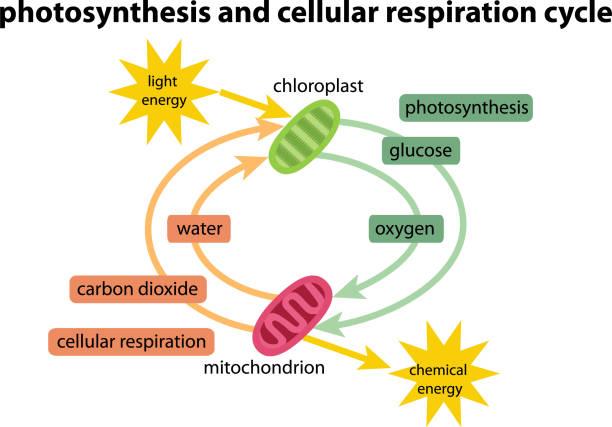
I used to think metabolism was just a list of pathways to memorize glycolysis, the Krebs cycle, the electron transport chain each one a separate wall of arrows and enzyme names. It wasn't until I started asking why a cell bothers with ten separate steps to break down one glucose molecule that the subject actually clicked. Metabolism isn't a memorization problem. It's a logistics problem: how does a cell move energy from food to function without wasting it?
This guide walks through the core ideas of cellular metabolism the way I wish someone had explained them to me starting with the big picture, then narrowing into the details that actually show up on homework and exams.
What Cellular Metabolism Actually Does
Every living cell runs thousands of chemical reactions at once, and metabolism is the umbrella term for all of them. Some of those reactions build things; others tear things apart. Both are necessary, and confusing the two is where a lot of students lose points on exams.
- Catabolism breaks large molecules into smaller ones and releases energy in the process. Digesting a slice of bread and converting its carbohydrates into glucose, then breaking that glucose down for fuel, is catabolism from start to finish.
- Anabolism goes the other direction it spends energy to build complex molecules like proteins, DNA, and fatty acids out of simpler building blocks.
A cell is running both processes simultaneously, all day, in a constant balancing act. When you're building muscle after a workout, anabolism dominates. When you're sprinting for a bus, catabolism takes over.
Professional academic support can be useful when you need structured guidance, clearer explanations, or assistance managing challenging coursework. Services focused on Biochemistry Homework Writing can help students approach difficult assignments with better organization and deeper understanding.
ATP: Why Cells Need a "Currency" at All
Here's a question worth sitting with: why doesn't a cell just use glucose directly for everything it needs to do?
The answer is that glucose stores a lot of energy in one place, and releasing it all at once would be like trying to pay for a candy bar with a $500 bill usable, but wildly impractical. Cells solve this by converting glucose's energy into smaller, spendable units: ATP (adenosine triphosphate).
ATP holds its energy in the bonds between its three phosphate groups. When a cell needs energy to contract a muscle fiber, pump ions across a membrane, or replicate DNA it breaks the outermost phosphate bond, releasing energy and leaving behind ADP (adenosine diphosphate). The cell then "recharges" that ADP back into ATP using energy harvested from food. A single cell can recycle its entire ATP supply thousands of times a day; the body doesn't store ATP so much as constantly regenerate it on demand.
Glycolysis: Where Glucose Metabolism Begins
Glycolysis is the opening move in extracting energy from glucose, and it happens in the cytoplasm no oxygen required. Across ten enzyme driven steps, one six carbon glucose molecule splits into two three carbon pyruvate molecules.
The net output per glucose molecule is modest: 2 ATP and 2 NADH. That's not a lot, which surprises students who assume glycolysis is where most of a cell's energy comes from. It isn't it's the setup for the much larger energy payoff that follows in the mitochondria. Think of glycolysis less as the main event and more as breaking a large bill into smaller, workable pieces the rest of the pathway can use.
If you're struggling with the ten steps, don't start by memorizing enzyme names. Start by tracking three things through the pathway: where ATP is consumed early on (steps 1 and 3), where it's produced later (steps 7 and 10), and where NADH is generated (step 6). Once that skeleton is in place, the enzyme names attach themselves to something meaningful instead of floating in isolation.
The Citric Acid Cycle and Electron Transport Chain
Once pyruvate is converted into acetyl CoA, it enters the mitochondria and feeds into the citric acid cycle (also called the Krebs cycle). This cycle doesn't produce much ATP directly but it generates a steady supply of NADH and FADH₂, electron carriers that do the real heavy lifting in the next stage.
Those electron carriers hand off their electrons to the electron transport chain, embedded in the inner mitochondrial membrane. As electrons move through the chain, protons get pumped across the membrane, building up a concentration gradient. That gradient is what powers ATP synthase a molecular turbine, essentially to manufacture the bulk of a cell's ATP. Per glucose molecule, this stage yields somewhere around 28–30 ATP, dwarfing glycolysis's contribution.
This is the part of metabolism most textbooks explain visually rather than verbally, and for good reason it's easier to understand as a flow of electrons and protons than as a written description. If you're using a textbook, this is the diagram worth spending real time with (OpenStax's Biology 2e has a particularly clear one in its cellular respiration chapter).
Enzymes: The Reason Any of This Happens Fast Enough
None of these reactions would happen at a biologically useful speed without enzymes. A reaction that might take years to occur spontaneously can happen in milliseconds with the right enzyme catalyzing it.
Instead of memorizing definitions like "active site" or "substrate specificity" in isolation, it helps to ask a more concrete question every time an enzyme comes up: what would happen to this pathway if this specific enzyme stopped working? That's essentially the logic behind competitive and noncompetitive inhibition questions, which show up constantly in biochemistry coursework and it's also the logic behind a lot of real drug design, since many medications work by deliberately inhibiting a specific enzyme.
Where Students Usually Get Stuck
A few patterns show up again and again in the mistakes students make with metabolism:
Treating pathways as separate stories instead of one connected system. Glycolysis, the citric acid cycle, and the electron transport chain aren't three unrelated topics they're three chapters of the same story, connected by shared molecules (glucose → pyruvate → acetyl CoA → NADH → ATP). If you can trace that chain from start to finish, most exam questions become pattern matching rather than recall.
Mixing up which reactions release energy and which consume it. A fast way to check yourself: catabolic reactions (breaking down) release energy; anabolic reactions (building up) consume it. If a question describes molecules getting bigger, energy is being spent, not gained.
Trying to memorize before understanding purpose. Ten glycolysis steps are much harder to hold onto if you don't first know why the pathway exists to extract usable energy from glucose in a controlled, stepwise way rather than all at once.
A Study Approach That Actually Works
- Learn the pathway's purpose before its steps. Before opening a diagram, ask what problem this pathway solves for the cell.
- Build one connected map, not five separate ones. Draw glycolysis, the citric acid cycle, and the electron transport chain on a single page, linked by the molecules that pass between them.
- Explain it out loud, without notes. If you can walk through how glucose becomes ATP in plain language, without checking a diagram, you've moved past memorization.
- Use primary, reliable sources when textbooks fall short. The NCBI Bookshelf and MedlinePlus Genetics are free, well vetted resources that go deeper than most survey textbooks without requiring a biochemistry degree to parse.
Metabolic pathways are genuinely one of the more assignment heavy parts of a biochemistry course, and it's normal to need a second explanation, a study partner, or outside tutoring help to get through a dense unit that's not a sign you're behind, it's just a dense topic taught fast.
The Core Idea Worth Remembering
If you forget every enzyme name by next semester, hold onto this: metabolism is how cells convert what they eat into what they need energy, building blocks, and the ability to respond to change through a connected chain of controlled, enzyme driven reactions. Catabolism breaks down, anabolism builds up, ATP is the currency that moves between them, and every pathway in between exists to manage that exchange efficiently.
Once that framework is solid, the diagrams stop being something to memorize and start being something you can actually read.

 English
 French
 Spanish
 Portuguese
 Deutsch
 Turkish
 Dutch
Dutch
 Italiano
 Russian
 Romaian
 Portuguese (Brazil)
 Greek
Greek