
QR Codes for Real Estate: Listings, Virtual Tours, and Lead Generation
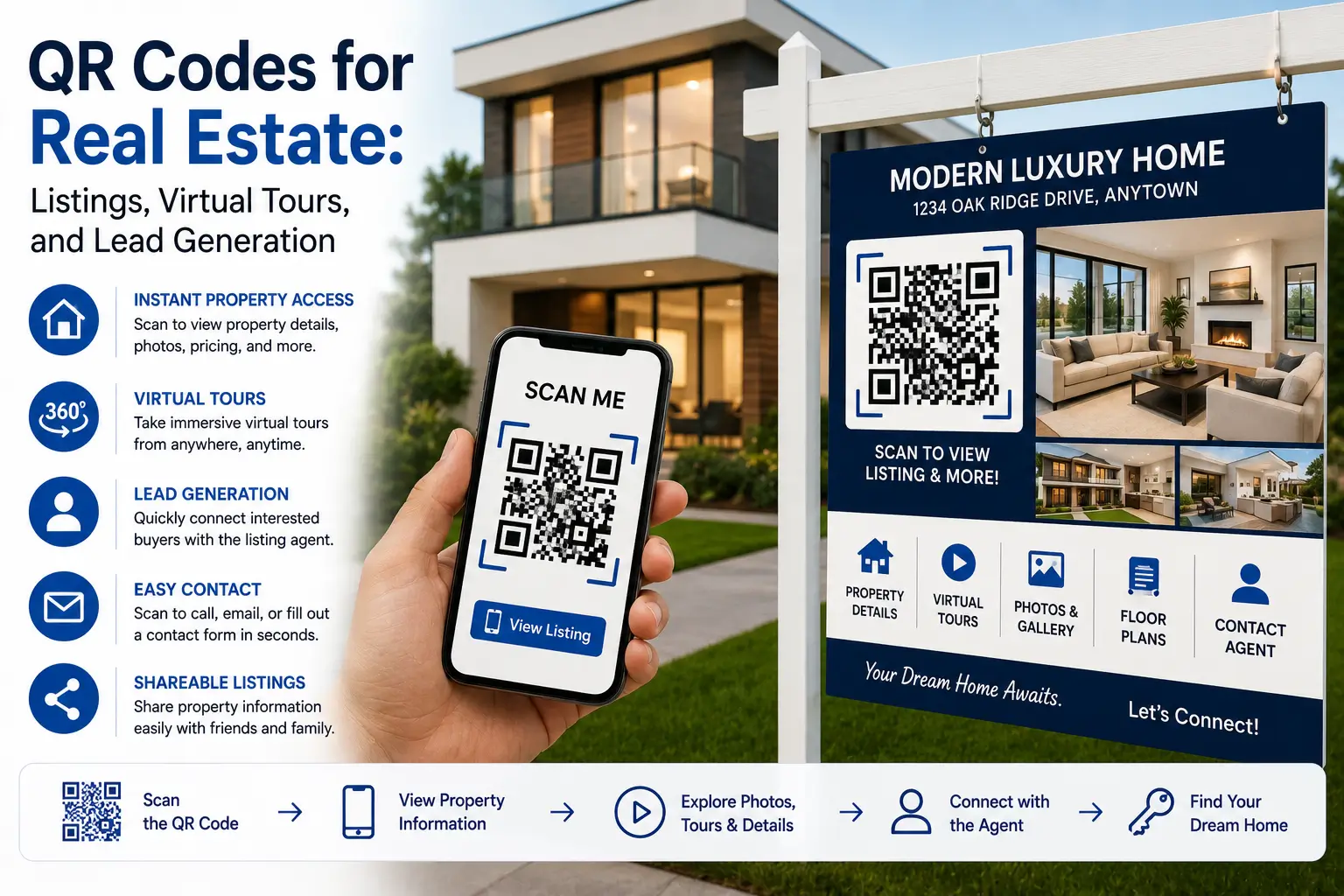
Real estate marketing often begins offline.
A potential buyer notices a property sign while driving through a neighborhood. Someone picks up a brochure outside a home. A visitor sees a window display at an agency or receives a flyer during an open house.
The next step usually happens online.
Buyers want to view photographs, check the asking price, explore the floor plan, watch a virtual tour, and contact the agent. QR codes can make that transition from offline interest to online action much faster.
Instead of asking someone to remember a web address or search for the property later, a real estate agent can place a QR code on the marketing material. One scan can take the buyer directly to the listing, tour, inquiry form, or booking page.
This makes QR codes for real estate useful for promoting properties, generating leads, and helping interested buyers access information at the exact moment their attention is strongest.
What Are QR Codes for Real Estate?
QR codes for real estate are scannable codes that connect physical marketing materials with digital property information.
They can be added to:
-
Property signs
-
Listing brochures
-
Window displays
-
Open-house flyers
-
Newspaper advertisements
-
Direct-mail postcards
-
Agent business cards
-
Property information sheets
-
Development banners
-
Rental advertisements
After scanning the code with a compatible smartphone, the user is taken to a selected online destination.
That destination could be:
-
A property listing
-
A virtual tour
-
A photo gallery
-
A floor plan
-
An inquiry form
-
An appointment-booking page
-
An agent profile
-
A mortgage calculator
-
A neighborhood guide
-
A rental application
The QR code acts as a direct connection between the physical advertisement and the next step in the buyer’s journey.
Why QR Codes Work Well in Real Estate Marketing
Property marketing depends heavily on timing.
A potential buyer may notice a home while walking through a neighborhood or driving past a sign. Their interest may be strong in that moment, but it can disappear quickly if finding more information requires too much effort.
Without a QR code, the buyer may need to:
-
Remember the agent’s name or property address.
-
Search for the listing online.
-
Identify the correct property.
-
Find the information they wanted.
-
Locate a way to contact the agent.
Every additional step creates another opportunity for the buyer to stop.
A QR code can remove much of that friction. The user scans once and reaches the intended page immediately.
This gives agents a better chance of turning casual interest into a listing view, inquiry, tour booking, or direct contact.
Link Property Signs Directly to Listings
Property signs are one of the most natural places to use QR codes.
A traditional sign provides limited information. It may show the agent’s name, agency, telephone number, and a short message such as “For Sale” or “To Let.”
A QR code can extend that sign by linking to the complete property listing.
After scanning, a potential buyer could view:
-
The asking price
-
Interior and exterior photographs
-
The number of bedrooms and bathrooms
-
The property description
-
A floor plan
-
Location details
-
Energy information
-
Availability
-
Agent contact details
This is particularly helpful outside normal business hours.
Someone who notices the property in the evening or during the weekend does not need to wait for the agency to open. They can access the listing immediately and decide whether to request more information.
A service such as QRColor can be used to create a QR code that links a property sign, brochure, or advertisement directly to the relevant listing or property page.
The destination should be specific. Sending users to an agency homepage forces them to search for the property again, which reduces the convenience of scanning.
Give Buyers Instant Access to Virtual Tours
Virtual tours help buyers understand a property before arranging an in-person viewing.
They can show room layouts, movement between spaces, outdoor areas, and details that may not be obvious from still photographs.
A QR code can make the tour accessible from almost any printed material.
Agents can place the code on:
-
Property brochures
-
Window cards
-
Direct-mail flyers
-
Open-house handouts
-
Development advertisements
-
Print publications
-
For-sale signs
The label beside the code might say:
-
Scan to take the virtual tour
-
Scan to explore the property
-
Scan for a 360-degree walkthrough
-
Scan to view the home online
This gives buyers a clear reason to scan.
It can also help qualify leads. Someone who watches the full tour and still requests a viewing may have stronger interest than someone responding only to a short advertisement.
Turn Property Brochures Into Interactive Resources
Printed brochures remain useful during open houses, property exhibitions, and agency visits.
However, printed material has limited space and may become outdated when prices, availability, or property details change.
A QR code allows the brochure to act as a gateway to more complete and current information.
The code can connect readers to:
-
A detailed listing
-
Additional photographs
-
A downloadable floor plan
-
A virtual tour
-
A property video
-
A neighborhood map
-
An inquiry form
-
A viewing calendar
The brochure still provides the essential information, while the QR code gives interested buyers an easy way to continue exploring.
This can also reduce the need to print oversized brochures containing every photograph and detail.
Capture Leads With Inquiry Forms
Sending buyers to a property page is useful, but QR codes can also lead directly to a contact or inquiry form.
A simple form could ask for:
-
Name
-
Email address
-
Telephone number
-
Preferred viewing date
-
Buying or renting status
-
Questions about the property
-
Preferred contact method
This allows the agent to collect structured lead information rather than relying only on telephone calls.
The form should be short.
A potential buyer who scans a code from a sign or flyer is unlikely to complete a long questionnaire. Request only the details needed to continue the conversation.
A clear call to action can improve the response:
-
Scan to request property details
-
Scan to arrange a viewing
-
Scan to ask the agent a question
-
Scan to receive the brochure by email
The destination should also work well on mobile devices because most users will access it from a phone.
Allow Buyers to Book Property Viewings
QR codes can connect interested buyers directly to an appointment-booking page.
Instead of calling the agent, waiting for a reply, and exchanging several messages, the buyer can view available times and request a suitable appointment.
This can be useful for:
-
Private viewings
-
Rental inspections
-
New-development appointments
-
Agent consultations
-
Property valuation requests
-
Open-house registration
A booking page should clearly explain whether the appointment is confirmed immediately or requires approval from the agent.
It should also include the property address, expected duration, and any instructions the visitor needs before arriving.
Reducing the number of steps between interest and booking can help agents capture leads while the property is still fresh in the buyer’s mind.
Improve Open-House Experiences
Open houses create several opportunities to use QR codes.
A code near the entrance could allow visitors to register. Another could link to the property details, floor plan, or virtual tour. A final code could direct visitors to a feedback form or viewing request.
QR codes at an open house can be used for:
-
Visitor registration
-
Digital property brochures
-
Room-by-room information
-
Floor-plan access
-
Offer instructions
-
Follow-up requests
-
Feedback collection
-
Viewing bookings
For example, a visitor standing in the kitchen could scan a code that opens details about the appliances, renovation work, or included fixtures.
A code in the garden might provide information about the plot size, boundaries, or planning permissions.
The codes should not overwhelm the property. A small number of clearly labeled codes is usually more effective than placing one in every corner.
Promote New Developments and Off-Plan Properties
New developments often need to sell a property experience before every unit is available to visit.
QR codes can connect physical advertisements with digital content that helps buyers understand the project.
A code on a development sign or brochure could link to:
-
Architectural visualizations
-
Available units
-
Floor plans
-
Pricing information
-
Construction updates
-
Location guides
-
Reservation forms
-
Show-home appointments
-
Developer contact details
This is especially useful for large outdoor banners, exhibition stands, and print advertisements where space is limited.
The QR code allows potential buyers to continue exploring the development after leaving the location.
Add QR Codes to Real Estate Window Displays
Agency window displays still attract attention from people walking through local commercial areas.
Each property card can include a QR code that directs the viewer to the complete listing.
This allows people to browse properties even when the office is closed.
A person may notice a listing late in the evening, scan the code, view the photographs, and submit an inquiry without waiting until the next business day.
Window-display codes should be large enough to scan through the glass. Agents should test them from the pavement and check whether glare or reflections interfere with scanning.
Use QR Codes on Direct-Mail Campaigns
Postcards and printed flyers are commonly used to promote listings, announce recent sales, and generate valuation leads.
Adding a QR code gives the recipient a direct next step.
Depending on the campaign, the code could link to:
-
A featured listing
-
A collection of local properties
-
A home valuation request
-
An agent introduction video
-
A recently sold case study
-
A neighborhood market report
-
A consultation-booking page
A campaign targeting homeowners might use a call to action such as:
Scan to request a property valuation.
A campaign targeting buyers could say:
Scan to view homes available in this area.
The landing page should closely match the message printed on the mailer. A disconnect between the advertisement and destination can cause users to leave.
Connect Agent Business Cards to Digital Profiles
A business card can hold only a small amount of information.
A QR code can connect it to a more complete agent profile containing:
-
Current listings
-
Contact details
-
Client testimonials
-
Social media profiles
-
Appointment booking
-
Agency information
-
Service areas
-
A digital contact card
This can be useful at networking events, property viewings, conferences, and local business meetings.
The code should support the card rather than replace the essential information. The agent’s name, telephone number, and email address should still be printed clearly.
Share Neighborhood and Location Information
Buyers are not evaluating only the property. They are also considering the surrounding area.
A QR code can direct them to a neighborhood guide that includes:
-
Nearby schools
-
Public transportation
-
Shops and services
-
Parks and recreation
-
Travel times
-
Local restaurants
-
Healthcare facilities
-
Community information
Agents could place the code in a property brochure or on a display during an open house.
This can help buyers picture daily life in the area and answer common location-related questions before they contact the agent.
The information should remain factual and relevant. Agents should avoid making guarantees about matters that may change or depend on personal interpretation.
Help Rental Applicants Move to the Next Step
QR codes can also simplify rental marketing.
A code on a rental sign, poster, or advertisement could link to:
-
The rental listing
-
Application requirements
-
A viewing schedule
-
A tenant inquiry form
-
A virtual tour
-
An application page
-
Agent contact information
Before linking directly to an application, it may be better to provide the property details and eligibility requirements first.
This helps applicants understand the process and can reduce incomplete or unsuitable submissions.
The application page should use secure forms and avoid requesting sensitive information through an unprotected destination.
Use Dynamic QR Codes for Changing Listings
Real estate information changes frequently.
A property may be reduced in price, moved under offer, sold, rented, or removed from the market. Printed signs and brochures may remain visible after the original listing has changed.
A dynamic QR code can allow the destination to be updated without replacing the printed code.
For example, after a property sells, the same code could direct users to:
-
Similar available properties
-
A sold-property announcement
-
A home valuation page
-
The agent’s current listings
-
A buyer registration form
This can extend the useful life of the printed material.
However, the replacement destination should remain relevant to the original context. Redirecting a property code to an unrelated page can confuse visitors and reduce trust.
Measure Interest in Offline Marketing
One advantage of digital real estate marketing is the ability to measure activity. QR codes can bring some of that measurement to offline materials.
Depending on the QR code system and analytics setup, agents may be able to monitor:
-
Number of scans
-
Approximate scan times
-
General locations
-
Devices used
-
Campaign performance
-
Differences between placements
An agent could create separate codes for the property sign, brochure, window display, and direct-mail campaign.
This makes it easier to compare which materials generate the most engagement.
For example, if the property sign receives many scans but few inquiries, the listing page or call to action may need improvement.
If direct-mail postcards generate more valuation requests than another print campaign, the agent may decide to invest more heavily in that format.
Scan numbers should not be treated as completed sales. They are engagement signals that can help agents evaluate and improve campaigns.
Match Every QR Code to a Clear Goal
A real estate QR code should have one main purpose.
That purpose might be to:
-
Display the listing
-
Start a virtual tour
-
Collect an inquiry
-
Book a viewing
-
Request a valuation
-
Download a brochure
-
Register for an open house
-
Contact the agent
Trying to send users to a page with too many unrelated options can reduce conversions.
Before creating the code, the agent should decide what action the user should take after scanning.
The destination page should make that action obvious.
Write a Clear Call to Action
A QR code without context may not attract many scans.
Users should know what they will receive before opening it.
Useful real estate calls to action include:
-
Scan to view the full listing
-
Scan to see more property photos
-
Scan to take the virtual tour
-
Scan to arrange a viewing
-
Scan to download the floor plan
-
Scan to request more information
-
Scan to view similar properties
-
Scan to book a free valuation
The call to action should match the destination exactly.
A code labeled “View the virtual tour” should open the tour directly rather than sending users to a general agency homepage.
Send Users to Mobile-Friendly Pages
Most people scan QR codes with smartphones.
The destination page should therefore work properly on a small screen.
A mobile-friendly property page should have:
-
Fast loading times
-
Clear photographs
-
Readable text
-
Simple navigation
-
Easy-to-use inquiry buttons
-
Clickable telephone numbers
-
Short forms
-
Visible booking options
Large files and slow-loading photo galleries can cause potential buyers to leave before viewing the listing.
Agents should test the page using mobile data as well as Wi-Fi. A page that works quickly in the office may load differently for someone standing outside a property.
Make Real Estate QR Codes Easy to Scan
A QR code must be readable in the environment where it will be displayed.
Use strong contrast
Dark code elements on a light background are generally the most reliable.
Branded colors can work, but the code and background should remain clearly separated.
Choose the right size
A QR code on a handheld brochure can be relatively small.
A code on a roadside sign, building banner, or window display needs to be much larger.
The greater the scanning distance, the larger the code should be.
Leave clear space around the code
The blank area surrounding the code helps cameras recognize it.
Avoid placing text, logos, borders, or photographs too close to the edges.
Avoid glare and distortion
Reflective signs, curved surfaces, weather damage, folds, and poor printing can make codes difficult to scan.
Outdoor codes should be tested under different lighting conditions.
Maintain safe placement
A code on a roadside sign should not encourage drivers to scan while operating a vehicle.
It should be designed for pedestrians, passengers, or people who have stopped safely.
Test the Complete Buyer Experience
Testing should go beyond checking whether the QR code opens.
Agents should follow the same path a potential buyer will take.
Confirm that:
-
The correct listing opens
-
The page loads quickly
-
The property is still available
-
Photographs display correctly
-
The contact form works
-
Telephone links can be tapped
-
Viewing requests are received
-
No unnecessary login is required
-
The page is easy to use on mobile devices
Testing should also continue after the campaign begins.
A code may remain visible for weeks or months, while the destination page may be moved or removed during a website update.
Keep Property Information Accurate
QR codes can make information easier to access, but they also make errors easier to discover.
The linked page should match the printed advertisement.
Check that the following details are consistent:
-
Asking price
-
Property status
-
Address
-
Number of rooms
-
Floor area
-
Availability
-
Agent contact details
-
Viewing instructions
If the listing changes, the online destination and printed material should be updated when possible.
Accuracy helps protect trust and prevents agents from wasting time responding to inquiries based on outdated information.
Protect Buyer and Seller Privacy
Real estate forms may collect personal information from buyers, tenants, sellers, and landlords.
The destination should use a secure website and collect only the information necessary for the stated purpose.
Agents should avoid linking public QR codes to:
-
Private client documents
-
Internal property records
-
Unsecured file folders
-
Personal identification documents
-
Confidential seller information
-
Restricted transaction pages
Privacy information should be available when users submit their contact details.
Agents should also avoid including information in public listings that could create unnecessary security risks for occupied properties.
Common Real Estate QR Code Mistakes
Some common mistakes can reduce the value of a QR code campaign.
These include:
-
Sending users to the agency homepage instead of the property
-
Using a code that is too small
-
Printing it with weak contrast
-
Providing no explanation beside the code
-
Linking to a slow or outdated page
-
Using a long inquiry form
-
Failing to test through window glass
-
Leaving a sold property linked as available
-
Removing the destination page
-
Placing the code where scanning is unsafe
-
Using the same untracked code for every campaign
Most of these problems can be prevented by testing the code in its actual location and reviewing the destination regularly.
Are QR Codes Worth Using in Real Estate?
QR codes are most valuable when they remove a step from the buyer’s journey.
They can help a person move directly from:
-
A property sign to a listing
-
A brochure to a virtual tour
-
A postcard to a valuation request
-
A window display to an inquiry form
-
An open house to a viewing booking
-
A business card to an agent profile
Their value depends on what happens after the scan.
A QR code cannot fix an unclear listing, poor photographs, an unresponsive agent, or a difficult contact form.
It can, however, make it much easier for an interested person to take the next action.
Final Thoughts
QR codes for real estate can connect offline property marketing with the digital information buyers expect.
Agents can use them on signs, brochures, window displays, postcards, business cards, and open-house materials.
They can direct potential clients to listings, virtual tours, floor plans, inquiry forms, booking pages, neighborhood guides, and valuation requests.
The main opportunity is not the QR code itself. It is the reduction of friction between interest and action.
When the code is clearly labeled, easy to scan, linked to a mobile-friendly page, and built around a specific goal, it can help agents capture more value from their existing marketing materials.
A buyer who notices a property should not have to search for it later.
With the right QR code, the complete listing can be one scan away.

 English
 Arabic
 French
 Spanish
 Portuguese
 Deutsch
 Turkish
 Dutch
Dutch
 Italiano
 Russian
 Romaian
 Portuguese (Brazil)