
QR Codes for Events: Tickets, Check-Ins, and Guest Engagement
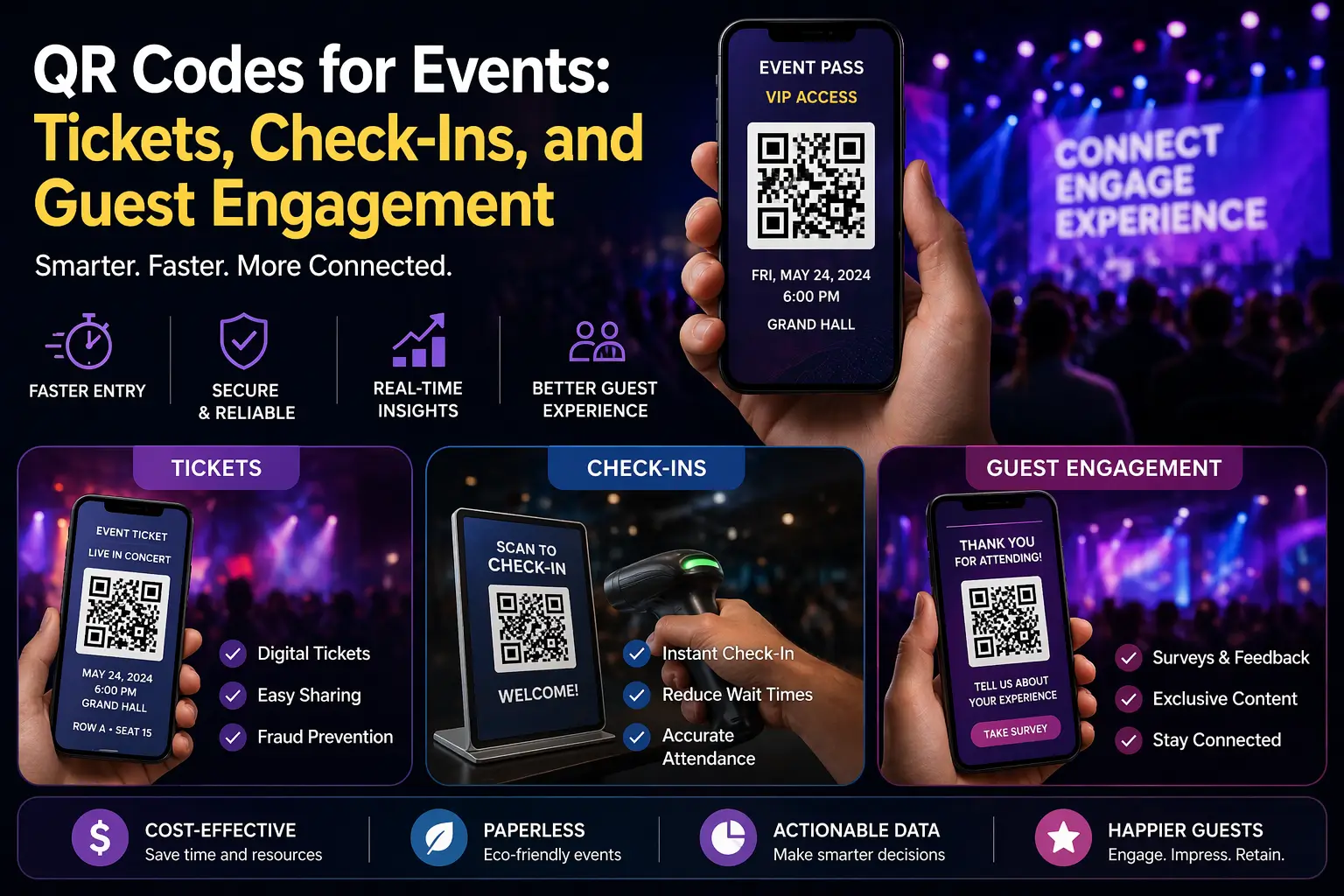
QR codes have become a key tool in modern event management. From ticket distribution to guest check-ins and post-event engagement, they help organizers streamline operations while improving the attendee experience.
Whether it’s a conference, concert, workshop, or private event, QR codes offer a simple way to connect physical access with digital systems.
Why Events Are Adopting QR Codes
Events often involve large groups of people, tight schedules, and multiple touchpoints. Managing all of this efficiently can be challenging.
QR codes help by:
-
Reducing manual processes
-
Speeding up entry and check-ins
-
Minimizing paper usage
-
Improving organization and tracking
-
Creating smoother guest experiences
They allow organizers to manage complex workflows with minimal friction.
QR Code Tickets: Simple and Scalable Access
One of the most common uses is digital ticketing.
Instead of printing tickets, attendees receive a QR code that can be stored on their phone or email.
How it works
-
Ticket is generated with a unique QR code
-
Attendee receives it digitally
-
Code is scanned at the entrance
Benefits of QR code tickets
-
Faster entry at events
-
Reduced risk of lost tickets
-
Easier distribution via email or messaging
-
Lower printing costs
This system works well for events of all sizes, from small gatherings to large-scale festivals.
Efficient Check-Ins and Crowd Management
QR codes significantly improve the check-in process.
Instead of manually verifying names or tickets, staff can scan each attendee’s code and grant access instantly.
Advantages
-
Shorter lines at entry points
-
Reduced human error
-
Real-time attendance tracking
-
Better crowd flow management
For larger events, this can make a noticeable difference in how smoothly everything runs.
Enhancing Guest Engagement
QR codes aren’t limited to entry—they can also improve the event experience itself.
Organizers can use them to:
-
Share event schedules
-
Provide maps or directions
-
Link to speaker profiles
-
Offer downloadable resources
-
Collect feedback after sessions
This keeps attendees informed and engaged without requiring printed materials.
Marketing and Post-Event Interaction
QR codes can also extend the value of an event beyond the day itself.
They can link to:
-
Feedback forms or surveys
-
Email sign-up pages
-
Special offers or promotions
-
Social media platforms
This helps organizers maintain contact with attendees and build long-term relationships.
Where to Use QR Codes at Events
Strategic placement improves visibility and usage.
Common locations include:
-
Entry points (ticket scanning)
-
Registration desks
-
Event signage and banners
-
Presentation slides
-
Booths and exhibition areas
The goal is to place QR codes where attendees naturally look for information.
Best Practices for Event QR Codes
To ensure effectiveness, follow these guidelines:
Keep it clear
Let attendees know what the QR code is for (e.g., “Scan for schedule”).
Ensure fast scanning
Use high contrast and avoid overly complex designs.
Optimize for mobile
All linked pages should load quickly and display properly.
Test everything
Check functionality before the event begins.
Plan for connectivity
Ensure reliable internet access at scanning points when needed.
Creating QR Codes for Events
Setting up QR codes for an event is straightforward.
Organizers can use tools like QRColor to generate QR codes for tickets, information pages, or engagement links → https://qrcolor.com
This makes it easy to implement QR-based systems without complex technical setups.
Are QR Codes Suitable for All Events?
QR codes work well for most event types, including:
-
Conferences and seminars
-
Concerts and festivals
-
Corporate events
-
Workshops and training sessions
-
Private gatherings
They are especially valuable when managing larger audiences or multiple event touchpoints.
Conclusion
QR codes provide a simple yet powerful way to improve event organization and attendee experience.
From digital tickets and faster check-ins to enhanced engagement and post-event follow-up, they help streamline every stage of an event.
With minimal setup and wide accessibility, QR codes have become an essential tool for modern event planning.

 English
 Arabic
 French
 Spanish
 Portuguese
 Deutsch
 Turkish
 Dutch
Dutch
 Italiano
 Russian
 Portuguese (Brazil)
 Greek
Greek