
QR Codes for Restaurants: Menus, Ordering, and Contactless Experiences
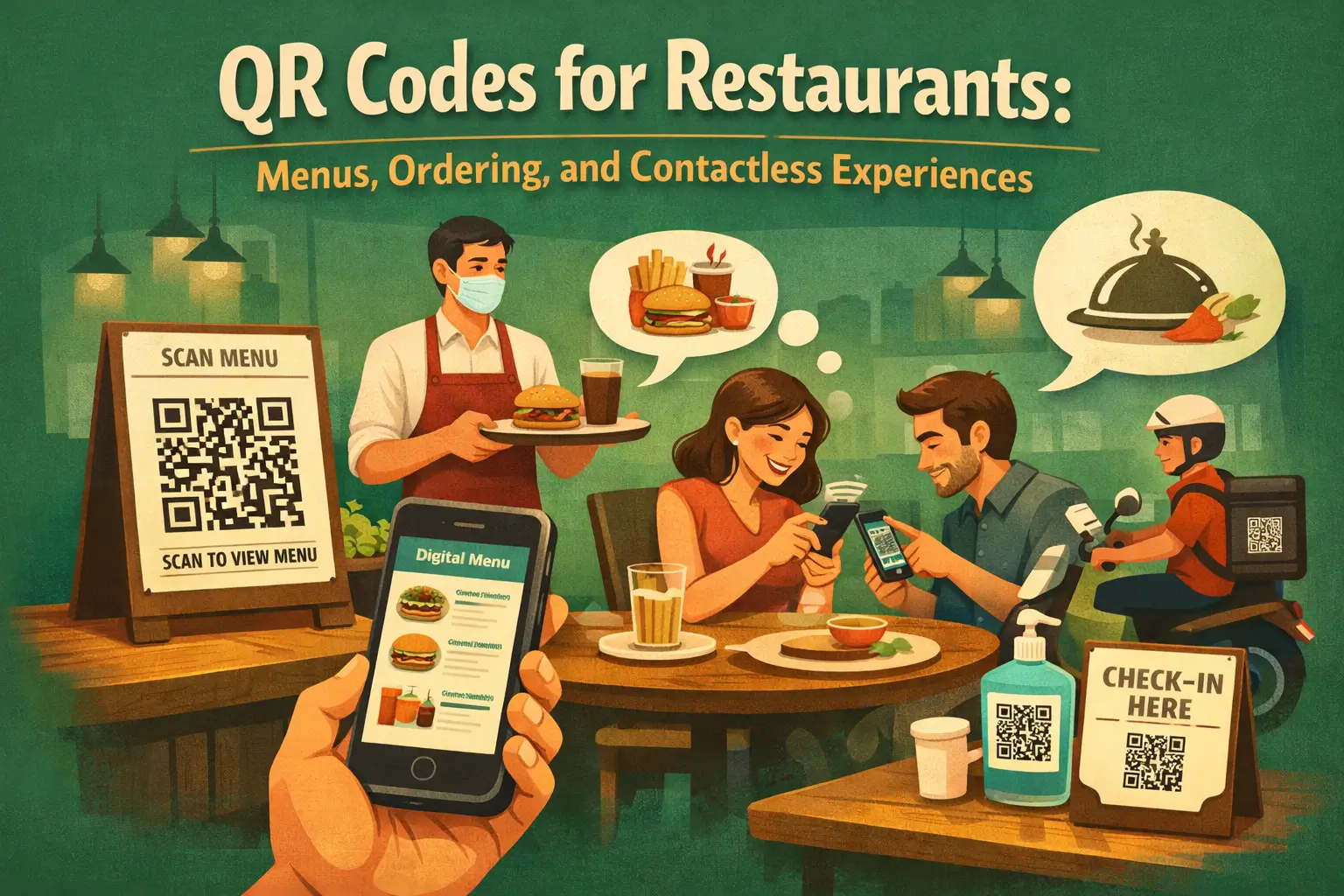
QR codes have quietly become one of the most useful tools in the restaurant industry. What started as a simple way to replace printed menus has evolved into a powerful system for improving service, reducing costs, and creating smoother customer experiences.
Today, restaurants of all sizes use QR codes not just for menus, but for ordering, payments, promotions, and customer engagement.
Here’s how it all works—and how it can be used effectively.
Why Restaurants Are Using QR Codes
Restaurants operate in fast-paced environments where efficiency matters. QR codes help solve several common problems at once:
-
Reducing printing costs for menus
-
Updating items or prices instantly
-
Speeding up ordering and service
-
Minimizing physical contact
-
Connecting offline dining to online systems
Instead of handing out physical materials, customers can simply scan a code and access everything from their phone.
Digital Menus: The Most Common Use Case
The most widely adopted use of QR codes in restaurants is the digital menu.
A customer scans the code and is instantly taken to a menu page that can include:
-
Food and drink items
-
Prices
-
Images
-
Descriptions
-
Allergens or dietary info
Why digital menus work well
-
Easy to update anytime (no reprints)
-
Cleaner tables with less clutter
-
Multilingual options for tourists
-
Better visual presentation than printed menus
Restaurants can create a menu page and link it to a QR code using tools like QRColor, allowing quick setup without technical complexity.
QR Code Ordering: Faster Service, Fewer Errors
Beyond menus, many restaurants now use QR codes for direct ordering.
Instead of waiting for a server, customers can:
-
Scan the QR code at the table
-
Browse the menu
-
Place an order directly from their phone
Benefits of QR ordering
-
Reduces wait times
-
Minimizes order mistakes
-
Allows staff to focus on service instead of order-taking
-
Improves table turnover efficiency
This is especially useful in:
-
Busy restaurants
-
Cafés
-
Food courts
-
Casual dining environments
Contactless Payments and Checkout
QR codes can also simplify payments.
After dining, customers can:
-
Scan a QR code to pay online
-
Split bills digitally
-
Leave tips without handling cash
This reduces friction at the end of the experience and speeds up table availability for the next guests.
Improving the Customer Experience
QR codes aren’t just about efficiency—they can enhance the overall dining experience.
Restaurants can use them to:
-
Share chef stories or ingredient sourcing
-
Link to loyalty programs
-
Offer discounts or promotions
-
Collect feedback instantly
-
Connect to social media
This turns a simple scan into a deeper brand interaction.
Where to Place QR Codes in a Restaurant
Placement plays a big role in how effective QR codes are.
Common placements include:
-
Tables (most effective for menus and ordering)
-
Receipts (for feedback or promotions)
-
Windows or entrances (for menus before entering)
-
Packaging (for takeout and delivery)
The goal is to place QR codes where customers naturally pause and engage.
Best Practices for Restaurant QR Codes
To make QR codes actually work in a real restaurant setting:
Keep it simple
The QR code should lead directly to the menu or action—no unnecessary steps.
Make it visible
Use clear signage like “Scan to view menu” or “Order here”.
Ensure mobile optimization
Your menu or ordering page must load quickly and look good on phones.
Test before deploying
Always scan the code yourself on different devices.
Use strong contrast
Avoid designs that are hard to scan (light colors on light backgrounds, etc.).
Are QR Codes Right for Every Restaurant?
Not always—but they fit most modern setups.
They work best for:
-
Casual dining
-
High-traffic restaurants
-
Tech-friendly audiences
-
Businesses that frequently update menus
Some fine dining restaurants may still prefer traditional menus for the experience—but even they often use QR codes for wine lists or additional information.
Final Thoughts
QR codes have become more than just a temporary trend—they’re now a practical tool for modern restaurants.
From digital menus to ordering and payments, they help streamline operations while giving customers more control and convenience.
When implemented correctly, a simple QR code can improve both efficiency behind the scenes and satisfaction at the table.
And as customer expectations continue to evolve, restaurants that adopt flexible, digital-friendly solutions will be better positioned to keep up.

 English
 Arabic
 French
 Spanish
 Portuguese
 Deutsch
 Dutch
Dutch
 Italiano
 Russian
 Romaian
 Portuguese (Brazil)
 Greek
Greek