
Using QR Codes in Marketing: Practical Strategies That Go Beyond the Basics
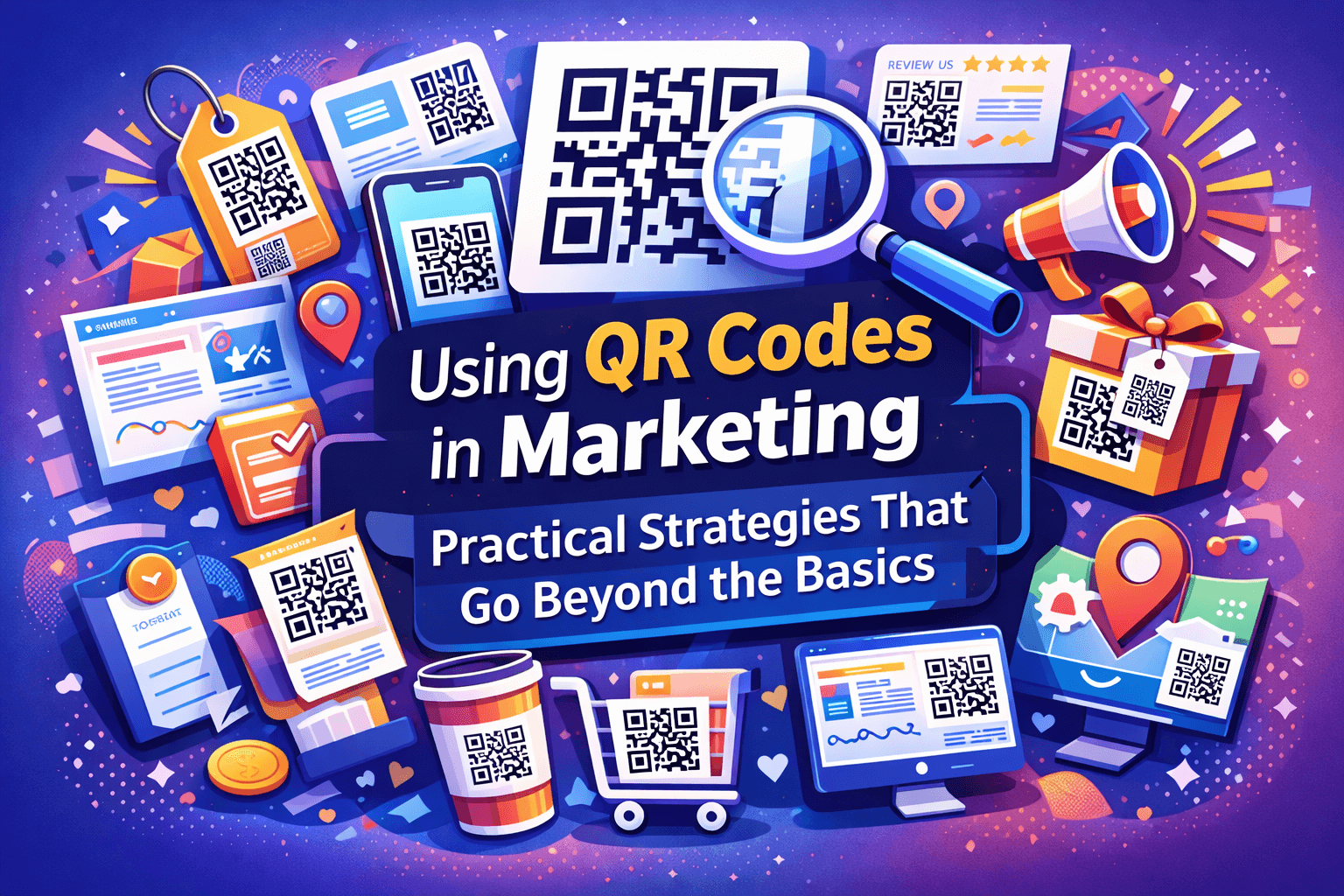
QR codes are often seen as simple links printed on posters or packaging. In reality, they’ve become a flexible marketing tool that helps brands connect offline attention with online action.
When used intentionally, QR codes don’t just send people to a page — they move them forward in a journey.
Why QR Codes Fit Modern Marketing
Modern marketing competes for attention across multiple channels. QR codes work because they remove friction.
Instead of asking people to remember a brand name, search later, or type a long URL, a QR code lets them act immediately. One scan turns curiosity into engagement.
That speed is what makes QR codes valuable in both physical and digital campaigns.
Turning Offline Exposure Into Measurable Traffic
One of the strongest marketing uses of QR codes is connecting offline visibility to online performance.
You’ll often see QR codes used on:
-
Posters that link to campaign landing pages
-
Flyers that open sign-up forms
-
Print ads that lead to exclusive offers
This makes offline campaigns measurable and easier to optimize.
Driving Action With Offers and Incentives
QR codes perform best in marketing when there’s a clear reason to scan.
Common examples include:
-
Discounts or coupon pages
-
Limited-time promotions
-
Early-access offers
-
Exclusive content
When the value is obvious, users are far more likely to engage.
Enhancing Events and In-Person Experiences
At events, QR codes help brands extend engagement beyond the physical moment.
They’re often used to:
-
Share event schedules or maps
-
Collect email sign-ups
-
Link to follow-up content
-
Provide resources after the event ends
This turns short interactions into longer-term connections.
Using QR Codes on Products and Packaging
Product packaging is valuable marketing space, but it has limits. QR codes help move deeper storytelling online.
They’re commonly used to link to:
-
Product demos or videos
-
Tutorials and usage tips
-
Customer reviews
-
Brand or sustainability stories
This adds context without cluttering the design.
Lead Generation and Data Collection
QR codes are effective for lead generation when paired with simple, focused forms.
They’re often used for:
-
Newsletter subscriptions
-
Giveaway entries
-
Feedback collection
-
Surveys
Because scanning is fast, people are more likely to complete short actions on the spot.
Learning What Actually Works
Unlike traditional print materials, QR codes can provide insight into performance.
Depending on how they’re set up, marketers can learn:
-
How many times a code is scanned
-
Which placements perform best
-
When engagement happens
These insights help improve future campaigns instead of relying on guesswork.
Designing QR Codes for Marketing Success
In marketing, how a QR code looks and where it’s placed matters.
A good marketing QR code:
-
Is easy to spot
-
Has enough contrast to scan quickly
-
Clearly explains what happens after scanning
Tools like QRColor make it easier to create branded QR codes that still scan reliably.
You can see an example here:
👉 https://qrcolor.com
Mistakes That Reduce Marketing Impact
Some common mistakes limit QR code performance:
-
Not explaining why someone should scan
-
Linking to generic homepages
-
Using static QR codes for campaigns that change
-
Placing QR codes where scanning is awkward
Clear intent and placement make a major difference.
Final Thoughts
QR codes are most effective in marketing when they guide people toward a clear next step. They work best as part of a broader strategy — not as decoration, but as a bridge between attention and action.
Used thoughtfully, QR codes can turn offline moments into measurable, meaningful engagement

 English
 French
 Spanish
 Portuguese
 Deutsch
 Turkish
 Dutch
Dutch
 Italiano
 Russian
 Romaian
 Portuguese (Brazil)
 Greek
Greek