
Static vs Dynamic QR Codes: What’s the Difference and When It Matters
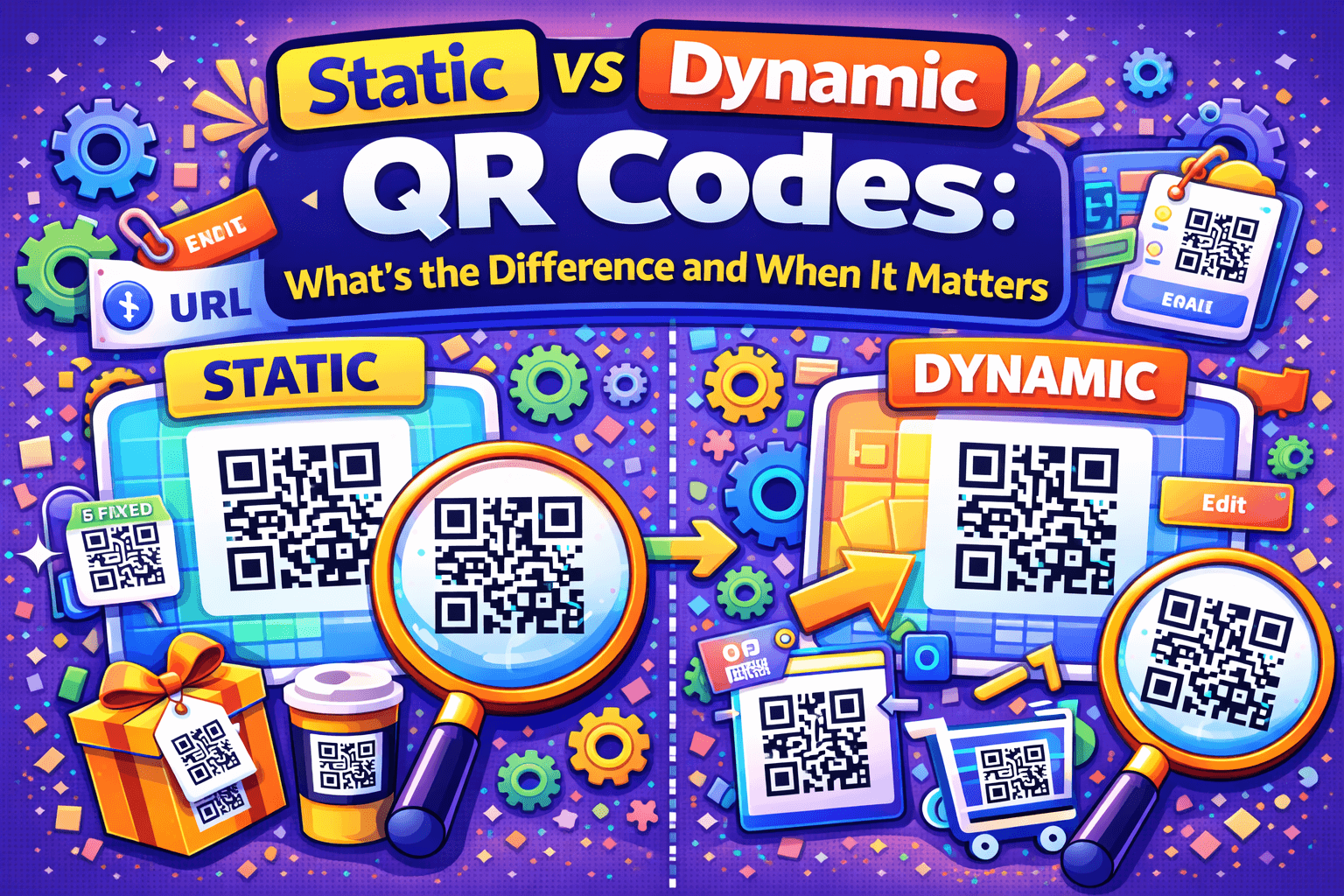
Not all QR codes work the same way. While they may look identical on the surface, static and dynamic QR codes behave very differently once they’re scanned.
Understanding the difference matters more than most people realize — especially if a QR code will be printed, reused, or used in a campaign.
What Is a Static QR Code?
A static QR code contains information that is permanently embedded into the code itself.
Once it’s created:
-
The destination cannot be changed
-
There is no scan tracking
-
The code works as long as the original content exists
Static QR codes are simple and reliable, but they offer no flexibility.
Common uses for static QR codes
-
Personal websites
-
Simple contact details
-
One-time uses
-
Content that will never change
If the information is guaranteed to stay the same, a static QR code can be enough.
What Is a Dynamic QR Code?
A dynamic QR code does not store the final destination directly. Instead, it points to a short redirect link that forwards users to the actual content.
This setup allows:
-
The destination to be changed later
-
Scan tracking and analytics
-
More control over how the QR code is used
From the user’s perspective, scanning feels the same — but behind the scenes, the QR code is far more flexible.
Why the Difference Actually Matters
The choice between static and dynamic QR codes becomes critical in real-world situations.
Imagine this scenario
You print a QR code on:
-
Product packaging
-
Menus
-
Flyers
-
Posters
-
Business cards
If that QR code is static and the link changes, the printed material becomes useless.
If it’s dynamic, you can update the destination without reprinting anything.
That single difference can save time, money, and frustration.
Tracking and Insights: Static vs Dynamic
Static QR codes offer no insight into how they’re used.
Dynamic QR codes often allow:
-
Scan counts
-
Time or date tracking
-
Device or location data (depending on the platform)
This information helps you understand what’s working and what isn’t — especially in marketing or business contexts.
When a Static QR Code Makes Sense
Static QR codes are best when:
-
The content will never change
-
Tracking is unnecessary
-
The QR code is used once or temporarily
-
Simplicity is the priority
They’re lightweight and dependable for very basic needs.
When a Dynamic QR Code Is the Better Choice
Dynamic QR codes are usually the better option when:
-
The QR code will be printed long-term
-
You may want to update the destination
-
You need usage data
-
The QR code is part of a campaign or process
For most professional, commercial, or repeat-use scenarios, dynamic QR codes offer far more control.
Cost vs Flexibility
Static QR codes are often free and easy to generate.
Dynamic QR codes may involve limitations or paid plans, depending on the platform — but they reduce the risk of broken links and wasted materials.
In many cases, flexibility is worth more than the small upfront cost.
Choosing the Right Tool
Because dynamic QR codes rely on redirects and management tools, the platform you use matters.
Tools like QRColor allow users to create QR codes with customization options and flexibility suited for real-world use cases.
You can explore how this works here:
👉 https://qrcolor.com
Final Thoughts
Static and dynamic QR codes may look the same, but they serve very different purposes. Choosing the wrong type can lead to broken links, lost data, or unnecessary reprints.
If flexibility, updates, or insights matter at all, dynamic QR codes are usually the safer choice.

 English
 Arabic
 French
 Spanish
 Deutsch
 Turkish
 Dutch
Dutch
 Italiano
 Russian
 Romaian
 Portuguese (Brazil)
 Greek
Greek