
The Thrills of Handball: A Dynamic and Fast-Paced Sport
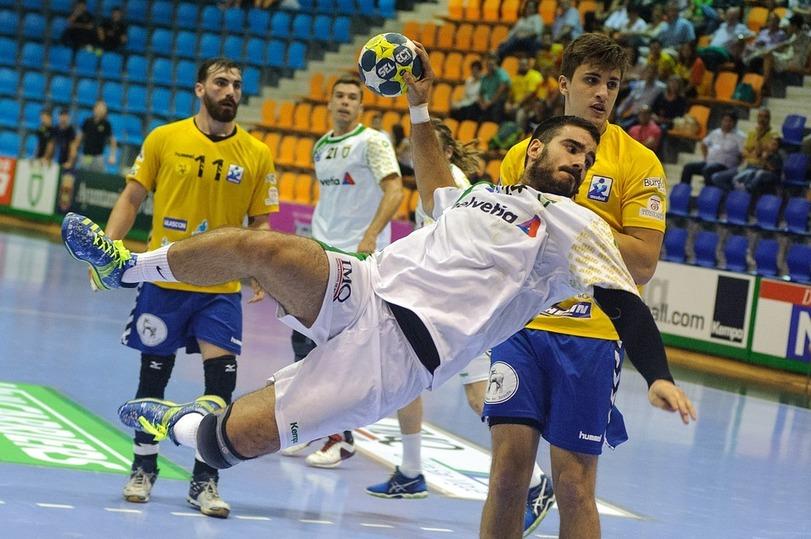
Handball is a high-energy, fast-paced team sport that combines the best elements of basketball, soccer, and water polo, all while keeping players on their toes with its rapid tempo and intense action. Played across the globe, handball has established itself as a major sport in Europe, particularly in countries like France, Germany, and Denmark, and continues to grow in popularity worldwide. Despite its thrilling nature, handball is still relatively unknown in some regions, making it an exciting sport to explore for both players and fans alike.
In this article, we’ll dive into the fundamentals of handball, its history, how it's played, and why it’s become such an exciting global sport.
The Origins and History of Handball
The origins of handball date back to ancient times, with various forms of handball-like games being played by civilizations in Europe, Asia, and South America. However, the modern version of handball as we know it today began to take shape in the early 20th century.
The game’s development is credited to Danish physical education teacher Holger Nielsen, who established a version of handball in 1898. A few years later, a German version of the sport known as "Torball" was developed, leading to the formation of organized teams and tournaments. The sport eventually merged into a more uniform structure, and by the 1920s, handball had become a popular outdoor sport in Europe. In 1936, handball was introduced as an Olympic sport during the Berlin Summer Olympics, though it was initially played outdoors.
In the 1970s, a significant shift occurred when handball transitioned to an indoor version, which helped further boost its popularity, particularly in European countries. The International Handball Federation (IHF) was established in 1946, and since then, it has been the governing body overseeing international competitions, including the World Handball Championships and Olympic Games.
How Handball is Played
Handball is typically played indoors on a rectangular court that is 40 meters long and 20 meters wide. Each team consists of seven players—six field players and one goalkeeper—who attempt to score by throwing the ball into the opposing team’s goal. The game is fast-paced, with players constantly moving, passing, dribbling, and attempting to outmaneuver their opponents.
The Objective:
The objective of the game is simple: score more goals than the other team. A goal is scored when a player throws the ball into the opponent’s goal from within the 6-meter goal area. Players must use their hands to pass, catch, and shoot the ball.
The Court and Key Zones:
The handball court is divided into several zones, the most important of which is the 6-meter goal area. This area is a no-go zone for field players, meaning only the goalkeeper is allowed inside the area to defend the goal. Field players can shoot from anywhere on the court, but their shots must come from outside the 6-meter area or from within it with a quick jump shot.
The court also has a 9-meter line, which players use to set up attacking plays, and a center circle where the game begins after each goal. There are also free-throw lines and penalty lines that come into play during fouls.
Duration and Rules:
A standard handball match is played in two 30-minute halves, with a 10-15 minute halftime break. The team with the most goals at the end of the match wins. If the match is tied after regulation time, extra time or a penalty shootout may be used to determine the winner.
Handball is a contact sport, but the rules are designed to prevent excessive aggression. Fouls are common and can result in free throws, two-minute suspensions, or even a red card for serious offenses. One of the most exciting moments in the game is the penalty throw, where a player takes a one-on-one shot against the goalkeeper from the 7-meter line.
The Skills and Strategy Behind Handball
Handball requires a unique combination of athleticism, skill, and strategy. To succeed, players need to be agile, quick, and have excellent hand-eye coordination. Passing and shooting are fundamental, but players must also master techniques like pivoting, jumping, and dodging to evade defenders.
In attack, teams must work together to break through the opposition's defense by using a variety of offensive strategies, including quick passes, feints, and wall passes. The goal is to outsmart the defense and create space for an open shot. Defensively, players aim to block shots, intercept passes, and disrupt the opposing team's offensive rhythm.
Goalkeepers in handball are vital players on the court. They need incredible reflexes and the ability to read the game, as they face high-speed shots from all angles. The goalkeeper's role is to stop goals, whether by blocking shots with their hands, feet, or body, and often by anticipating the shooter’s movements.
The Global Popularity of Handball
Handball is most popular in Europe, where countries like France, Germany, Spain, and Denmark have historically been powerhouses in international competitions. The sport also enjoys growing success in countries such as Sweden, Croatia, and Norway. The IHF World Handball Championship, held every two years, features the best teams from around the world, and the European Handball Championship serves as a major continental event.
Countries outside Europe are increasingly investing in handball, with emerging nations such as Qatar, Tunisia, and Egypt making strides on the world stage. The sport also enjoys popularity in Asia, particularly in South Korea and Japan.
The Olympic Games have played a key role in the global spread of handball. The sport has been a part of the Summer Olympics since 1972 for men’s teams and since 1976 for women’s teams. Olympic competitions help to highlight the excitement of the game to a worldwide audience, sparking interest and inspiring new generations of players.
The Future of Handball
Handball’s future looks bright, with the sport continuing to evolve both in terms of its gameplay and global reach. Increased exposure through international competitions, as well as the efforts of the IHF and national federations, are expected to bring the sport to new audiences and inspire more youth participation.
As technology continues to influence sports, the use of video review systems (such as VAR in football) and advanced analytics may help improve the quality of the game and provide better insight into player performance.

 English
 Arabic
 French
 Spanish
 Portuguese
 Deutsch
 Turkish
 Dutch
Dutch
 Russian
 Romaian
 Portuguese (Brazil)
 Greek
Greek