
The Digital Framework Connecting Gold Reserves and Investors
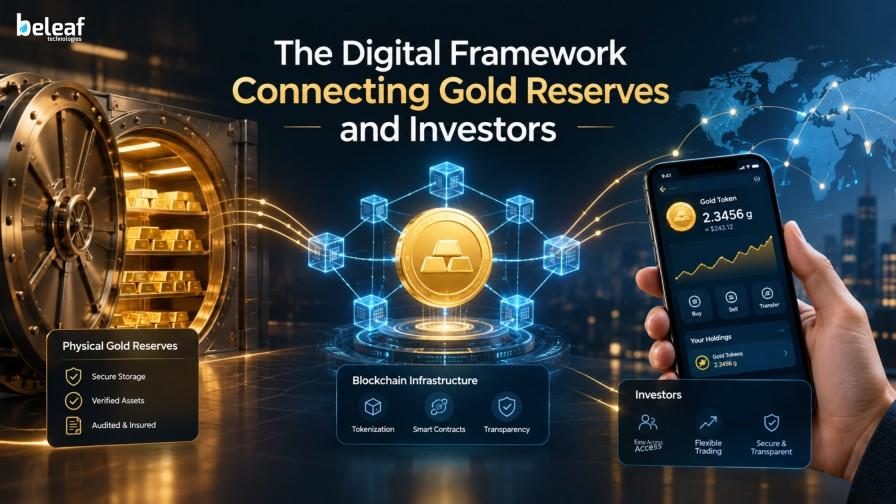
Gold has remained a valuable asset for centuries, but owning and managing physical gold can involve storage, transportation, verification, and accessibility challenges. As financial technology continues to evolve, blockchain is creating new ways to represent traditional assets digitally. Gold tokenization connects physical gold reserves with digital ownership, offering businesses and investors a different approach to managing gold backed assets.
Behind this connection is a digital framework that combines asset verification, secure custody, blockchain infrastructure, and smart contracts. Understanding how these components work together helps explain the growing interest in gold tokenization development.
Connecting Physical Gold With Digital Ownership
Gold tokenization involves representing ownership rights associated with physical gold through digital tokens recorded on a blockchain. Depending on the platform's structure, each token may represent a specific quantity of gold held in secure storage.
For example, a platform might issue tokens representing one gram of gold per token. The exact arrangement depends on the project's legal structure, reserve policy, and token design.
This model creates a digital connection between physical reserves and blockchain-based records. However, the tokens themselves do not automatically prove that gold exists. Reliable verification, transparent documentation, and enforceable ownership rights remain essential.
The Role of Gold Custody and Verification
A gold tokenization platform begins with the physical asset. Before tokens are issued, the underlying gold must be sourced, assessed, documented, and stored under an established custody arrangement.
Custody providers help protect the physical reserves, while independent audits or verification procedures can help confirm the quantity and status of the gold backing the tokens. Clear reporting also helps investors understand how the digital supply relates to the available reserves.
A dependable gold tokenization framework should address several important elements:
-
Secure storage arrangements for physical gold.
-
Documentation of ownership and reserve quantities.
-
Independent verification and periodic reporting.
-
Procedures for handling discrepancies or changes in reserves.
-
Clear redemption terms for eligible token holders.
These measures support accountability and help reduce uncertainty surrounding the relationship between physical assets and digital ownership.
Blockchain Infrastructure and Smart Contracts
Blockchain technology provides the digital recordkeeping layer for tokenized gold. It records token issuance, transfers, and other permitted transactions, depending on the network and platform design.
Smart contracts can automate predefined operations, including token transfers, supply controls, and certain compliance checks. For instance, a smart contract may prevent additional tokens from being issued unless the platform's authorized process confirms sufficient backing reserves.
However, smart contracts cannot independently inspect physical gold stored in a vault. Verified reserve information must come from trusted external processes, authorized operators, or suitable reporting mechanisms.
During gold tokenization development, businesses need to choose an appropriate blockchain network, token standard, security architecture, and integration strategy. These decisions influence transaction costs, scalability, compatibility, and the platform's long term maintenance requirements.
Creating a Secure and Accessible Investor Experience
The investor was facing a platform connecting blockchain operations with practical financial activities. Through a website or application, users may be able to register accounts, complete identity verification, purchase tokens, review holdings, and access transaction histories.
A well designed interface should clearly display token balances, relevant asset information, transaction status, and applicable fees. Investors should also understand whether tokens can be transferred freely, traded through supported venues, or redeemed for physical gold.
Security is equally important. Multi factor authentication, secure key management, encryption, access controls, and continuous monitoring can help protect user accounts and platform operations.
Depending on the business model and jurisdiction, the platform may also require identity checks, anti money laundering controls, transaction monitoring, and other regulatory measures.
Transparency Between Gold Reserves and Token Supply
One of the central challenges in gold tokenization is maintaining confidence that the issued digital tokens correspond to the promised underlying assets.
A transparent framework should make it possible to compare verified reserve information with the total token supply. Regular audits, reserve disclosures, and clear issuance and redemption procedures can help establish this connection.
Some platforms may also use blockchain-based reporting tools or external data integrations to publish reserve information. Nevertheless, transparency depends on the quality and independence of the underlying verification process, not simply on making data publicly visible.
Businesses should establish clear policies for correcting discrepancies, suspending issuance when necessary, and communicating material changes to token holders.
Why Businesses Are Exploring Gold Tokenization Development
Gold tokenization development offers businesses an opportunity to create digital platforms around a familiar physical asset. Depending on the design and applicable regulations, these platforms may support fractional ownership, digital transfers, improved transaction records, and access to gold backed products.
For fintech startups, asset managers, and established businesses, the development process requires coordination between blockchain engineering, custody arrangements, legal frameworks, security practices, and user experience design.
The objective is not merely to create a token. It is to establish a dependable system that connects a real world asset with clearly defined digital ownership rights.
Building a Reliable Framework for Tokenized Gold
The future of tokenized gold depends on more than blockchain adoption. Physical reserve management, independent verification, secure smart contracts, regulatory compliance, and transparent investor communication must work together.
Businesses planning a gold tokenization platform should define the ownership model, reserve structure, redemption policy, and operational responsibilities before selecting their technical architecture.
When these elements are designed as a connected framework, gold tokenization can provide a structured way to represent physical gold digitally while giving investors clearer information about the assets behind their tokens.
Let's Talk >> https://www.beleaftechnologies.com/gold-tokenization-development
WhatsApp : +91 8056786622
Reach Us : https://www.beleaftechnologies.com/contact-us
Telegram: https://telegram.me/BeleafSoftTech

 Arabic
 French
 Spanish
 Portuguese
 Deutsch
 Turkish
 Dutch
Dutch
 Italiano
 Russian
 Romaian
 Portuguese (Brazil)
 Greek
Greek