
What a Shop Foreman Wants You to Know About Parts
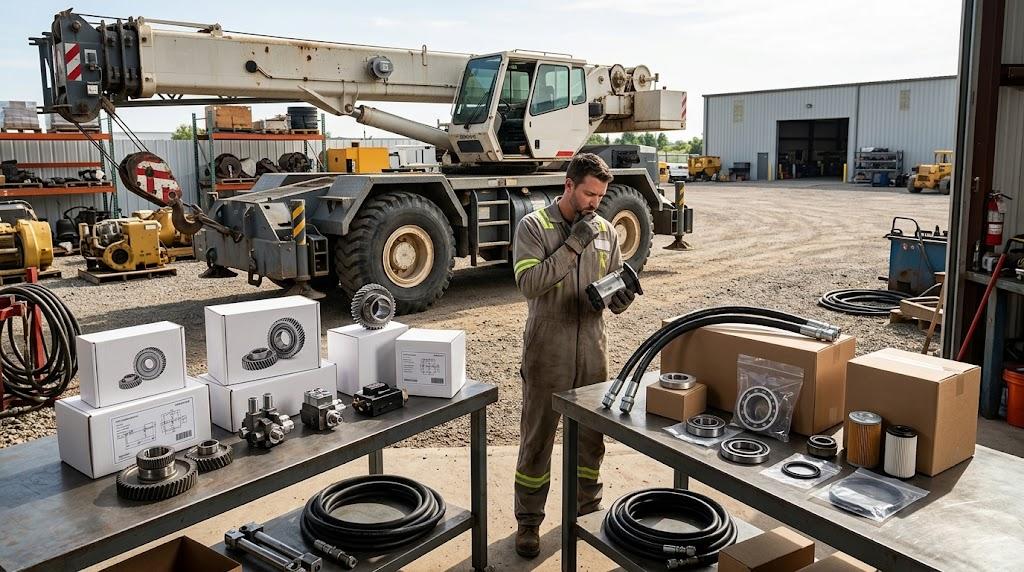
Every maintenance yard runs on a quiet set of rules that nobody writes down. Which grease gets used, which lift gets priority, who signs off on a repair. Parts sourcing falls into that same category of unwritten rules. It deserves to be written down.
Two supply routes feed any crane repair in practice. One runs through the manufacturer and its authorized network. The other draws on independent producers who rebuild and replicate. Both keep machines working when something lets go.
Comebacks trace back to a short list of components in most shops, and how those get sourced matters. So does the age of the iron in your yard. What follows offers a working look at cost, quality, and lead time across both routes.
Reading the Factory Route
Factory supply means the crane maker's own drawings and inspection routine govern production. Alloys, tolerances, and heat treatment match what left the assembly line. No third party has redrawn or approximated a single dimension. For the shop floor, that means fewer surprises during installation.
Fit is the first thing a mechanic notices. Bolts line up and seals seat without persuasion. Warranty coverage comes along for the ride, which simplifies the claim if something is off. Installation hours fall because nothing gets modified.
Records matter beyond the repair itself. A log filled with Grove parts tells a buyer the machine had steady care. That narrative supports resale discussions down the road. Fleets that change hands regularly learn to value it.
Price is where the argument turns sour for most operations. The tag reflects engineering heritage and support overhead, not just the metal. Availability can compound the pain when a backordered board idles a lift. Idle machines keep costing money while they wait.
Reading the Independent Route
Third-party producers reverse-engineer replacements to sit in factory assemblies. Better houses publish tolerance bands, alloy certificates, and test results. Their target is interchangeability, sometimes with corrections to known weak points. Poorer houses simply chase a low price and skip the evidence.
Quality assumptions in this market deserve a second look. Serious builders hold the same tolerances as the original drawing and match its steel. Some strengthen the part, like hardening a gear tooth that wears early in service. That copy then outlives the factory piece it replaced.
Cost leads people through the door here. Quoting one repair through both channels usually shows a workable gap. Tight operations feel that difference in their cash position each month.
Supply speed is the second draw. A dependable crane parts supplier keeps slow-moving references on their shelves where the factory may not. Six weeks of backorder can become a two-day delivery. Every day returned to the schedule protects work queued behind the repair.
One caution from the bench: this market is uneven. Diligent builders and careless ones fill the same listings. Unbranded bargains from untraceable sellers tend to come back within the year. Verify who actually made the part before signing anything.
Triage: Which Parts Go Where
Blanket rules tend to fail on the floor, so triage by risk works better. Ask what happens if the component gives way without warning. Consequence of failure sorts the queue before budget ever enters. That ordering keeps the operation out of trouble.
Load indicators, hoist brakes, and structural pins sit at the top of the pile. They hold suspended tonnage and need traceability to the source. Genuine Grove parts fit this group because tolerance control and records carry weight here. Nothing above a suspended load is an experiment.
Routine wear items belong at the other end of the scale. Filters, hoses, lamps, wipers, and glazing fail on a schedule regardless of maker. Independent versions perform these roles well and cost less. Premium spend on such items buys little in return.
Engine assemblies and hydraulic pumps sit between the two groups. A brand that has survived years in your shop carries standing. For an untested maker, put the question to whoever turns the wrenches. Trial it on a secondary circuit before it meets the hoist.
Older Iron on the Yard
Model age quietly changes the sourcing conversation over time. Production runs end and tooling eventually falls out of tolerance. Catalogs shrink as product lines advance and engineers move on. Those shifts show up mid-emergency rather than in a planning session.
A five-year-old crane usually sits inside the support window. Routine references sit on dealer shelves and the rest arrive without drama. Lead times hold steady enough to build a schedule around them.
Vintage iron follows a different pattern. Take a GMK5130 from the late nineties still turning work. Its references may be flagged obsolete with nothing further scheduled. Independent supply stops being a preference and becomes the only route forward.
Hunting Grove parts for obsolete assemblies takes patience and good contacts. Cross-referencing archival catalogs against current lines is often the starting point. Remanufactured castings occasionally bridge a gap where nothing else fits. Counting on a single dealer channel alone can stretch a search across months.
This is where a well-connected crane parts supplier earns their keep. They hold dead stock, machine substitutes, or know who will. Cross-reference tables in their files map current components onto old assemblies. What you buy there is know-how as much as hardware.
Don't Skip the Counter Staff
Brand arguments tend to crowd out the seller question in these discussions. Yet the vendor determines lead time, fit accuracy, and recourse after failure. Foremen know that variable separates one clean repair from two repeat visits.
Treat the crane parts supplier as part of your maintenance function rather than a phone number. Good ones flag which independent brands hold and which return. They pursue scarce factory references through channels you cannot reach alone. Their read keeps cost and risk in workable balance.
Regular dealing with one partner pays off as time passes. They learn your fleet codes, courier preferences, and substitution limits. A breakdown late on Friday turns into a Saturday delivery instead of a Monday dispute. Effectively, that relationship adds bench space to your own shop.
Anonymous marketplace listings give none of that back. If a part fails at the worst hour, no one picks up. Vendors with standing accept responsibility for what ships, whichever category it came from.
Tallying the Real Cost
Sticker price covers one part of what a repair actually costs. Fitting labor, downtime, and repeat work fill out the rest. Decisions built on invoice lines alone go wrong in predictable ways.
Every failure repeats the labor bill. Four hours to swap a pump becomes eight across two cycles. Lost operating hours layered on top make the arithmetic worse still. What looked like a modest saving becomes the largest line in the ledger.
Overspending carries the mirror-image waste. Factory pricing on a trivial item returns nothing measurable in performance. Spend should match what a failure would cost and stop there.
Log every purchase beside its service life and the picture clears. Within a year, patterns separate the durable makers from the rest. You will see which independent brands endure and which Grove parts warrant the premium. Across a fleet, that knowledge turns into real money.
Closing Notes from the Yard
No supply channel wins every line on the work order. Treat the OEM question as triage rather than as doctrine. Apply it one component at a time, weighting risk and lead time first. Habit in either direction eventually shows up on the bill.
Reserve factory supply for critical, heavily stressed assemblies. Send wear items and legacy support toward proven independent lines. Keep a dependable crane parts supplier within reach before the next failure lands. Judge every decision by uptime, operator safety, and controlled spending.

 English
 Arabic
 Spanish
 Portuguese
 Deutsch
 Turkish
 Dutch
Dutch
 Italiano
 Russian
 Romaian
 Portuguese (Brazil)
 Greek
Greek