
How QR Codes Are Used in Marketing (Beyond Just Scanning a Website)
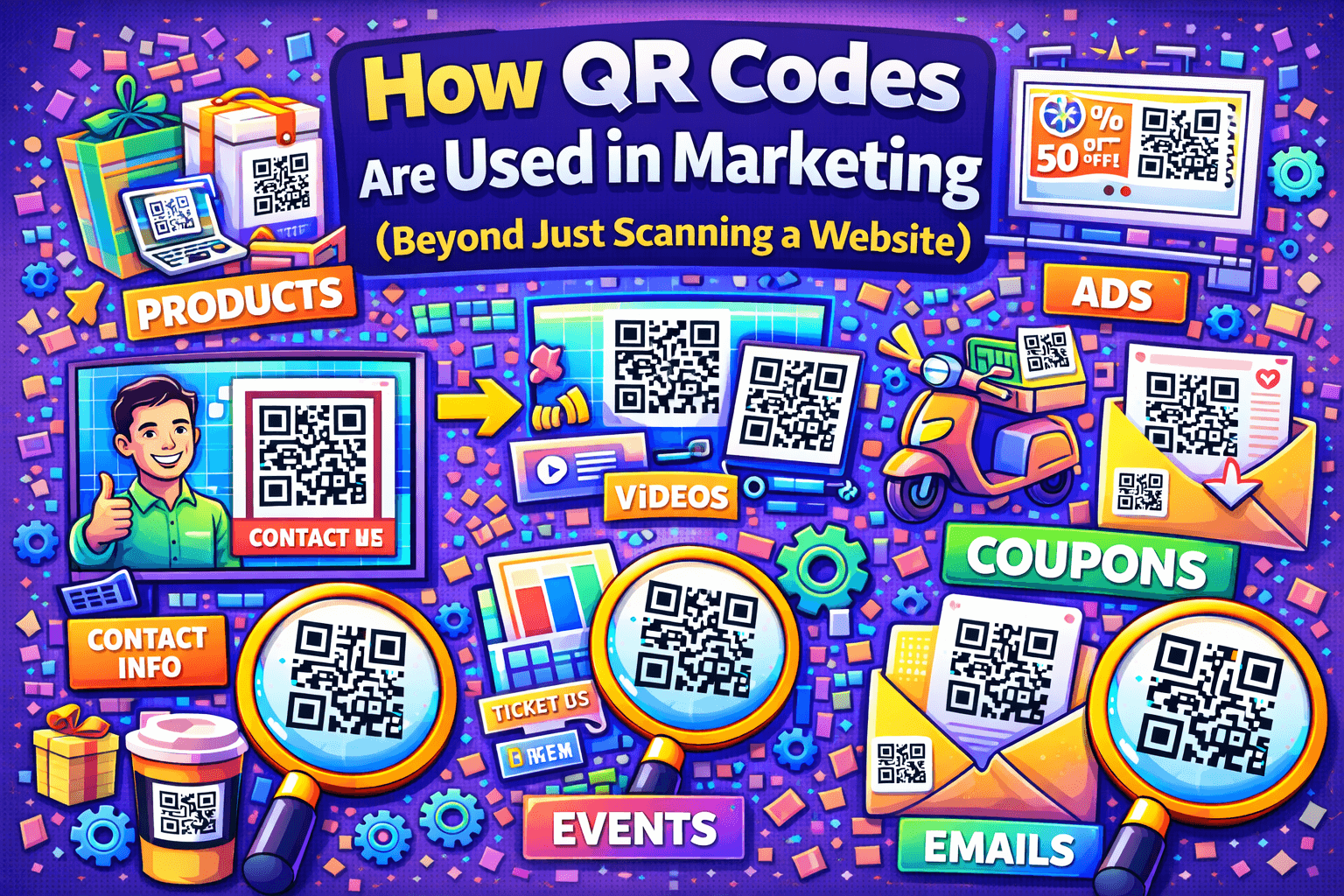
QR codes are often treated as simple shortcuts to a homepage. But in marketing, their real value goes much deeper. When used strategically, QR codes help bridge offline and online channels, reduce friction, and guide people toward clear actions.
The key is not having a QR code — it’s using it with intent.
Why Marketers Use QR Codes
QR codes solve a common marketing problem: attention is limited.
Instead of asking people to remember a brand, type a URL, or search later, a QR code lets them act immediately. One scan can turn curiosity into engagement.
That immediacy is why QR codes are especially effective in offline and hybrid campaigns.
Linking Offline Campaigns to Digital Funnels
One of the most powerful uses of QR codes in marketing is connecting physical materials to digital funnels.
Common examples include:
-
Posters linking to landing pages
-
Flyers pointing to sign-up forms
-
Print ads opening campaign-specific pages
This makes it possible to track and optimize offline marketing in ways that weren’t practical before.
Promotions, Discounts, and Limited Offers
QR codes are frequently used to deliver promotions because they lower the effort required to participate.
They’re commonly used for:
-
Discount or coupon pages
-
Limited-time offers
-
Seasonal promotions
-
Exclusive deals
A clear incentive paired with a QR code often performs better than generic calls to action.
Events, Activations, and Brand Experiences
At events or in physical locations, QR codes help extend the experience beyond the moment.
They’re often used to:
-
Share event schedules
-
Collect email sign-ups
-
Link to follow-up content
-
Offer post-event resources
Instead of handing out printed materials that get lost, brands can provide lasting digital access.
Product Marketing and Packaging
QR codes on packaging allow marketers to tell a bigger story without overcrowding the design.
They’re used to link to:
-
Product demos or videos
-
Usage tips and tutorials
-
Reviews or testimonials
-
Brand stories or sustainability pages
This adds depth to the product experience without adding clutter.
Collecting Leads and Customer Data
QR codes are useful for lead generation when paired with a clear value proposition.
Examples include:
-
Newsletter sign-ups
-
Early-access forms
-
Giveaway entries
-
Feedback or survey forms
Because scanning is fast, users are more likely to complete short forms in the moment.
Measuring Campaign Performance
Unlike static print materials, QR codes can provide insight into how campaigns perform.
Depending on setup, marketers can learn:
-
How often a code is scanned
-
Which placements perform best
-
When engagement happens
This helps refine messaging, placement, and overall strategy.
Designing QR Codes for Marketing Use
In marketing, appearance and placement matter. A QR code should feel intentional, not like an afterthought.
Customization, contrast, and clarity all affect whether people actually scan. The QR code should also clearly communicate what happens next.
Tools like QRColor allow marketers to create QR codes that align with branding while remaining easy to scan.
You can explore an example here:
👉 https://qrcolor.com
Common Marketing Mistakes to Avoid
Some common issues reduce QR code effectiveness:
-
No explanation of what the scan does
-
Placing QR codes where phones can’t easily scan
-
Linking to generic or irrelevant pages
-
Using static codes where updates are needed
Good marketing QR codes are clear, purposeful, and easy to use.
Final Thoughts
QR codes are most effective in marketing when they remove friction and guide people toward a specific action. They’re not a strategy on their own, but when paired with clear goals and thoughtful placement, they can significantly improve engagement.

 Arabic
 French
 Spanish
 Portuguese
 Deutsch
 Turkish
 Dutch
Dutch
 Italiano
 Russian
 Romaian
 Portuguese (Brazil)
 Greek
Greek