
Why Trust Is the Real Reason QR Codes Fail (Or Succeed)
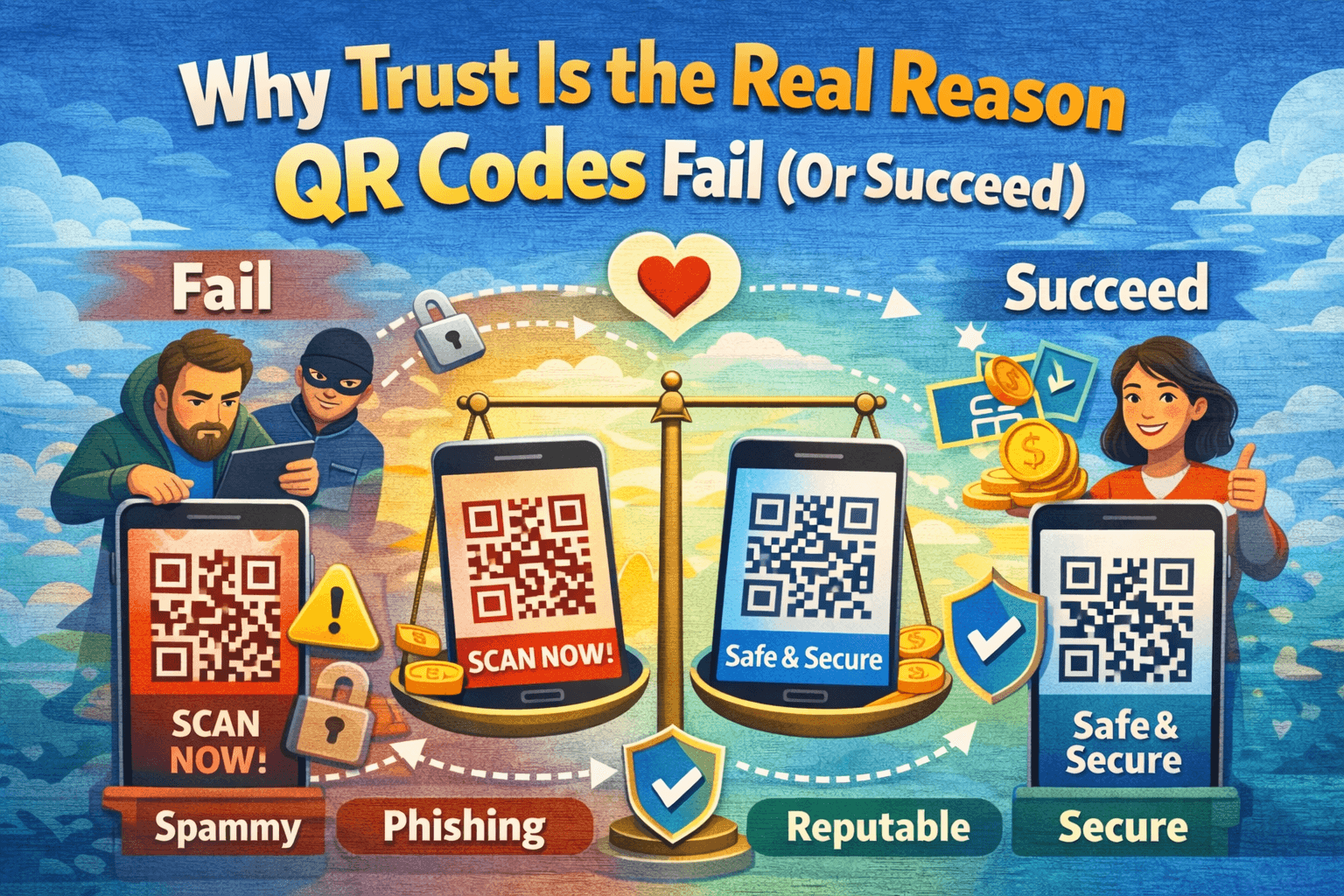
QR codes are simple tools, but they ask for something important: trust.
When someone scans a QR code, they’re letting an unknown link open on their phone. That decision happens quickly and emotionally. If anything feels unclear or inconvenient, the scan doesn’t happen — or the page gets closed immediately.
Most QR code problems come down to broken trust, not broken technology.
Unclear Purpose Feels Risky
A QR code without explanation creates doubt.
When people don’t know what they’ll see after scanning, their default reaction is hesitation. Even a perfectly safe QR code can feel suspicious if it doesn’t explain itself.
A short, clear message changes everything:
Scan to view the menu.
Scan for product details.
Scan to leave feedback.
Clarity builds confidence.
Generic Pages Reduce Credibility
Landing on a generic homepage after scanning a QR code feels disappointing.
From a user’s perspective, it raises a quiet question: Was this worth it?
QR codes work best when the destination feels intentional and relevant. When the page clearly matches the reason for the scan, trust increases. When it doesn’t, users leave quickly and remember the experience negatively.
Small Friction Signals Lower Trust
Trust isn’t just about content — it’s about comfort.
QR codes lose credibility when:
-
They’re hard to scan
-
They require awkward positioning
-
The contrast is poor
-
The size is too small
If scanning feels inconvenient, people subconsciously question whether it’s worth the effort.
The Mobile Experience Is the First Impression
QR codes always lead to a mobile experience.
If the page loads slowly, looks cluttered, or is difficult to read, trust disappears instantly. Users don’t separate the QR code from the page it opens — to them, it’s the same experience.
A bad mobile page makes the QR code feel careless.
Broken or Outdated Links Break Trust Permanently
QR codes often live longer than expected.
They appear on menus, signs, packaging, and printed materials that remain in circulation for months or years. If the destination changes or disappears, the QR code quietly stops working.
Once someone scans a dead or outdated QR code, they’re less likely to trust the next one they see.
Invisible Results Lead to Repeated Mistakes
When QR codes aren’t measured, the same mistakes repeat.
Without knowing how often a QR code is scanned or what users do afterward, there’s no feedback loop. Improvement becomes guesswork.
Even simple tracking helps identify whether a QR code is building trust or eroding it.
The QR Code Isn’t the Risk — The Experience Is
Generating a QR code takes seconds.
What takes effort is making sure the experience after the scan feels deliberate, relevant, and respectful of the user’s time. Once that’s planned, creating the QR code itself is easy.
A simple tool like
https://generate-qr-code.com
lets you generate clean, scannable QR codes without unnecessary complexity.
The success of the QR code depends on everything around it.
Final Thoughts
People don’t reject QR codes because they dislike scanning.
They reject QR codes that feel unclear, inconvenient, or careless.
When QR codes communicate purpose, lead to relevant pages, and respect the mobile experience, they build trust — and trusted QR codes get scanned.
The difference isn’t the technology.
It’s the confidence you give the user.

 Arabic
 French
 Spanish
 Portuguese
 Deutsch
 Turkish
 Dutch
Dutch
 Italiano
 Russian
 Romaian
 Portuguese (Brazil)
 Greek
Greek